
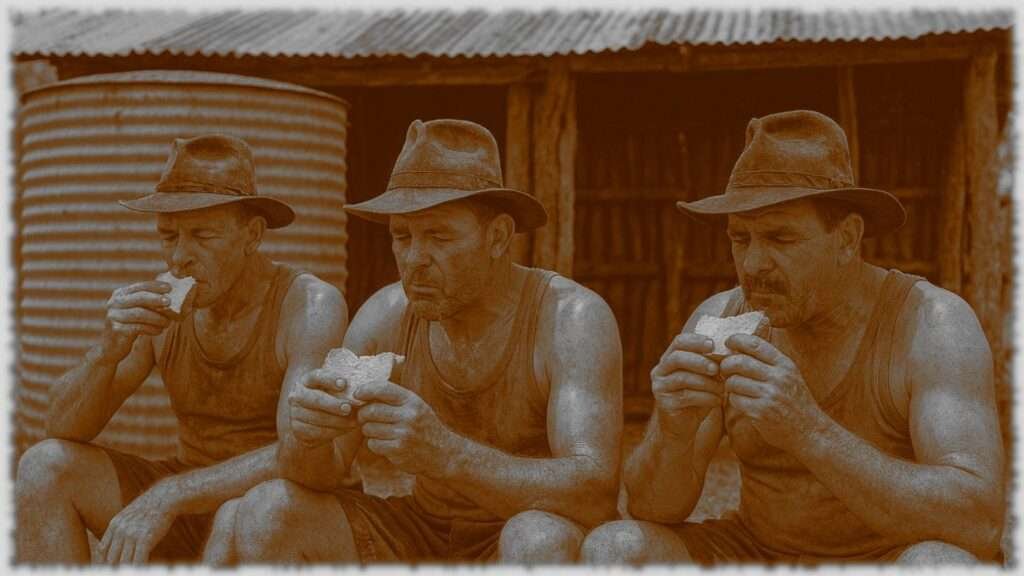
Marketing The Hard Working Aussie Spirit Of The Good Old Days
Disclaimer.
This article provides general information and personal opinions and does not constitute professional advice. Readers should seek their own advice for specific concerns.
Article Summary.
This article explores the enduring value of the hard‑working Aussie spirit, rooted in resilience, resourcefulness, humour and mateship and forged through the challenges of Australia’s past.
By blending powerful nostalgia with practical examples, it shows how these timeless qualities can inspire contemporary brand building and bring Australians together.
It proposes “bottling” and sharing the Aussie Spirit of Yesteryear, urging Australians to embrace their heritage, pass these values across generations and lead by example.
Through stories, cultural commentary and actionable insights, it aims to foster pride and confidence, positioning authentic Aussie character as a transformative force for the nation’s future.
Top 5 Takeaways.
1. The Aussie spirit was forged through hardships and adversity, nurturing a national character defined by humour, resilience, mateship, and practical ingenuity.
2. Legendary Australian grit comes from ordinary people who tackle challenges directly, support their mates, and value action over status or recognition.
3. The tradition of the larrikin, irreverent, informal, and compassionate remains central, helping others and bringing levity in tough times while never crossing lines of cruelty.
4. Modern Australians can revive historical character by actively practising these values in daily life, through community spirit, fair play, and inclusion, especially in the face of adversity.
5. In 2025, nostalgia for the authentic Aussie spirit inspires branding and marketing, using stories and symbols from a resilient, warm, and united national heritage to drive engagement and pride.
Table of Contents.
1.0 Capturing the Aussie Spirit – The Soul Of Our Nation
2.0 The Foundation of Grit and Grace
3.0 The Texture of an Era
4.0 The Golden Era of Australian Rugby: Spirit on the Field
5.0 Modern Legends Among Us
6.0 The Dependable Larrikin Lives On
7.0 When the Spirit Went Astray
8.0 The Spirit in Modern Australia
9.0 Bottling The Aussie Spirit For Tomorrow
10. Living the Legacy
11.0 Marketing the Spirit in 2025
12.0 The Path Forward
1.0 Capturing the Aussie Spirit – The Soul Of Our Nation.
Imagine how great it would be to have the ‘tough as a dunny door’ hard working Aussie spirit of the good old days captured in a bottle and to share that spirit with the world.
Yes, there’s something unmistakably powerful about the Australian character of yesteryear, forged in the harsh realities of life in a country of extremes: bushfire seasons, droughts, and floods.
It’s a spirit that turned adversity into opportunity, hardship into humour, and isolation into independence.
Through droughts, wildfires, wars, and recessions, the legendary Aussie spirit has always burned brightest in times of trouble.
Its roots run deep in the dusty outback and sun-drenched suburbs, where mateship, cheeky humour and tough resolve have helped Australians weather every storm.
2.0 The Foundation of Grit and Grace.
This spirit wasn’t born in boardrooms or political chambers, no, it was hammered out on the anvil of necessity.
Farmers, miners, diggers, factory workers, and pioneers who shaped this nation shared one common trait: they didn’t wait for someone else to solve their problems.
If you stood around doing nothing, the usual response was, “What are you doing, mate—holding that wall up, are ya?”
Another crowd favourite for someone standing idle because they thought the job was too hard for one person was: “What are you waitin’ for, mate, a written invitation from the Queen?”
The Australian character was forged by isolation that bred self-reliance, harsh conditions that demanded ingenuity, and a classless society that valued what you could do over who you knew.
From the Eureka Stockade miners who stood up to unfair licensing fees with pickaxes and courage, to the thousands of women who kept farms and families running while their husbands were at war, complaining wasn’t the way, helping your mates was.
The heroic stories stretch across our history. Leonard Ives, shot through the chest at Gallipoli, was rescued when a mate spotted his hand move among the wounded. He lost a lung but rebuilt his life, embodying the survival and camaraderie that defined his generation.
The “Rats of Tobruk” dug in for months in relentless desert heat, refusing to surrender. For them, mateship was everything—risking your own life for a mate, sharing a crust, or finding a laugh amid the shells.
These weren’t superhuman feats, they were Aussies being Aussies, doing extraordinary things because the situation demanded it, not for social media views or recognition.
As the saying went: “There’s no point whingeing, mate, nobody’s gonna listen to ya anyway. Just shut ya gob, roll up your sleeves and get to work.”
3.0 The Texture of an Era.
The 1980s and 1990s in Australia had a texture all their own. The country still felt raw around the edges.
Droughts, recessions, and hard yakka were part of life, and “Have a go, ya mug” was said to anyone whingeing about a bit of hard work.
It wasn’t mean-spirited, it was just being Aussie. A nudge, a grin, and a gentle reminder that everyone was expected to pitch in, no matter how tough the job.
John Laws, the “Golden Tonsils” speaking into a golden microphone was right in the middle of that cultural heartbeat. His almost magical voice was a constant companion in kitchens, truck cabs, shearing sheds, and corner stores.
He had that rare ability to make a caller from the back of Bourke, where it was 50 degrees in the shade, feel just as important as the Prime Minister. For a lot of people doing it tough, his show was more than entertainment—it was a lifeline.
That period had its own soundtrack: Slim Dusty’s “Lights on the Hill” on the radio, Cold Chisel’s “Cheap Wine” on the pub jukebox, and after a few lemon sherbets, we weren’t afraid to join in.
You could walk through the mall in Perth and stumble across Johnny Diesel busking on the footpath, rattling off rippa songs he’d later sing to packed stadiums.
There was a common way people got sized up: their “hardness level.” It didn’t matter how many muscles you had, “Let’s see how they go on the pick and shovel” was the real test.
If you didn’t know the trick of using your legs to dig instead of your arms, you’d end up with palms covered in blisters. It was pretty funny to see a big 6’5″ fella, six pick handles across the shoulders, whingeing about the excruciating pain in his hands and then the wiry 5’9″ bloke next to him would grin and say, “What’s the matter, princess? You got a boo boo?”
Our 23rd Prime Minister, Bob Hawke, was the embodiment of that rare Aussie blend: sharp as a tack, tough as nails, polished in delivery, and with a backbone made of BHP steel.
He came from the union movement, where you didn’t survive without grit, and carried that toughness into politics without losing his ability to charm a room.
Hawkey could walk into a vehicle workshop or the US Congress and command the same level of attention, not because he was loud, but because he was compelling.
4.0 The Golden Era of Australian Rugby: Spirit on the Field.
Nothing embodied the Aussie spirit of yesteryear quite like our Rugby Union team of the 1980s and ’90s, a collection of warriors who didn’t just play rugby, they lived it with every ounce of that tough-as-nails character that made Australia great.
Take George Gregan, all 173 centimetres and 80kg of him, with a heart the size of Uluru. Watching him take down absolute monsters from opposing teams was almost unbelievable and he did every game and somehow made it look easy.
He had that classic Aussie refusal to be intimidated, the kind of bloke who’d look at a 130-kilogram forward charging at him flat out and think, “Righto mate, let’s see what you’ve got.”
Nick Farr-Jones was the perfect embodiment of leadership without any sort of ego, directing traffic like a master conductor while never forgetting he was just another bloke doing his job.
John Eales, nicknamed “Nobody” because nobody’s perfect, proved that Australian excellence came wrapped in humility.
He was a brilliant captain and was known as a player that his teammates would “run through brick walls for,” highlighting his inspirational leadership qualities.
And David Campese (Campo) represented that creative larrikin streak that made Australian rugby poetry in motion.
He’d try things that should have been impossible, pull them off with a cheeky grin, then shrug like it was nothing special.
These weren’t prima donnas; they were tradies in rugby boots, bringing that same work ethic and mateship to the international stage.
I think this team won so much because they understood something fundamental about the Australian way: individual brilliance meant nothing without the team, flash was worthless without substance and talent without character was just wasted potential.
They carried that 1920s-2000s spirit in their hearts, tough, loyal, innovative and never too proud to help a teammate up or shake hands with the opposition.
That’s the Australia we need to bottle and show the world that it still exists.
5.0 Modern Legends Among Us.
Shane Fitzsimmons led through the ferocious bushfires of 2019-20, as thousands of volunteers appeared from nowhere, offering hands, hearts, and weekends to mend broken fences and raise communities back to life.
Fred Hollows gave sight back to thousands while fighting tirelessly for Indigenous health. Steve Irwin fearlessly championed wildlife conservation with humour and passion, making Australians proud on the world stage.
Sport has given us proud examples too. Pat Rafter’s humility on the court, apologizing, “Sorry Mate” every time he messed up a ball toss, he showed respect and decency at the highest level.
Lleyton Hewitt’s teenage training sessions on Henley Beach, collapsing breathless yet refusing to give up, captured that fighting edge and refusal to whinge that defines us.
Senior Australian of the Year Peter Dornan reminds us: “When you’re climbing a mountain, you’re climbing towards yourself.”
Diagnosed with cancer, he pressed on and inspired thousands, proving that every challenge contains a silver lining.
Younger generations carry the torch too. Indigenous artist Jordan Taunton used her trials to fuel creativity and help others.
In sport, Layne Beachley became surfing’s greatest despite chronic fatigue and depression, and Matthew Wade returned from cancer to cricketing glory, standing as proof that Aussie grit defeats adversity.
6.0 The Dependable Larrikin Lives On.
If the battler represents Australian grit, the larrikin represents Australian heart. The larrikin tradition gives us permission to be irreverent without being disrespectful, cheeky without being cruel, and informal without being unprofessional.
It’s our spirit we were taught from a young age that says you can take the work seriously without taking yourself too seriously. We had the saying, “Get over yourself mate.”
The dependable larrikin is the tradie who fixes your problem properly the first time and throws in a joke to lighten the mood as he hands you his invoice.
It’s the nurse who uses humour to help patients through their worst moments, or the teacher who makes learning fun while never compromising on standards.
You see this character most clearly in crisis. During natural disasters, volunteers make sandwiches for emergency crews while cracking jokes about the weather.
They might give you a hard time about your new haircut, but they’ll be first to help you move house on a weekend.
We could grumble about the government while blowing the froth off one at the local, then turn up for the fire brigade the next day without expecting thanks.
7.0 When the Spirit Went Astray.
Something’s gone wrong with the way we talk to each other and just the way some of us behave in general and it’s real shame.
Scroll through social media these days and you’ll see Australians saying things that would have gotten them a fair dinkum ‘tune up’ from their mates back in the day. The cruel comments, the pile-ons, the videos designed to humiliate rather than help, this isn’t the Australia our parents and grandparents built.
This isn’t the country that earned respect around the world for its fair go attitude and decent treatment of people doing it tough.
The Aussies of yesteryear had a code that ran deeper than mateship, it was about basic human decency.
Sure, they’d give you a ribbing if you needed it, and they weren’t afraid to call a spade a spade. But there was a line you didn’t cross, “You didn’t kick someone when they were down.”
You didn’t gang up on the vulnerable. You didn’t record someone’s worst moment and share it for laughs. That isn’t being ‘Aussie’, that’s being something, else, something I would not mention in an article.
There’s a world of difference between the good-natured stirring that built character and the malicious attacks we see online today.
The tradies of the 1980s might have given the new apprentice a hard time about his soft hands, but they’d also teach him how to use his legs instead of his back when digging.
The ribbing came with mentorship, with inclusion, with the understanding that everyone deserved a fair chance to prove themselves.
Today’s keyboard warriors hide behind screens, targeting people they’ll never meet, destroying reputations and mental health with a few vicious keystrokes.
They mistake cruelty for comedy, harassment for honesty. This isn’t the larrikin spirit, it’s a corruption of everything that made the Australian Spirit so special.
8.0 The Spirit in Modern Australia.
The DNA of that historical Australian character still runs through modern Australia, though sometimes it’s very hard to spot.
You see it in communities organising bushfire relief efforts, in our approach to innovation where entrepreneurs display that same “have a go” mentality, and in workplaces that still value straight talking and practical solutions.
Even during COVID-19 lockdowns, neighbourhoods rallied around local businesses, continuing that deep-seated belief that we’re responsible for looking after each other, no matter the challenge.
9.0 Bottling The Aussie Spirit For Tomorrow.
So how do we capture that essence and keep it alive? It starts with recognising that the Australian spirit isn’t a museum piece, it’s a living tradition that must be practised, not just remembered.
We can honour this heritage by supporting local businesses that live these values, prioritising quality over quick profits.
We can back leaders who choose integrity over image, and build communities that value contribution over status.
Education is key, when we tell stories about Australian pioneers, we should highlight their resourcefulness, loyalty to mates, and willingness to have a go.
Community events keep social bonds strong, whether it’s a local market, fundraising barbecue, or neighbourhood working bee. These gatherings remind us we’re stronger when we work together.
10. Living the Legacy.
The hard-working Aussie spirit isn’t gone, it’s just lying dormant, waiting for the right circumstances to emerge.
It appears every time Australians face crisis with determination and humour, every time someone goes out of their way to help a stranger, and every time they choose to do the right thing when no one’s watching.
Fair dinkum Aussies don’t kick people when they’re down, they help them back up. It’s time we remembered what that really means and started living it again.
Our kids are watching, and they deserve to inherit the best of what it means to be Australian, not the worst of what we’ve allowed ourselves to become.
11.0 Marketing the Spirit in 2025.
The power of nostalgia in branding cannot be underestimated. It triggers deep emotional bonds, driving loyalty and engagement, especially in uncertain times when people long for simpler, safer days.
Brands that evoke reassuring memories through classic products, iconic visuals, or familiar language can stand out as warm and trustworthy, quickly forging connections with audiences starved for meaning.
Marketing the “Aussie Spirit of Yesteryear” is about more than sentimentality, it’s about embedding timeless values into every brand experience.
This means showing, through brand story and messaging, how creativity, mateship, humour and hard grit still matter and can help inspire a stronger, more united Australia.
To bring the Aussie spirit to modern audiences, we must frame it as a revival, not a relic, emphasising its adaptability to today’s challenges and its power to unite people from all walks of life.
We can use nostalgic visuals, throwback promotions, or “classic” product experiences that evoke the hard-working, cheerful, and resilient ethos of eras from the 1920s to the early 2000s.
Successful Australian campaigns collaborate with real cultural icons, artists, and everyday Aussies to ensure authentic representation.
They use phrases, themes, and imagery instantly recognisable to locals—”she’ll be right, mate,” “have a go”, boosting pride while welcoming everyone into the fold. The key is balancing nostalgia with innovation, so the “spirit” feels fresh and relevant to new generations rather than dated or exclusive.
12.0 The Path Forward.
Perhaps the most Australian answer to promoting our heritage is this: stop talking about it and start living it. The world will recognise authentic Australian character when they see it in action, just as they always have.
We can keep this spirit alive by living our uniquely Australian values: giving everyone a fair go, speaking plainly and honestly and judging people by their actions rather than their accent or address. These values don’t need to be legislated, they just need to be lived.
The best of Australia is built by everyday heroes with big hearts and dry wit. When trouble strikes, it’s our habit to stand together, dust off, and lift someone else. To revive this spirit today, we must celebrate its living legacy.
By supporting each other, sharing a joke, and passing down stories and values to new generations, we keep hope burning bright.
The spirit is still there, maybe not as strong as it once was, but if you look around, you’ll find those tough-as-nails and twice-as-reliable
Aussies we love so much. We just need the confidence to let Australia be Australian again.
“Let’s bottle the Aussie spirit of yesteryear and let it loose” could be the rallying cry. Australia doesn’t need to go back; it needs to bring forward the best of what we were to build what we can become.
This is the brand that can help carry the Aussie spirit into the future—a spirit that doesn’t kick people when they’re down, but helps them back up, because that’s what fair dinkum Aussies do.
Bibliography

1. Book Review –
Resilient | Future Forge – Defence – Review of John Eldredge’s Resilient,
exploring faith, rest, and the restoration of inner strength, pertinent to the
theme of Australian resilience.
2. Plenty of resilience, but little resistance: Australia’s Great Depression
– Joan Beaumont’s history book on Australian resilience during the Depression.
3. Resilience – A
Spiritual Project – Kirsten Birkett’s analysis of
resilience in Australian life through a spiritual lens.
4. Indigenous
Resilience in Australia: A Scoping Review – Scholarly article
on Indigenous perspectives on adversity, resilience, and the cultural roots of
character.
5. Mateship
(Wikipedia) – Comprehensive overview of the role of mateship in
shaping Australian identity, including historical and contemporary analysis.
6. Nostalgia
Marketing and Building Brand Affinity – Article exploring
how nostalgia is harnessed for building brands in contemporary Australia.
7. Today’s
rebellious youth evolved from the larrikins of yesteryear – Historical and
cultural analysis by Melissa Bellanta on the enduring larrikin tradition.
8. Barry Humphries’
humour is now history (Friday Essay) – Article tracing
the legacy of Australian comedic tradition and its relevance for national
identity.
9. Australia
national rugby union team (Wikipedia) – Detailed history
of the Wallabies’ golden era and its national symbolism.
10. Lennie Gwyther’s
true grit – Blog post chronicling a legendary story of ordinary
Australian grit and determination.
11. Steve Irwin’s Early Life & Legacy
— PDF – Downloadable document summarising the life and
inspirational legacy of Steve Irwin.
12. Untold
Resilience by Future Women – A collection of true stories
spotlighting women across Australia who embody resilience.
13. (PDF) Mateship:
A Very Australian History – Academic work exploring the
evolving nature of mateship in Australian history and politics.
14. Nostalgia
Marketing Takes Centre Stage in 2025 – In-depth look at
nostalgia as a contemporary marketing force shaping brands and identity.
15. THE HUNTING OF
THE LARRIKIN (PDF) – Legal and social exploration
of the larrikin archetype, its roots and evolution in Australian society.
16.
More than a
medal: An introduction to Grit & Gold – National Library
exhibition capturing stories of adversity, sporting legends, and the shaping of
national character.
17.
The GREAT Framework for National
Renewal – Provides a structured model for
transforming nostalgia and collective grief into actionable renewal. This
framework is frequently cited as the practical counterpart to the cultural
reflections in Revive
the Aussie Spirit.
18.
The Storytelling Power of Australian
Manufacturing – Examines how the “Made in Australia” identity
can either authentically embody the Aussie spirit or risk becoming a hollow
marketing device. This analysis reinforces the importance of integrity in
national branding.
19. Marketing the Great Inland Shift for Australia – Explores demographic and cultural transitions inland, connecting them to the enduring values of resilience and adaptation. This article situates the Aussie spirit within contemporary social and economic change.
20. Climbing Every Rung of the Brand Ladder – Outlines how trust and meaning are built step by step in branding. Its emphasis on authenticity and lived values complements the call to “bottle the Aussie spirit” for future generations.




Lleyton Hewitt Was The Aussie Spirit in Full Flight.
Few athletes embody the hard‑edged, big‑hearted Aussie spirit of yesteryear quite like Lleyton Hewitt. Long before he became the youngest men’s world No. 1 in tennis history, holding the top spot for 80 weeks.
Lleyton was a wiry teenager pounding the soft sand of Henley Beach in Adelaide. Those brutal sand‑dune sprints, repeated until his legs burned and his lungs screamed, were more than fitness drills. They were a rite of passage, a test of grit, and a declaration that no opponent would ever outwork him.
This was the old‑school Australian way: no shortcuts, no excuses, no whingeing. Llyton Hewitt’s training mirrored the ethos of shearers, miners, and diggers before him , push through the pain, back yourself, and keep going when others stop.
That foundation forged a player renowned not just for his skill, but for his mental toughness. On court, he chased down every ball, fought for every point, and stared down bigger, stronger rivals with a defiant “come on!” that became his trademark.
Lleyton’s career was a masterclass in mateship and resilience. He thrived in Davis Cup battles, lifting teammates with his energy and refusing to concede even when the odds were stacked against Australia.
His relentless style reflected the same values that built the nation: hard work, loyalty, humility, and a refusal to be intimidated, let alone beaten.
In an era when sport can be dominated by image and ego, Lleyton Hewitt’s journey is a reminder of the raw, unpolished determination that once defined Australians.
His story is proof that the Aussie spirit, forged in the dust, heat, and hard knocks of the past, still runs strong in those willing to embrace it.
[…] that try to exploit the “Made in Australia” label or lean on the “Aussie Spirit of Yesteryear” without real substance quickly face […]
[…] Revive the Aussie Spirit of the Good Old Days – Reflects on nostalgia and the need to transform grief into […]