
What Makes The Article Writing Ecosystem A Digital Goldmine?
Disclaimer.
This article is provided for informational and educational purposes only. The content represents observations and insights about the article writing ecosystem and should not be construed as professional business, financial, legal, or technical advice.
While every effort has been made to ensure accuracy, the digital landscape evolves rapidly, and readers should conduct their own research and consult with qualified professionals before making significant decisions related to their content strategy, business operations, or investments.
The author assumes no liability for actions taken based on the information provided herein.
Article Summary.
The article writing ecosystem has evolved into a sophisticated landscape where technical decisions, strategic choices, and creative execution intersect to determine content success.
This article examines fifteen interconnected elements, from domain selection and hosting infrastructure to SEO strategy, AI integration and thought leadership positioning.
Rather than prescribing rigid formulas, this article illuminates how various components interact, empowering content creators to make informed decisions aligned with their unique goals and values.
Whether you’re building a personal brand, establishing thought leadership, or developing commercial content strategies, understanding this ecosystem enables you to leverage each element intentionally rather than leaving critical decisions to chance or default settings.
Top 5 Takeaways.
1. Every Technical Decision is a Branding Decision: Your choices around domains, hosting, platforms, and design communicate credibility and values before readers engage with your actual content. These foundational elements either amplify or undermine your message.
2. SEO and Authenticity Are Not Mutually Exclusive: Effective search optimization serves genuine value creation rather than replacing it. The most sustainable approach integrates technical optimization naturally into authentic content that prioritizes reader needs.
3. The Article Ecosystem Rewards Intentionality: Success comes not from mastering every element simultaneously, but from understanding how components interact and making deliberate choices that align with your long-term vision rather than defaulting to convenience.
4. Tools Shape Outcomes Invisibly: The plugins, writing aids, and automation tools you employ don’t just improve efficiency—they gradually influence your writing style, content structure, and strategic approach in ways you may not consciously recognize.
5. Trust Compounds Over Time: Whether through consistent quality, transparent monetization, legal clarity, or ethical AI use, trust-building isn’t a single decision but an accumulation of aligned choices that distinguish temporary visibility from lasting influence.
Table of Contents.
1. Introduction: The War of Words.
2. Domain Decisions: The First Branding Move.
3. Hosting Realities: Free vs. Paid Infrastructure.
4. Platform Wars: WordPress, Ghost, Medium, and Beyond.
5. The Plugin Economy: Tools That Shape the Writing Process.
6. SEO as a Sub-Ecosystem: Visibility vs. Authenticity.
7. Content Strategy: From Clickbait to Legacy.
8. Audience Mapping: Who Reads and Why They Stay.
9. Visual Identity: Fonts, Layouts, and Imagery.
10. Legal and Ethical Foundations.
11. Monetization Pathways: From Influence to Income.
12. The Role of AI and Automation.
13. Expired Domains, Content Resurrection & Backlinks.
14. Academic and Thought Leadership Positioning.
15. Conclusion: The Article as a Strategic Asset.
16. Bibliography.
1.0 Introduction: The War of Words.

Every day, millions of articles flood the internet. Some vanish into obscurity within hours, others become reference points that people return to for years.
The difference rarely comes down to writing quality alone. Instead, it’s about understanding that article writing exists within a complex ecosystem, one where domain choices, hosting platforms, SEO strategies, design decisions, and audience psychology all interact to determine whether your words create a lasting impact or simply add to the noise.
This isn’t about gaming the system or manipulating readers, not at all, it’s about recognizing that when you publish an article, you’re making dozens of strategic decisions, whether you realize it or not.
Each choice sends signals about your credibility, values and expertise. Together, these decisions form an ecosystem that either amplifies your message or quietly undermines it.
So, let’s explore this landscape together. Not as rigid rules you must follow, but as interconnected elements you can understand and use to tell your story more effectively.
2.0 Domain Decisions: The First Branding Move.

Before anyone reads a single word you’ve written, they see your domain name. This seemingly simple choice carries surprising weight.
New domains offer a blank slate. You control the narrative from day one, building authority organically through consistent, valuable content.
There’s an honesty in this approach, you’re earning trust in real time, with no borrowed credibility.
Expired domains tell a different story.
When a domain lapses, it often retains backlinks, search engine trust, and residual traffic. Acquiring the right one is like inheriting a library card with access to prestigious institutions.
If its history aligns with your goals, you’re building on established foundations instead of starting from scratch.
By leveraging existing keyword rankings, you can accelerate visibility. With well-crafted content, you can both promote your new direction and capitalize on those rankings, especially in low- to medium-competition spaces. I talk more on the expired domains subject in section 13.0, I have also written an article on the subject previously, Expired Domains And Related Backlinks – Topload Brands
Domain auctions have become marketplaces where branding meets investment strategy. Premium domains command premium prices because they’re memorable, intuitive, and carry inherent authority. Consider the difference between TechInsights.com and TechBlogFriends2847.com.
Both could host identical content, but one immediately conveys professionalism and permanence.
The emotional resonance of a domain name matters more than many realize. Short, clear domains signal confidence.
Hyphenated names can feel makeshift. Industry-specific domains communicate focus.
Two local examples from Muswellbrook illustrate this well:
www.lenorascleaningservices.com.au, a clear, service-oriented domain that reflects the owner’s name and scope.
www.sydneystreetelectrical.com.au, a location-based domain that instantly communicates trade and geography.
Your domain becomes part of your brand identity before anyone sees your logo or reads your bio.
3.0 Hosting Realities: Free vs. Paid Infrastructure.

When you’re starting out, free platforms like Google Sites, Wix, or Blogger offer tempting simplicity. You can publish within hours, with no technical knowledge required. For testing ideas or personal projects, they’re perfectly serviceable.
But here’s what many people discover over time: hosting choices affect more than just where your files live. They influence how search engines perceive your site, how quickly pages load for readers, and how much control you have over your presentation.
Free platforms typically display branding that isn’t yours. Your credibility gets diluted when “Powered by Wix” appears in the footer, subtly reminding visitors that this isn’t entirely your space.
Load times on free platforms can be slower, especially during traffic spikes, and you’re often limited in customization options that might better serve your content.
Paid hosting shifts the dynamic. Suddenly you control the entire environment. Page speed becomes something you can optimize. Security becomes your responsibility but also your advantage.
The psychological impact on visitors is subtle but real—a custom domain on quality hosting simply feels more established, more permanent, more trustworthy.
This doesn’t mean free platforms are wrong. For certain purposes, they’re ideal. But understanding the trade-offs helps you make intentional choices rather than defaulting to convenience.
4.0 Platform Wars: WordPress, Ghost, Medium, and Beyond.

The platform you choose to build on shapes everything that follows. Each major platform comes with its own philosophy, strengths, and limitations.
WordPress dominates for a reason. Its plugin ecosystem is vast, giving you tools for virtually any functionality you can imagine.
The trade-off is complexity, WordPress can sometimes unintentionally overwhelm newcomers with options and maintaining it requires more technical attention than simpler platforms.
Ghost emerged as a reaction to WordPress’s complexity, focusing specifically on publishing. It’s elegant, fast, and deliberately streamlined.
Writers who want to focus on content without managing extensive customization often find Ghost liberating. The limitation is that same simplicity, you trade flexibility for focus.
Medium offers something entirely different: built-in distribution. Publishing on Medium means your article potentially reaches Medium’s existing audience.
The platform handles all technical aspects, letting you focus purely on writing. The downside is you’re building on rented land. Medium controls the rules, the monetization, and ultimately, your relationship with readers.
Substack has carved out territory in the newsletter-article hybrid space, making it remarkably easy to build a paid subscriber base.
LinkedIn articles tap into professional networks. Notion has become a surprisingly viable publishing platform for some creators.
Each platform shapes how readers perceive your content. WordPress suggests independence and seriousness.
Medium feels contemporary and accessible. Ghost signals that you’re a dedicated writer. These aren’t rules, they’re patterns that readers unconsciously recognize.
5.0 The Plugin Economy: Tools That Shape the Writing Process.

Behind every polished article sits an invisible infrastructure of tools that influenced how it was written, edited, and presented.
Grammarly and similar writing aids catch errors, suggest alternatives, and gradually shape your writing style.
Hemingway Editor pushes you toward clarity and simplicity. These tools don’t just fix mistakes, they become silent collaborators, nudging your voice in particular directions.
SEO plugins like Yoast or Rank Math provide real-time feedback on how search engines might interpret your content.
They encourage certain structures, keyword densities, and formatting choices. Used well, they help you balance human readers with search algorithms. Used poorly, they can make your writing feel mechanical.
Visual plugins and schema tools work behind the scenes to make your content more comprehensible to both readers and search engines.
Table of contents generators improve navigation. Related post plugins keep readers engaged. Social sharing tools influence how your content spreads.
The interesting thing about this plugin ecosystem is how it quietly shapes outcomes. Two writers could start with identical skill levels, but different tool choices lead them down diverging paths.
One becomes more concise through constant Hemingway feedback. Another becomes more SEO-savvy through regular Yoast guidance. The tools become part of your development as a writer.
6.0 SEO as a Sub-Ecosystem: Visibility vs. Authenticity.
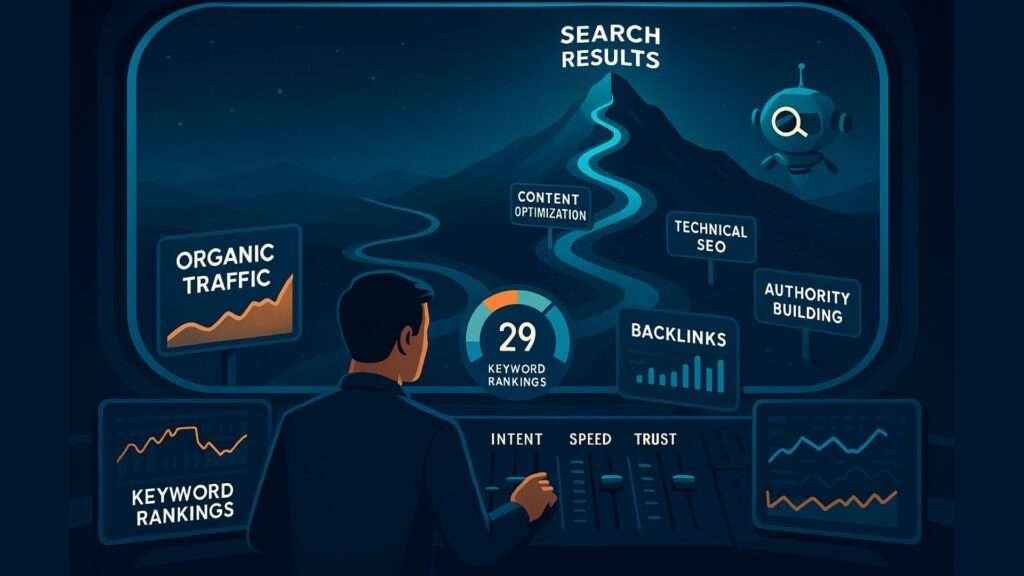
Search Engine Optimization (SEO) sits at a fascinating crossroads between technical strategy and genuine value creation. Understanding this intersection helps you navigate it more effectively.
At its core, SEO is about making great content discoverable. When someone searches for information you’ve written about, SEO helps connect them to your work.
Keywords, backlinks, technical optimization, site speed, these elements all serve the fundamental goal of matching searchers with relevant content.
The tension emerges when optimization becomes manipulation. Keyword stuffing, link schemes, and content designed primarily for algorithms rather than humans might generate short-term traffic, but they erode trust and rarely build lasting value.
Search engines have grown increasingly sophisticated at detecting this approach, and they penalize it.
Ethical SEO aligns technical optimization with genuine value.
You research keywords not to game the system but to understand what language your audience uses.
You build backlinks by creating content worth referencing. You optimize technical elements to provide better user experiences.
The intersection with brand voice matters profoundly. Some advice suggests rigid keyword placement or formulaic structures.
However, forced optimization often creates awkward reading experiences.
The art lies in weaving SEO considerations naturally into your authentic voice, making content that serves both ‘human readers’ and ‘search algorithms’ without compromising either, it’s a little tricky at first but gets easier, the more you do it.
7.0 Content Strategy: From Clickbait to Legacy.

Every piece of content represents a choice between immediate gratification and long-term value. Neither approach is inherently wrong, but understanding the difference helps you make intentional decisions.
Clickbait and trending topic coverage can drive impressive short-term traffic. “You Won’t Believe What Happened Next“, “This Changes Everything”, “They Don’t Want You To Know About This” and last but not least, “I’ll Get Fired For Telling You This”, these headlines and timely commentary on current events catch attention.
They’re the digital equivalent of a sugary snack, immediate satisfaction, quickly forgotten.
Evergreen content takes a different approach. These quality pieces address fundamental questions or persistent challenges.
They remain relevant months or years after publication, continuously attracting readers and building authority.
A well-researched guide on communication skills or financial principles might generate modest initial traffic but compound value over time.
Seasonal content occupies middle ground. Holiday guides, annual predictions, or quarterly trend analyses have predictable relevance cycles. They let you plan ahead while still capitalizing on timely interest.
The most effective content strategies typically blend these approaches. Trending topics bring new readers. Evergreen pieces keep them engaged. Seasonal content provides predictable rhythms.
But beyond traffic considerations lies something more valuable: emotional storytelling as a differentiator.
In a digital landscape saturated with information, the content that resonates most deeply often succeeds by making readers feel something.
Data informs, but stories transform. The articles people remember and share aren’t necessarily the most comprehensive, they’re the ones that connected emotionally while delivering valuable information.
8.0 Audience Mapping: Who Reads and Why They Stay.

Understanding who reads your content and what motivates them changes how you write. Not to manipulate, but to serve them more effectively.
Readers arrive with different intentions. Some want quick answers, they’re solving immediate problems and will leave as soon as they find solutions.
Others are exploring, building knowledge over time, open to deeper engagement.
Some are evaluating you as a potential expert or partner. Each group needs different things from your content.
The psychology of reading online differs from print. People scan before they read. They’re easily distracted.
They make snap judgments about credibility based on design, formatting, and opening sentences.
Knowing this doesn’t mean dumbing down your content, it means structuring it to honor how people actually consume information online.
Funnel strategies recognize that reader relationships develop over time. An article might be someone’s first exposure to your work.
If it delivers value without pushing too hard, they might seek out more. Over time, consistent quality builds familiarity, then trust, then advocacy.
This isn’t manipulation, not at all, it’s recognizing that relationships deepen through repeated positive interactions.
Emotional resonance through tone and structure matters enormously. Formal, academic writing signals expertise but can feel distant.
Conversational writing builds connection but might undermine authority in certain contexts.
The tone you choose should match both your personality and your audience’s expectations.
The structure you use, short paragraphs, subheadings, examples, storytelling, either facilitates or hinders that emotional connection.
9.0 Visual Identity: Fonts, Layouts, and Imagery.

Design choices communicate before words do. The visual presentation of your content either reinforces or contradicts your message.
Font selection seems minor until you realize how profoundly it shapes reader perception. Serif fonts like Georgia or Times New Roman suggest tradition, formality, and authority.
Sans-serif fonts like Arial or Helvetica feel modern and clean. Display fonts can add personality but risk readability. Consistent font usage across articles builds visual brand recognition.
Layout decisions determine whether readers engage or bounce. Wide text columns strain eyes. Extremely narrow columns feel cramped.
Adequate white space lets content breathe. Generous line spacing improves readability.
These technical considerations have psychological impacts, readers stay longer and comprehend better when the visual presentation supports the content.
Imagery serves multiple purposes. Hero images set emotional tone before the first word is read. Screenshots and diagrams clarify complex information. Infographics make data more digestible.
However, generic stock photos can sometimes undermine credibility, readers have learned to recognize and dismiss obvious stock imagery.
Some publishers take cinematic approaches to article presentation, treating each piece like a visual experience.
Others prioritize simplicity, letting words carry full weight. Neither approach is universal, but both require intention.
Your visual identity should align with your content’s purpose and your audience’s expectations.
10. Legal and Ethical Foundations.

Building trust requires more than good content. It demands transparency and legal clarity.
Copyright considerations affect every article you publish.
Using images, quotes, or data without proper attribution or permission exposes you to legal risk and ethical criticism.
Creative Commons licenses offer legitimate ways to use others’ work. Original content and proper citations build credibility.
Disclaimers protect both you and your readers. If you’re sharing information about health, finance, or legal matters without professional credentials in those fields, disclaimers clarify that you’re not providing professional advice.
This isn’t just legal protection, it’s ethical transparency about the limits of your expertise.
Privacy policies have become necessary as data collection has become ubiquitous.
If your site uses cookies, analytics, or collects email addresses, privacy policies aren’t optional, they’re legal requirements in many jurisdictions and ethical obligations everywhere.
Compliance considerations vary by location and industry. GDPR in Europe, CCPA in California, and other regulations create frameworks for how you handle reader data.
Understanding these requirements might seem tedious, but they represent societal agreements about respect and trust.
Building trust through legal clarity sounds unexciting, but it’s foundational. Readers notice when sites handle these elements professionally.
They might not consciously praise you for having a clear privacy policy, but they’ll feel more comfortable engaging with your content.
11.0 Monetization Pathways: From Influence to Income.

At some point, many content creators consider how writing might generate income. Multiple pathways exist, each with different trade-offs.
Affiliate marketing involves recommending products or services and earning commissions on resulting sales.
Done ethically, this means recommending only what you genuinely believe serves your audience.
The challenge is maintaining independence, if readers sense that financial incentives drive your recommendations more than their interests do, trust erodes quickly.
Sponsored content lets brands pay for exposure within your articles.
Transparency is crucial, readers should always know when content is sponsored. The best sponsored content aligns so well with your normal topics and values that it serves readers even while serving the sponsor.
Ad networks like Google AdSense and mediavine provide passive income based on page views. This requires substantial traffic to generate meaningful revenue, and ads can degrade user experience if implemented poorly.
Selling digital products or services through articles treats content as lead generation.
An article demonstrates your expertise, and interested readers can purchase deeper access through courses, consulting, or premium content.
This approach aligns incentives well, your best content attracts the right clients.
On that note, if you’d like to read more about writing quality content that ranks, then this is an article I’ve written specifically on this subject, Writing High Value And Authoritative Content That Ranks
Lead magnets offer free valuable resources in exchange for email addresses, building an audience you can nurture over time. This requires respecting that relationship and providing ongoing value rather than constant pitches.
The key across all monetization approaches is maintaining trust. Readers tolerate monetization when they believe your primary commitment remains to their interests.
12.0 The Role of AI and Automation.

AI writing tools have sparked intense debate. Understanding their capabilities and limitations helps you use them effectively without compromising authenticity.
AI can draft outlines, suggest phrasings, generate variations, and handle repetitive writing tasks. These capabilities offer genuine augmentation, they can help you work faster or overcome writer’s block. The technology excels at patterns and structure.
But AI currently struggles with originality, nuanced judgment, and authentic voice. It can produce coherent text, but that text often lacks the distinctive perspective that makes writing memorable.
AI-generated content sometimes contains subtle errors or awkward phrasings that attentive readers notice.
The ethical considerations extend beyond disclosure. Using AI to produce content you claim as entirely your own raises questions about authenticity.
Using AI as a tool while maintaining creative control and adding your own insight, perspective, and voice represents a different approach.
Search engines are developing sophisticated methods to detect pure AI-generated content, often treating it less favourably than human-written material. This creates practical incentives to use AI thoughtfully rather than relying on it entirely.
The landscape will continue evolving. AI capabilities will improve. Audience expectations will adjust.
The writers who navigate this successfully will likely be those who view AI as a tool that augments their unique human perspective rather than replaces it.
13.0 Expired Domains, Content Resurrection & Backlinks.

In the evolving ecosystem of article writing and SEO, one underutilized strategy is the ethical repurposing of expired domains.
These are web addresses that once hosted active sites but were abandoned and are now available for purchase.
When carefully vetted, they offer a shortcut to authority, carrying existing backlinks, domain history, and search engine recognition.
The process begins with identifying high-quality expired domains using tools like GoDaddy Auctions, ExpiredDomains.net, or DomCop.
Key metrics include Domain Authority (DA), backlink quality, and historical relevance. Once acquired, the domain’s archived content can be accessed via the Wayback Machine, allowing creators to resurrect valuable pages with updated, optimized material.
This “content resurrection” is more than recycling, it’s a strategic revival.
By modernizing proven content, aligning it with current search intent, and enhancing it with multimedia, writers preserve topical authority while improving user experience.
SEO tools like Surfer SEO, Grammarly, and Google Search Console help refine this process.
Redirecting old URLs via 301 redirects ensures that inherited backlinks pass their authority to new content.
Outreach to sites linking to the original domain can further strengthen credibility by updating those links to point to the refreshed material.
However, this strategy demands caution. Toxic backlinks, spam history, or irrelevant legacy content can harm rankings.
Ethical vetting, backlink auditing, and alignment with the domain’s original niche are essential.
For writers and marketers targeting low- to medium-competition keywords, this trifecta—expired domains, resurrected content, and backlink optimization, can dramatically accelerate visibility.
It’s not a shortcut in the manipulative sense, but a disciplined practice of building on existing foundations.
To explore this strategy in depth, including tools, workflows, and ethical considerations, read this article, Expired Domains And Related Backlinks – Topload Brands, a comprehensive resource on recycling digital assets for SEO advantage.
14.0 Academic and Thought Leadership Positioning.

Articles can serve purposes beyond traffic and monetization. They can establish intellectual legacy and thought leadership.
Treating articles as potential legacy pieces changes how you approach them. Rather than optimizing purely for immediate engagement, you consider whether this work might remain relevant and valuable years from now.
You cite sources more carefully. You develop arguments more rigorously. You write with the possibility that future readers might reference this work.
Abstracts and citations reframe articles for scholarly audiences. Adding structured abstracts, clear methodologies, and comprehensive citations transforms a blog post into something approaching academic publication.
This doesn’t mean abandoning accessibility—it means adding layers that different audiences can engage with at different levels.
Building a reputation beyond commercial goals requires consistent quality and integrity. It means sometimes publishing work that doesn’t serve immediate business interests but advances important conversations.
It means engaging seriously with critics and incorporating valid feedback.
This positioning isn’t for everyone, but for those building expertise in specific fields, treating articles as intellectual contributions rather than mere marketing tools creates different possibilities.
You become a voice in ongoing professional conversations rather than simply a content producer.
15.0 Conclusion: The Article as a Strategic Asset.

We’ve journeyed through the interconnected elements that make article writing more than just putting words on pages.
From the domain you choose to the tools you use, from SEO considerations to visual design, from monetization strategies to AI integration, each decision shapes how your message reaches and affects readers.
This ecosystem might seem overwhelming at first glance. Don’t let that put you off though, here’s the encouraging reality: you don’t need to master everything simultaneously.
Understanding that these elements exist and interact helps you make more intentional choices over time.
Start where you are. Write about what matters to you but just do so with awareness that you’re making strategic decisions whether you realize it or not. Every article is an opportunity to not just inform but to build credibility, establish authority, and create lasting value.
The most successful content creators in this ecosystem aren’t necessarily the most technically skilled or the most aggressive marketers.
They’re the ones who understand these interconnected elements and align them authentically with their values and their audience’s needs.
Build with intention. Write with resonance. The ecosystem rewards both equally, and together they create something remarkable: articles that don’t just occupy space on the internet but genuinely matter to the people who find them.
Your words have power. The ecosystem amplifies that power when you understand how to navigate it thoughtfully. Start now, learn continuously, and trust that consistent, valuable work compounds over time into something significant.
16.0 Bibliography.

1. Content Strategy for the Web — Kristina Halvorson and Melissa Rach
2. Everybody Writes: Your Go-To Guide to Creating Ridiculously Good Content — Ann Handley
3. They Ask, You Answer: A Revolutionary Approach to Inbound Sales, Content Marketing, and Today’s Digital Consumer — Marcus Sheridan
4. Building a StoryBrand: Clarify Your Message So Customers Will Listen — Donald Miller
5. SEO 2024: Learn Search Engine Optimization with Smart Internet Marketing Strategies — Adam Clarke
6. The Art of SEO: Mastering Search Engine Optimization — Eric Enge, Stephan Spencer, and Jessie Stricchiola
7. Made to Stick: Why Some Ideas Survive and Others Die — Chip Heath and Dan Heath
8. Deep Work: Rules for Focused Success in a Distracted World — Cal Newport
9. Contagious: Why Things Catch On — Jonah Berger
10. Superfans: The Easy Way to Stand Out, Grow Your Tribe, and Build a Successful Business — Pat Flynn
11. Epic Content Marketing (2nd Edition) — Joe Pulizzi
12. Marketing Rebellion: The Most Human Company Wins — Mark Schaefer
13. Top of Mind: Use Content to Unleash Your Influence and Engage Those Who Matter To You — John Hall
14. Content Chemistry: The Illustrated Handbook for Content Marketing — Andy Crestodina
15. The Elements of Style — William Strunk Jr. and E. B. White
16. Marketing ecosystem: An outside-in view for sustainable strategy — Day & Moorman
17. Navigating the Marketing Ecosystem — G. Tomas M. Hult
18. The Content Ecosystem Model: How to Build a Unified Content Strategy — Skyword Editorial Team
19. Business Promotion: Article Writing Strategies — Consulting Success
20. Why We Need Marketing Ecosystems Instead of Campaigns — Fernando Machado
21. How to Write an Article: A Six-Step Guide — Saahil Nair
22. Developing Brand Identity and Sales Strategy in the Digital Era — Lin Zhao et al.
23. The Scholarly Knowledge Ecosystem: Challenges and Opportunities — Leslie Chan & Dominique Babini
24. How Branded Articles Boost Your Content Marketing — Lexiconn Content Services
25. The Relationship Between SEO and Content Marketing — Rand Fishkin
26. Content as an Ecosystem: Moving Beyond Campaigns — Robert Rose
27. The Future of Writing: How AI Will Shape Content Creation — Julia McCoy
28. What Makes Great Content? — Meghan Casey
29. Building Trust Through Authentic Content Marketing — Jason Falls
30. Ethical SEO: Aligning Search Optimization with Genuine Value — Barry Schwartz