
The Wedding Industry Emotional Architecture That Binds Our Lives.
Disclaimer.
This article is provided for educational and informational purposes only.
It represents an exploratory analysis of branding, storytelling, and emotional architecture as observed within the wedding industry ecosystem.
The thoughts, views, ideas, and opinions expressed throughout this article are those of the author alone and do not necessarily reflect the positions, strategies, or practices of any organization, business, or professional body.
Nothing contained herein should be construed as financial, business, legal, or professional advice.
The insights and observations offered are intended to stimulate thought and discussion rather than prescribe specific strategies, actions, or outcomes.
Readers are strongly encouraged to conduct their own independent research and to seek guidance from qualified professionals before making any business, financial, or operational decisions related to the wedding industry or any other sector.
By engaging with this article, readers acknowledge that the author assumes no responsibility or liability for any decisions made or actions taken based on the content presented.
Article Summary.
This article examines the wedding industry through the lens of brand storytelling and emotional architecture, revealing how this unique ecosystem creates experiences that endure in memory.
By analysing eleven distinct components of the wedding journey—from invitations to digital presence to post‑wedding continuity, we uncover principles of emotional connection, narrative coherence, and memory‑making that extend far beyond weddings themselves.
The wedding industry thrives not through conventional marketing, but by contributing meaningfully to people’s life stories at moments of transformation.
Each vendor and service provider operates as both an independent brand and a supporting character in a larger narrative, forming a constellation of touchpoints that together create a cohesive, emotionally charged experience.
This exploration demonstrates that the most effective branding emerges when businesses focus less on self‑promotion and more on enabling others to tell their stories with beauty, resonance, and authenticity.
At its best, the wedding industry shows how emotional investment, trust‑building and narrative coherence combine to transform commercial transactions into cherished memories and enduring legacies.
Top 5 Takeaways.
1) Emotional Investment Creates Deeper Connection: Weddings show that when people invest emotionally in an experience, their engagement reaches profound levels. Brands operating in emotionally significant spaces carry both greater responsibility and greater opportunity to create lasting impact.
2) Narrative Coherence Amplifies Experience: The most memorable weddings are those where every element—visual, spatial, and emotional—belongs to the same story. Coherence doesn’t demand uniformity, but a consistent emotional tone and aesthetic language that reinforce a unified narrative.
3) Memory Is the Ultimate Product: Unlike industries that deliver tangible goods, the wedding ecosystem primarily creates memories that will be revisited for decades. Success is measured not in immediate satisfaction but in how experiences are remembered and retold over time.
4) Trust Is the Essential Currency: Because weddings unfold during vulnerable, high‑stakes moments, trust becomes the foundation of every vendor‑client relationship. Brands that build trust through authenticity, reliability, and emotional intelligence create connections that extend well beyond a single transaction.
5) The Best Brands Enable Others’ Stories: The most powerful branding doesn’t impose its own narrative but provides the artistry, tools, and support that help people become protagonists of their own meaningful stories. The wedding industry succeeds by making itself essential to personal narrative without overshadowing it.
Table of Contents
1) Introduction: The Wedding as a Brand Event.
2) The Emotional Economy of Weddings.
3) The Wedding Ecosystem: A Narrative Framework.
4) Invitations: Typography as Tone-Setting.
5) Attire: Identity, Heritage, and Transformation.
6) Venue & Decor: Spatial Branding and Immersion.
7) Photography & Videography: Memory as Myth.
8) Planners & Celebrants: Ritual Designers and Emotional Guides.
9) Gifts, Keepsakes & Packaging: Tangible Brand Echoes.
10) Digital Presence: Social Media and the Wedding Brand.
11) Post-Wedding Continuity: Lifecycle Branding.
12) Conclusion: Weddings as Emotional Architecture.
13) Bibliography.
1. Introduction: The Wedding as a Brand Event.
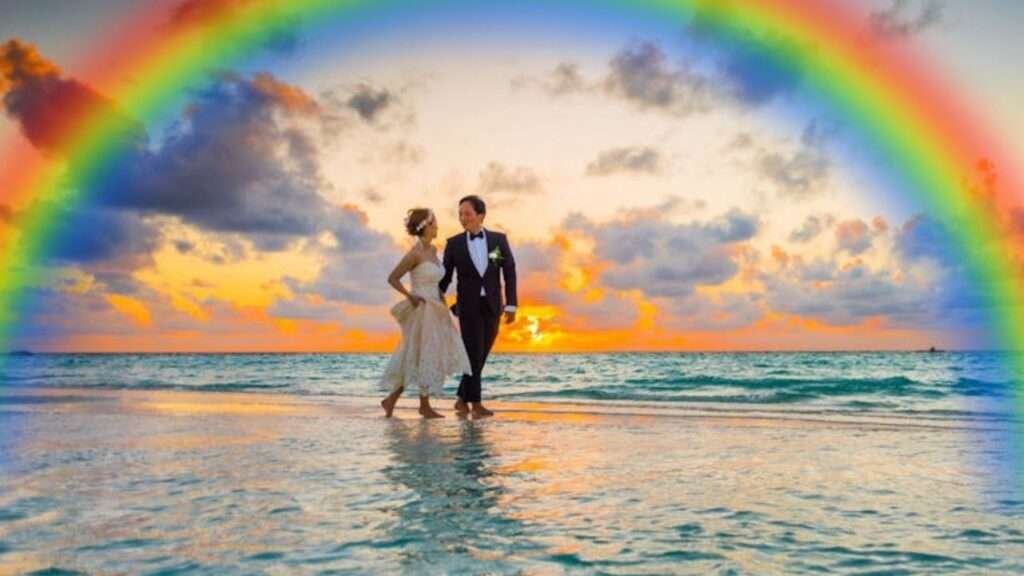
Something remarkable unfolds when two people decide to marry.
Beyond the private commitment and the legal formality, a story begins to take shape, a narrative that will be remembered, retold and ritualized.
Around that story, an entire ecosystem of creativity, craft and commerce comes alive. Having once been married, having attended many of them and spent many years since then observing how brands connect with people, I’ve come to see weddings as one of the most compelling case studies in emotional storytelling.
Not because they are commercial transactions, they transcend that, but because they reveal, in part, how narrative, identity and experience converge to create something unforgettable.
This article is not a marketing manual for reaching engaged couples, nor a guide to planning a wedding.
It’s an invitation to view the wedding industry through a different lens: as a masterclass in how brands, stories and emotions intersect to create experiences that resonate long after the moment has passed.
2. The Emotional Economy of Weddings.

Weddings occupy a singular place in human life. They are among the rare occasions where people willingly devote extraordinary resources, time, money and attention, to a single day.
Yet the day itself is only the vessel. To me, what truly matters is what it represents: a threshold, a transformation and a public declaration of private meaning.
This is why I believe weddings are fertile ground for understanding emotional connection.
Choosing a photographer is not merely a task, it is entrusting someone with the images that will carry your most precious memories forward for decades.
Selecting a venue is not simply renting a space for a defined duration, it is choosing the stage upon which a family’s most enduring stories will be told.
Every decision becomes symbolic: flowers that echo a grandmother’s garden, or a song that was playing during the couple’s first dance or was playing at the exact time they fell in love. Another good example is the toast that crystallizes joy and vulnerability in equal measure.
These choices are not about consumption; they are about memory‑making.
For businesses (goods and services providers), the implications are profound. Trust is not an accessory when you get involved with someone’s wedding, it is the very currency of the exchange.
Vendors are not selling or providing something in the traditional sense; they are becoming part of a couples most cherished memories.
That is both a responsibility and an opportunity unlike almost any other commercial interaction.
3. The Wedding Ecosystem: A Narrative Framework.
If you step back and look at the wedding industry as a whole, it resembles a story in its own right. It has a beginning, middle, and end. It features lead and supporting characters, moments of tension and release and a climactic celebration.
At the centre sit the couple, the authors and heroes of this tale.
Around them orbits a constellation of craftspeople, artists and professionals, each contributing a vital chapter.
The invitation designer sets the tone. The venue provides the setting.
The photographer preserves the visual memory. The celebrant gives voice to the emotional core. The caterer ensures abundance and welcome. Each vendor is both an independent brand and a supporting character in someone else’s story.
The most successful in this industry no doubt understand this duality instinctively. They know they are not the stars of the show, yet they also recognize that their contribution shapes how the story is remembered.
4. Invitations: Typography as Tone-Setting.
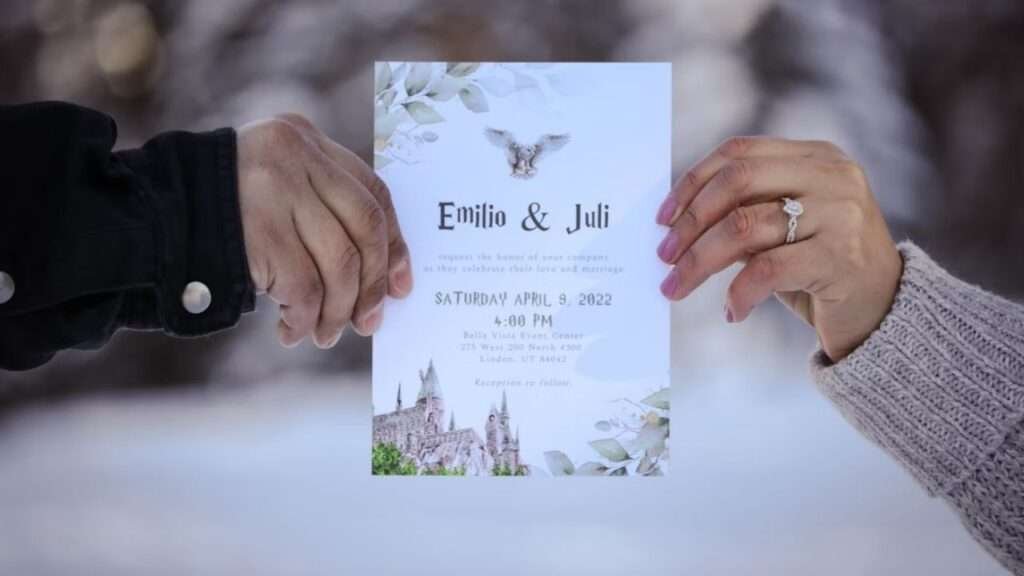
For most guests, the wedding story begins with the invitation.
Typography, paper stock, and layout form a language of their own.
A minimalist letterpress card on thick cotton whispers tradition and restraint. A vibrant, illustrated design with playful fonts signals creativity and joy.
Neither is superior; each tells a different story about the couple and the experience awaiting their guests.
This first touchpoint functions as the brand identity of the wedding.
It sets expectations, creates anticipation and signals whether the event will be formal or relaxed, traditional or unconventional, intimate or grand.
What is striking to me is that most couples do not consciously think in terms of “branding.” They follow instinct, choosing what feels right.
Yet those instincts are shaped by identity, values and the story they wish to tell about themselves. The invitation becomes a physical manifestation of that internal narrative, a prologue in paper and ink.
5. Attire: Identity, Heritage, and Transformation.
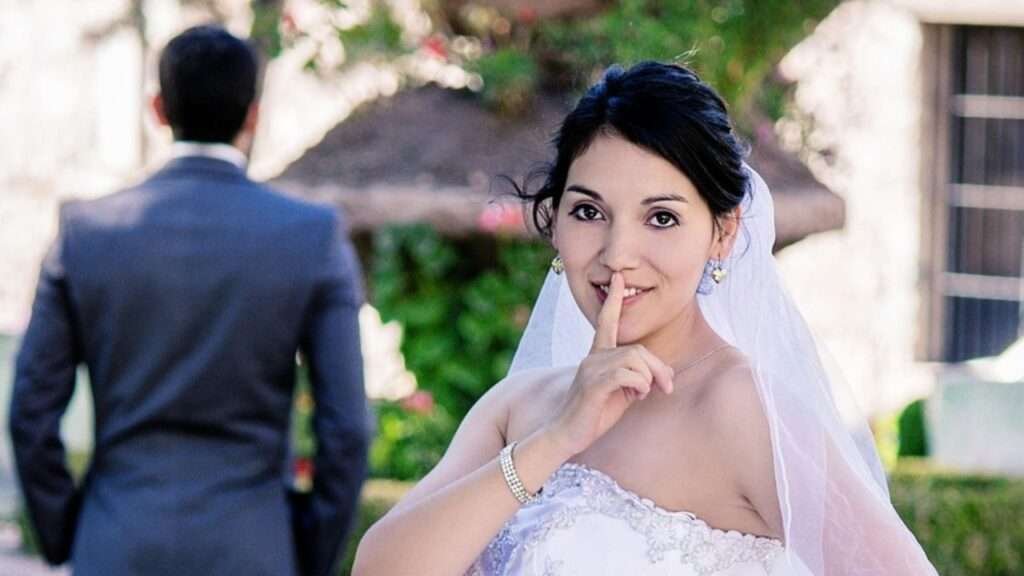
Few moments in life come with prescribed costumes, but weddings are certainly one of them. The garments worn on this most special day carry extraordinary symbolism and profound importance.
Wedding attire is where personal identity, cultural heritage, and aspirational self‑image converge. A bride may wear her grandmother’s veil, or her mother’s perfectly preserved and elegant dress, weaving continuity across generations.
A groom may don traditional attire that honours ancestry.
Some couples flip the script entirely, choosing clothing that reflects personality rather than prescribed roles. From a branding perspective, these choices communicate before a single word is spoken.
Silhouette, fabric and colour each contribute to the visual narrative. A flowing, ethereal gown suggests romance and delicacy.
A sharp, tailored suit projects confidence and sophistication. In many Asian cultures, the colour red signals joy and good fortune.
The most resonant brands in this space understand they are not merely selling dresses or suits, they are offering transformation.
They help people step into a mythic version of themselves for a single day, creating a visual identity that will be preserved in photographs and retold in family stories for generations.
6. Venue & Decor: Spatial Branding and Immersion.
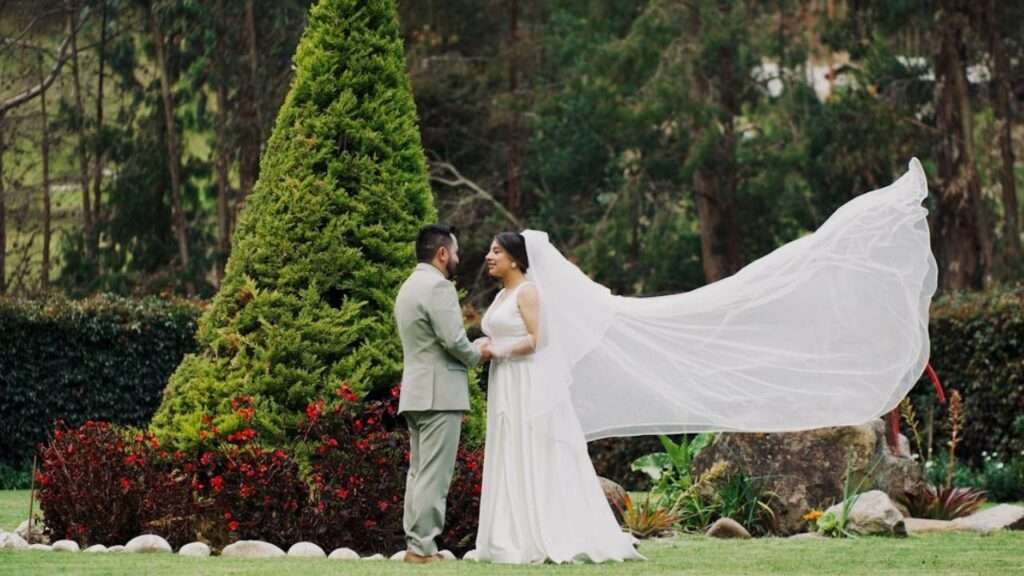
A space tells a story too, whether it is framed by four walls and a roof, written in the sands of a pristine beach, or unfolding in the quiet elegance of a backyard garden.
The moment guests enter a wedding venue, they step into a curated environment designed to evoke emotion and shape experience.
A candlelit barn with wildflower centrepieces creates a different atmosphere than a sleek urban loft with geometric installations.
A garden ceremony beneath ancient trees feels different than a beachside gathering at sunset. These choices are not merely aesthetic; they are experiential.
The best venues recognize they are not simply providing a location; they are offering a canvas for storytelling.
Décor, when done well, does more than beautify, it immerses. It transports guests into a distinct world, even if only for a few hours.
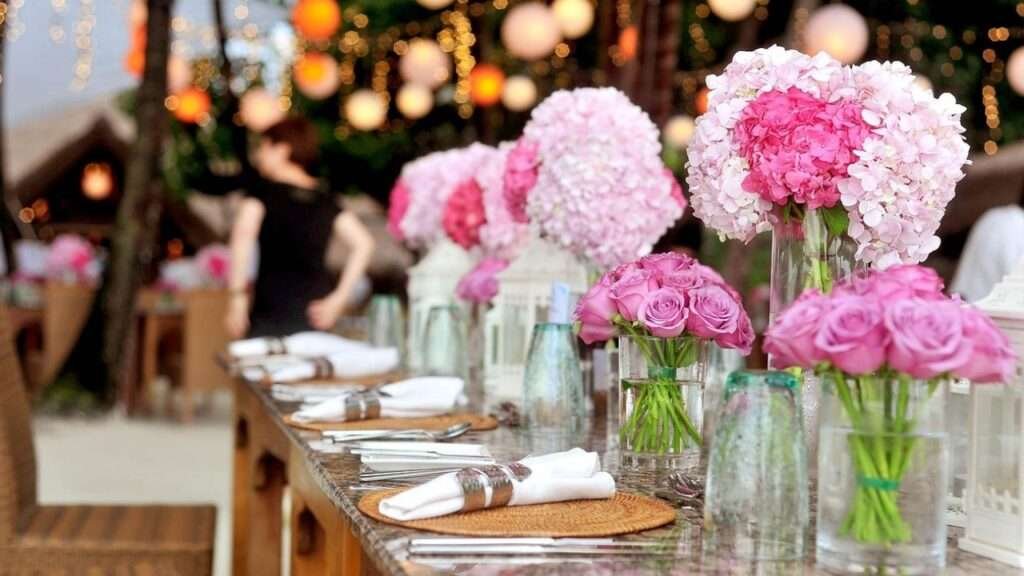
Lighting, in particular, is transformative. It can render a space intimate or expansive, warm or dramatic, magical or grounded. Florals and decorative elements add further layers of meaning: local flowers may emphasize connection to place, while colour palettes can reflect cultural traditions or personal symbolism.
When venue and décor align with the wedding’s overarching narrative, coherence emerges.
Every detail feels intentional, reinforcing the same emotional story.
Guests depart not only with memories of beauty, but with the sense of having inhabited a world designed with care and meaning.
7. Photography & Videography: Memory as Myth.
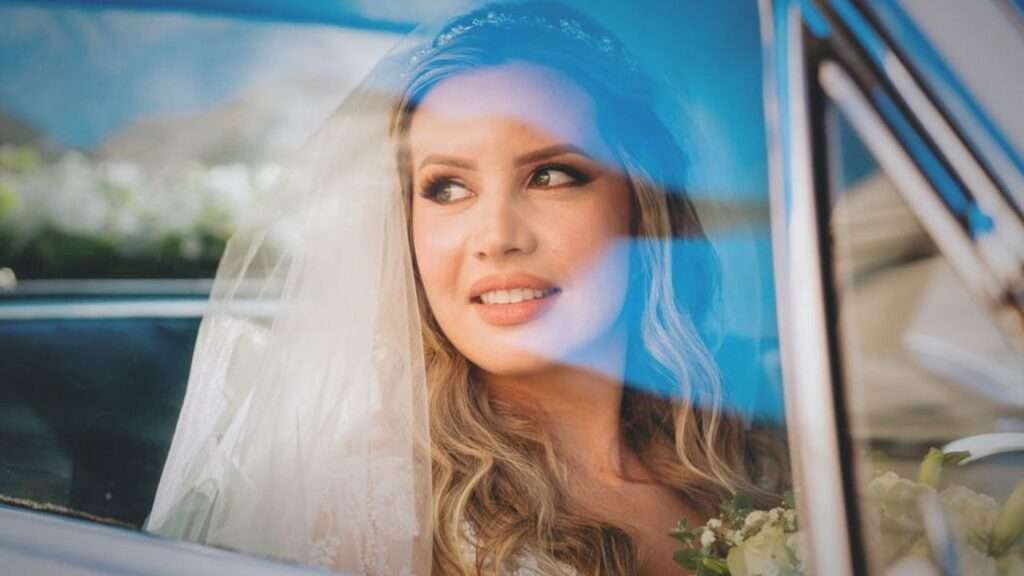
Here is where the story becomes permanent. Photographs and films are what remain after the flowers fade, the cake is gone, and the venue has hosted countless other events.
Photographers and videographers are, in many ways, the most crucial storytellers in the ecosystem. They do not simply record events; they shape how those events will be remembered. Through lens choice, editing, timing, and composition, they transform fleeting moments into a narrative with emotional arc and visual poetry.
The style a couple selects speaks volumes. Some prefer a journalistic approach—candid, spontaneous, authentic.
Others gravitate toward stylized, editorial imagery that borders on cinematic. Each choice produces a different kind of memory, a different version of the story.
What is striking is how these professionals have become brands in their own right. Their aesthetic becomes recognizable, their visual language distinct.
Couples choose them not only for technical skill but for the particular way they tell stories. In essence, they are saying: “We want our story told in your voice.”
The best in this field understand they are creating heirlooms. Their images will be seen by children and grandchildren who were not present.
They will serve as the primary evidence of how the day felt, not merely how it looked. That is both an immense responsibility and a profound opportunity to shape legacy.
8. Planners & Celebrants: Ritual Designers and Emotional Guides.
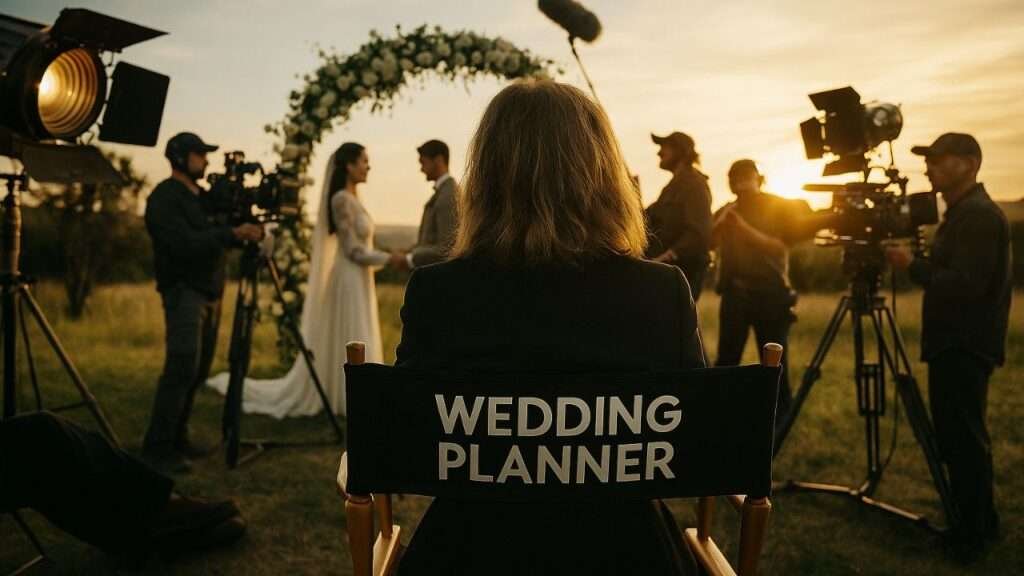
Behind the scenes, often invisible to guests but indispensable to the couple, are the planners and celebrants who architect the experience.
Wedding planners are equal parts brand strategist, producer, director, and project manager.
They help couples clarify their vision, develop the storyboard, write the scenes, create the action plan and bring the story to life with precision, allowing the couple to be more relaxed and fully present for their special day.
The best planners carry an almost therapeutic quality: they absorb stress, hold space for family dynamics and guide couples through the emotional complexity of choices that feel both intimate and monumental.
Celebrants, meanwhile, are the voice of the ceremony itself. They articulate the symbolic weight of the moment, giving language to feelings that might otherwise remain unspoken.
In many ways, they are the narrative thread that ties together the visual and experiential elements into a coherent story of meaning.
Both roles demand extraordinary emotional intelligence and trust‑building.
They work with people at a vulnerable and high‑stakes threshold, one that is highly anticipated, emotionally charged and often stressful.
The relationships they form feel less like transactions and more like partnerships. Their influence on how the wedding is experienced and remembered, cannot be overstated.
9. Gifts, Keepsakes & Packaging: Tangible Brand Echoes.

Even the smallest details carry narrative potential. Welcome bags, thank‑you notes, custom cocktail napkins, may seem minor to some people, but they extend the wedding’s story into tangible, take‑home form.
There is power in tactile storytelling. A box of locally made chocolates with a custom label becomes more than a sweet treat, it becomes a memory trigger.
A candle in the couple’s signature scent, packaged with care, creates a sensory link back to the day. Even a handwritten note of thanks continues the story beyond the event itself.
The rise of customization reflects a deeper truth: personalization strengthens emotional connection. When something feels specific to the couple, not generic or mass‑produced—it signals care and intentionality.
It says, “We thought about this. You matter to us.”
Packaging, too, plays a subtle but decisive role. Presentation shapes perception. A favour wrapped elegantly feels more significant than the same item in plain packaging.
It is not about expense, it is about coherence, thoughtfulness, and alignment with the wedding’s aesthetic and emotional tone.
10. Digital Presence: Social Media and the Wedding Brand.
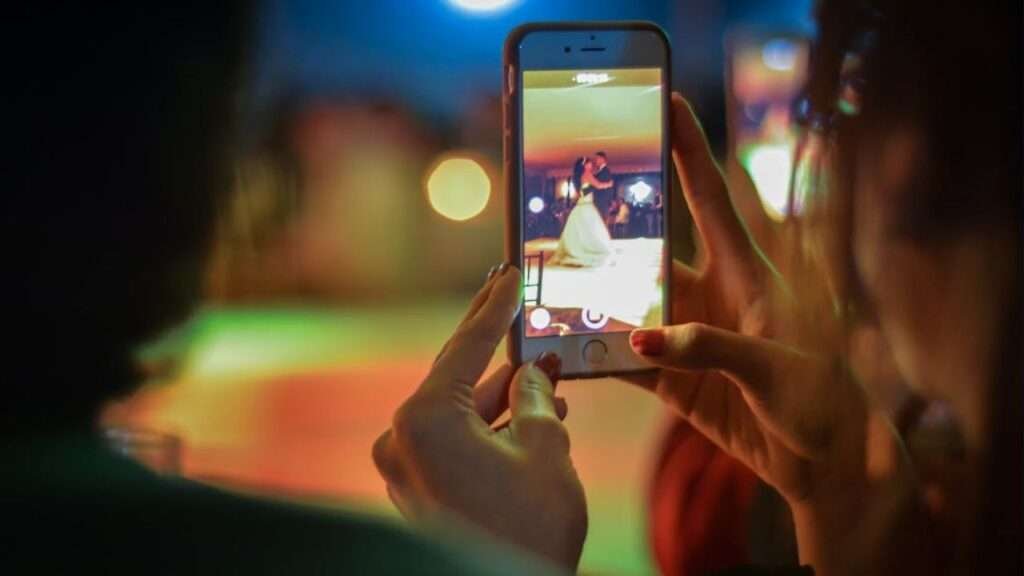
The wedding story no longer ends when the last guest departs.
For many couples, a parallel narrative unfolds online.
Social media has transformed weddings into shareable events with reach far beyond those physically present.
Engagement announcements, planning updates, sneak peeks and post‑event recaps extend the story across time and space.
Hashtags create a collective archive of the day from multiple perspectives. Instagram stories and TikTok clips offer behind‑the‑scenes glimpses that make distant friends and family feel included.
This digital layer carries profound implications. Couples are, in effect, managing a public relations campaign around their wedding, curating how their story is told to the world.
Vendors, too, become partners in that storytelling: their work is shared, tagged, and woven into their own brand narratives.
A feedback loop emerges. Pinterest and Instagram shape what couples imagine, which shapes what they request, which shapes what vendors create, which in turn shapes what is shared, influencing the next wave of couples.
The ecosystem is in constant dialogue with itself through digital channels.
The most thoughtful approach balances digital sharing with presence.
When handled well, the online narrative enhances rather than eclipses the lived experience. It becomes another layer of the story, another way to preserve, amplify, and share joy.
11. Post-Wedding Continuity: Lifecycle Branding.

Something that I believe is occasionally overlooked is that a wedding is not the end of a story, but the beginning of one.
The most perceptive vendors understand they are not serving clients for a single day, but potentially for a lifetime of chapters.
The photographer who captured the vows may later document a pregnancy announcement, newborn portraits, or family milestones.
The venue that hosted the ceremony may welcome anniversaries.
The invitation designer may be called upon for birth announcements or holiday cards.
This lifecycle approach reflects a deeper truth about branding: the strongest brands are not one‑time transactions or the one-hit wonders but recurring characters in the longer narrative of people’s lives.
They become woven into memory, trusted companions in the ongoing story.
For couples, there is comfort and joy in returning to familiar hands.
The photographer knows how to draw out their laughter.
The florist understands their aesthetic.
The planner remembers the dynamics that matter most.
These relationships become part of the fabric of their shared life.
Continuity also fuels advocacy. People recommend the vendors who have stood beside them in meaningful moments.
They become advocates not because they were persuaded, but because they lived something authentic and memorable.
12. Conclusion: Weddings as Emotional Architecture.
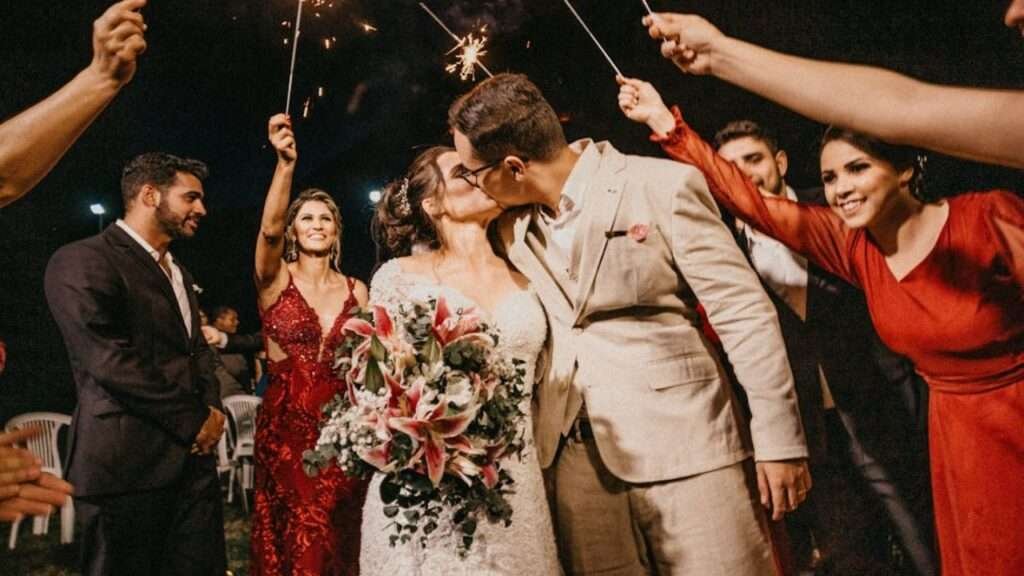
When we step back from something, distance grants perspective.
The further we move away, the wider our horizon becomes, and the more of the whole picture we can see.
So it is with the wedding industry: up close, it appears as a collection of services and details; but with distance, it reveals itself as a masterclass in how brands, stories, and emotions intersect to create resonance.
Every element we have explored, from the typography of an invitation to the way light falls in a venue to the laughter caught in a photograph, contributes to an experience that endures in memory as story.
The industry thrives not through conventional marketing, but through an intuitive understanding of what matters most during life’s thresholds.
To me, the wedding ecosystem demonstrates five principles that extend far beyond this context:
1) Emotional investment creates deeper connection: When people care intensely, their engagement reaches profound levels. Brands in emotionally significant spaces carry greater responsibility, but also greater opportunity.
2) Narrative coherence amplifies experience: The most resonant weddings are those where every element belongs to the same story—not identical, but unified by tone and intention.
3) Memory is the ultimate product: What is truly created is not flowers, food, or photographs, but memories that will be revisited for decades.
4) Trust is the essential currency: In vulnerable, high‑stakes moments, authenticity and reliability matter more than anything else.
5) The best brands enable others’ stories: They do not impose their own narrative, but provide the artistry and support that help people tell theirs more beautifully.
The wedding industry’s effectiveness lies in this recognition: people do not simply purchase products or services, they invest in experiences that help them construct the story of their lives.
And perhaps that is the deepest lesson. The most powerful branding is not about the brand at all.
It is about helping people become the protagonists of their own meaningful stories. At its best, the wedding industry does exactly that: it provides the setting, the supporting cast, and the artistry that allow two people to tell the story of their beginning together.
That is not just marketing. It is something more enduring: the widening horizon of perspective, the architecture of memory, the craft of meaning‑making, the art of creating experiences that matter.
13. Bibliography.

1)
Emotional Branding:
The New Paradigm for Connecting Brands to People — Marc
Gobe
2)
The Experience
Economy: Competing for Customer Time, Attention, and Money
— B. Joseph Pine II & James H. Gilmore
3)
Building a StoryBrand: Clarify Your Message So Customers Will Listen
— Donald Miller
4)
Lovemarks: The Future
Beyond Brands — Kevin Roberts
5)
Brand Sense: Sensory
Secrets Behind the Stuff We Buy — Martin Lindstrom
6)
How Brands Grow: What
Marketers Don’t Know — Byron Sharp
7)
Designing Brand
Identity: An Essential Guide for the Whole Branding Team —
Alina Wheeler
8)
The Art of Gathering:
How We Meet and Why It Matters — Priya Parker
9)
This Is Marketing:
You Can’t Be Seen Until You Learn to See — Seth Godin
10)
Branding That Means
Business: How to Build Enduring Bonds Between Brands, Consumers and Markets
— Matt Johnson & Tessa Misiaszek
11)
The Emotional Power of Weddings — Psychology Today, Kathryn Inman
12)
The Wedding Industry Is a Mirror of Culture — The Atlantic, Kaitlin Tiffany
13)
Why Emotional Storytelling Wins in Branding — Harvard Business Review, Keith Quesenberry
14)
The Business of Love: Inside the $60 Billion Wedding Industry
— Forbes, Rachel Arthur
15)
How Experiences Become Brands — Fast Company, Aaron Betsky
16)
Emotional Architecture in Design and Branding — Brandingmag, Magda Kay
17)
Trust as Currency in the Client–Brand Relationship —
The Dots, Harriet Minter
18)
Memory and Identity: The Role of Photography in Shaping Narrative
— National Geographic, Sarah Leen
19) From Wedding Hashtags to Legacy Creation: How Couples Brand Themselves Online — The New York Times, Emma Goldberg
20) Designing Rituals: The Intersection of Event Planning and Emotional Meaning — Brides Magazine, Sophie Moore
The Intent of This Article & Why It Matters.

This article was written to reframe the wedding industry not as a collection of services, but as a living ecosystem of emotional architecture, a constellation of brands, rituals, and memories that converge to shape one of life’s most meaningful thresholds.
It matters because weddings reveal what branding can become when it transcends promotion and enters the realm of storytelling, trust, and transformation.
It builds on the cautionary insights of The Hollow Frays in Branding: When A Brand Image Can Unravel Without Substance, showing how emotional coherence and authenticity are not luxuries but necessities in high-stakes environments.
It also echoes the aspirational tone of Target Mars And Settle For The Moon, where ambition and emotional resonance are framed as strategic imperatives.
The article’s emphasis on lifecycle branding and memory-making aligns with Climbing Every Rung Of the Brand Ladder, which explores how trust is earned through consistent, meaningful engagement.
Its focus on enabling others’ stories rather than dominating them reflects the ethos of Try Not To Leave Any Money On The Table, where orchestration and emotional intelligence drive value creation.
Finally, this piece shares a philosophical heartbeat with When Giants Forget Their Story, reminding us that even the most powerful brands falter when they lose sight of the emotional narratives they were built to serve.
At its core, this article is an invitation: to see branding not as decoration, but as emotional architecture, a way of helping people become the protagonists of their own meaningful stories. The wedding industry shows us how that’s done.
The Sweetness of Showing Up: A Living Example of Emotional Branding.
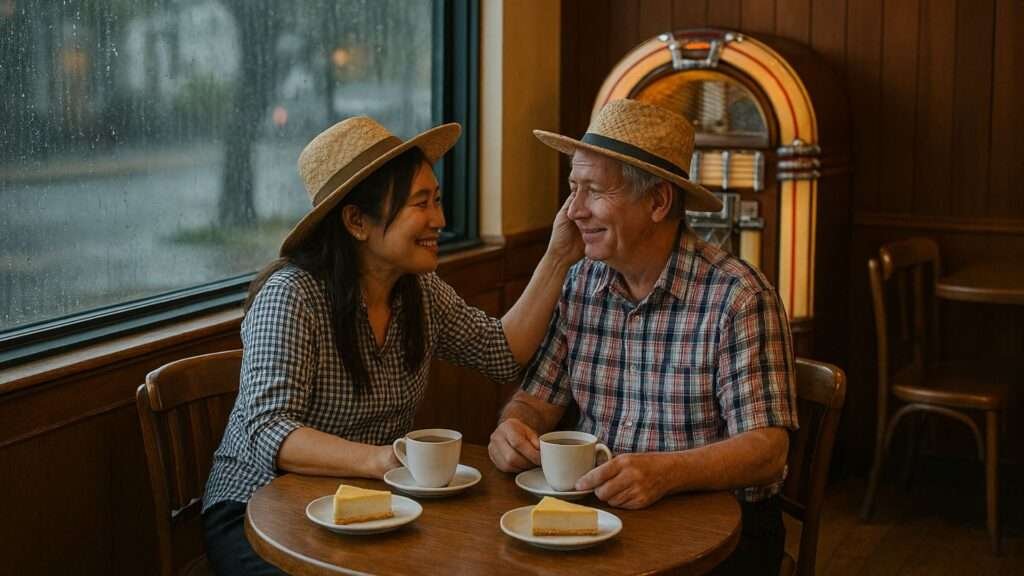
If this article has explored the wedding industry as a constellation of emotional touchpoints, then Cheesecake Brought Us Together is its quiet, lived counterpart, a story that shows what happens when branding becomes ritual, and ritual becomes legacy.
In that piece, two strangers meet by chance in a modest café on Haggart Street, drawn together by nothing more than a shared love of lemon cheesecake and coffee.
What begins as a rainy-day coincidence becomes a weekly tradition, repeated for fifty-three years.
The café, once chosen for shelter, transforms into sacred ground, a place where memory is made, trust is built, and love is quietly sustained.
This is emotional branding in its purest form. Not a campaign. Not a slogan.
Just the consistent presence of a place, a product, and a shared experience.
The café’s four walls and a roof become the architecture of a relationship. The cheesecake becomes a symbol. The ritual becomes the glue.
It’s the same principle that underpins the wedding ecosystem: vendors who show up consistently, who understand their role in someone else’s story, who create spaces where emotion can unfold naturally.
Whether it’s a florist remembering a bride’s favourite bloom, or a photographer capturing the quiet glance between newlyweds, these moments matter. They accumulate. They anchor.
Cheesecake Brought Us Together reminds us that emotional branding is not about scale, it’s about sincerity.
It’s about creating rituals that endure, spaces that feel safe, and experiences that become memory. It’s about showing up, again and again, with care and consistency. In the end, whether it’s a wedding or a café ritual, the story is the same: people remember how you made them feel.
If you do it well enough, they’ll return, not just for the product, but for the feeling. That’s the sweetness of showing up.
That’s the legacy of emotional branding.




[…] The Wedding Industry As A Branding Ecosystem: A deep dive in emotional architecture and lifecycle branding, where every touchpoint is a […]