The Global Ecosystem of Tractors And Agricultural Machinery.
Disclaimer.
This article is intended for educational and strategic insight purposes only.
The views, thoughts, opinions, and ideas expressed are those of the author and are shared in the spirit of exploration, reflection and storytelling.
They do not constitute business, financial, or legal advice.
Readers are encouraged to consult qualified professionals before making decisions related to agricultural equipment, brand strategy, or investment.
All examples, case studies, and brand references are illustrative only.
They are used to explore branding concepts across diverse farming contexts and do not imply endorsement, affiliation, or criticism of any specific company, product, or individual.
This work is offered as a lens, not a verdict on the evolving relationship between machinery, memory and meaning in agricultural life.
Article Summary.
Tractor brands are more than machines—they are cultural anchors, emotional companions, and strategic symbols of agricultural life.
This article explores how brands like John Deere, Fendt, Kubota, SAME, Massey Ferguson, and Mahindra have transcended their mechanical origins to become emblems of identity, resilience, and renewal.
Through personal reflection, historical insight, and global context, we examine how tractor branding operates at the intersection of commerce and culture.
These brands don’t just sell steel, they sell stories. They endure not by chasing trends, but by honouring legacy, listening deeply, and evolving with empathy.
Whether you’re building a brand in agriculture or any other industry, the lessons are clear:
1. Emotional imprinting shapes loyalty.
2. Heritage is leverage.
3. Simplicity builds trust.
4. Community multiplies impact.
5. And the strongest brands become part of the landscape, relived, not just remembered.
Top 5 Takeaways.
1. Tractor brands are emotional artifacts, not just mechanical assets: Loyalty is often inherited, shaped by childhood memories and generational trust.
2. Color, sound, and silhouette form a brand’s sensory signature: Farmers recognize their brand by ear, by feel, and by presence in the field.
3. Heritage and innovation must coexist: The best brands evolve without erasing, honoring the diesel rumble while embracing GPS and autonomy.
4. Community is the true engine of brand resilience: Dealer relationships, farmer clubs, and shared rituals sustain loyalty far beyond marketing.
5. Every brand has a renewal story waiting to be told: Transformation succeeds when it feels like continuity, when the past becomes a launchpad, not a liability.
Table of Contents.
1.0 Why Tractor Brands Matter.
2.0 Does Geography Shape Tractor Identity?
3.0 The Future of Farming Through Brand Innovation.
4.0 Resilience in the World Of Tractors.
5.0 The Tractor Ecosystem: Accessories, Implements And Brand Multipliers.
6.0 Heritage Meets Innovation: Balancing Tradition and Technology.
7.0 Simplicity as a Strategic Advantage.
8.0 Community as the True Engine of Loyalty.
9.0 Sensory Branding: The Sound, Feel, and Look of Tractors.
10.0 Case Studies: Transformative Branding in Agriculture.
11.0 Crafting Your Brand’s Renewal Story.
12.0 When Childhood Brand Memories Come First.
13.0 Conclusion: The Legacy of Brands That Feed and Inspire.
14.0 Bibliography.
1.0 Why Tractor Brands Matter.
When a farmer chooses a tractor, they’re not just selecting a powerful piece of farming kit, they’re choosing a companion for decades of labor, legacy, and land management.
In agricultural communities across the globe, tractor brands are more than mechanical workhorses. They are symbols of stewardship, emblems of resilience, and badges of belonging.
The green and yellow of John Deere, the orange of Kubota, the signature red of Case IH, the premium green-and-red of Fendt, these colors don’t just mark equipment. They mark identity.
They signal alignment with a philosophy of farming, a regional tradition, and a generational story. In many rural towns, a tractor isn’t just a machine, it’s a family crest on wheels.
And for some, that crest is etched in memory. I was seven when my family left the farm, but the imprint remains vivid: my father working the land with a larger SAME tractor, repairing an old plough with quiet precision, slashing paddocks in the heat, preparing fields with a sense of rhythm and care.
Our old Massey Ferguson was always nearby, smaller, humbler, but no less iconic. If I were to start a farm today, I wouldn’t need to deliberate.
I’d seek out a beautifully refurbished Massey Ferguson and a brand-new SAME. Not for their specs alone, but because they carry emotional gravity with me.
They are part of my origin story.
This kind of brand loyalty isn’t transactional, it’s ancestral.
Unlike consumer tech, where allegiance fades with each upgrade cycle, tractor preference often spans generations.
A grandfather’s Massey Ferguson may sit beside a grandson’s Mahindra, each carrying stories of droughts survived, harvests celebrated, and seasons endured.
These machines become part of the family narrative, passed down, rebuilt, repainted, remembered.
Economically, the tractor industry is vast. It powers billions in global commerce, supports intricate supply chains, and underpins the productivity of farms from hobby plots to industrial-scale operations.
But the brands that endure do so not through specs alone, they thrive by understanding the emotional terrain of farming: the pride of self-reliance, the fear of climate volatility, the hope invested in each planting, and the quiet promise to leave the land better than it was received.
Tractor branding lives at the crossroads of mechanical heritage and digital transformation.
Today’s machines carry GPS guidance, telematics and autonomous capabilities, yet they still honor the diesel rumble, the hydraulic heft, and the repairable simplicity that farmers trust.
This duality is not a contradiction, it’s a covenant. The best brands don’t abandon the past; they warmly embrace it and then evolve it.
To understand why these brands matter, we must look not just at what they build, but what they mean.
Each carries a distinct emotional tone, cultural footprint, and strategic legacy. Together, they form a living map of how machinery becomes memory.
1. John Deere: The Green-and-Gold American Legacy (Since 1837): Founded by a Vermont blacksmith who solved the prairie soil problem with a self-scouring steel plow, John Deere became synonymous with American agriculture. The green body and yellow wheels evoke nostalgia, reliability, and generational pride. Choosing Deere is often a vote for tradition—validated by the enduring slogan: “Nothing runs like a Deere.”
2. Fendt: The Quiet Power of German Precision (Since 1930): Fendt represents engineering aspiration. Known for the Vario transmission and sleek design, it’s the “Rolls Royce of tractors.” Fendt speaks to a philosophy of efficiency, control, and premium quality. Its message: “Leaders drive Fendt.”
3. Kubota: The Orange Optimism of Global Utility (Since 1890): Kubota’s compact reliability makes it the first tractor for many. With roots in Japanese engineering and a focus on accessibility, Kubota is the friendly workhorse—practical, durable, and approachable.
4. SAME: Italian Flair and Mechanical Soul (Since 1942): SAME brings mechanical purity and Mediterranean authenticity. Agile and distinctive, it’s a cult favorite for those who value craftsmanship and connection to European farming tradition. SAME is the tractor with soul.
5. Massey Ferguson: The Red Backbone of the World Farm (Since 1847): Massey Ferguson is the honest workhorse—modest, tough, and everywhere. Its legacy is built on grit and practicality. The dusty red body is a comforting time capsule, a symbol of enduring trust.
6. Mahindra: The Global Powerhouse of Resilience (Since 1962): Mahindra rose from rugged necessity to global dominance. Built on value and resilience, it empowers farmers across continents. Its brand philosophy, “Rise,” speaks to progress, self-reliance, and grit.
These aren’t just brands. They’re cultural artifacts, each carrying a philosophy of farming, a rhythm of place, and a promise to endure.
Whether it’s the nostalgic hum of a Massey, the quiet precision of a Fendt, or the soul-deep loyalty to a SAME, these machines don’t just work the land, they work their way into the story of the land itself.
2.0 Does Geography Shape Tractor Identity?
Tractor brands are born of soil, shaped by climate, and forged in the rhythms of regional farming life.
Their engineering philosophies, aesthetic choices, and cultural resonance are not abstract, they are geographic truths, embedded in the land that gave rise to them.
John Deere is the prairie’s answer to scale and endurance. Born in the American Midwest, its machines reflect the vastness of the landscape, long rows, hard winters and the economic gravity of every harvest.
The green and yellow aren’t just colours, they’re a declaration of grit, reliability and the pioneering spirit of continental agriculture.
Fendt, by contrast, is Bavaria’s precision incarnate. German farming traditions prize efficiency, longevity, and multi-generational stewardship.
Fendt tractors are engineered for tight European fields, alpine slopes and farmers who view their equipment as heirlooms.
The brand’s reputation for refinement isn’t marketing, it’s a reflection of terrain, temperament and tradition.
Kubota emerged from Japan’s compact, high-yield landscapes. In a country where every square meter matters,
Kubota mastered the art of doing more with less. Its machines are agile, ergonomic, and deeply attuned to the needs of smallholders, orchardists, and rice farmers. Kubota’s global success stems from exporting a philosophy of harmony, adaptability, and quiet strength.
Mahindra, forged in the agricultural diversity of India, represents resilience through accessibility. Its tractors are built for monsoons, dry zones, and everything in between.
Mahindra’s rise is a story of democratizing mechanization, bringing power to farmers who once relied on animals or hand tools. Its brand identity is not just affordability, it’s empowerment.
SAME carries the soul of Mediterranean terrain. Born in the hills of northern Italy, its machines are designed for steep slopes, narrow vineyards, and the complex choreography of European smallholder farming.
SAME tractors reflect a philosophy of agility, mechanical honesty, and rustic elegance. Their red-orange livery and compact stance speak of a land where farming is both art and endurance.
Massey Ferguson is a brand with dual heritage, rooted in both Canada and the United Kingdom.
It began in Ontario in 1847 as Massey Manufacturing, later merging with the UK’s Harry Ferguson Ltd. in 1953.
Ferguson’s revolutionary three-point hitch system reshaped tractor design globally, and the newly formed Massey Ferguson became a Commonwealth cornerstone.
Its machines were built for broadacre reliability and practical resilience, thriving in the paddocks of Australia, the fields of Britain, and the prairies of Canada.
Massey Ferguson’s red-and-silver design became a visual shorthand for working-class grit and mechanical trust.
Its legacy is not just national, it’s transnational, shaped by the needs of farmers across continents who demanded durability over prestige.
These brands don’t just reflect place, they carry it.
1. A Fendt’s quiet hum speaks of German engineering.
2. A John Deere’s roar echoes across American plains.
3. A Kubota’s compact silhouette fits neatly into the folds of Japanese farmland.
4. A Mahindra’s straightforward controls honour the diversity of its operators.
5. A SAME’s nimble frame dances through Italian hills.
6. A Massey Ferguson’s dusty red shell feels at home in the paddocks of New South Wales and the hedgerows of Yorkshire.
In branding, place is not just origin, it’s essence.
It shapes not only what a tractor does, but what it means.
When farmers choose machines that feel like home, it’s because they were born of similar soil, similar struggle, and similar values.
That’s not just brand alignment, it’s emotional synergy.
As these brands expand globally, the challenge is not to erase their roots, but to translate them.
The best do this not by becoming generic, but by making their specificity universally relevant.
They don’t abandon place, they carry it with pride, adapting without diluting.
3.0 The Future of Farming Through Brand Innovation.
In agriculture, vision isn’t just a corporate statement, it’s a cultural compass.
It guides engineering decisions, brand tone, and the emotional contract between machine and operator.
The strongest tractor brands don’t just respond to market shifts, they anticipate them, shaping futures that feel both bold and believable.
Vision is what turns a machine into a movement.
It’s the difference between selling horsepower and offering hope. And in the tractor industry, vision is always rooted in place, people, and purpose.
3.1 John Deere: Precision as Platform.
John Deere’s vision is expansive—transforming from a manufacturer into a data-driven ecosystem.
Its machines now steer themselves, analyse soil variability, and connect farmers to agronomic insights in real time.
Yet the brand never abandons its emotional core.
The green and yellow still signal reliability, legacy and pride.
Deere’s vision says: “We are still who we were, but we’ve become what you need.”
3.2 Fendt: Refinement as Responsibility.
Fendt’s vision is about intelligent control. It sees the future as quieter, smarter, and more sustainable.
Its innovations like the Vario transmission and energy-efficient drivetrains, aren’t just technical upgrades.
They’re philosophical statements. Fendt believes that luxury and stewardship can coexist and its machines reflect that belief.
3.3 Kubota: Utility as Uplift.
Kubota’s vision is grounded in accessibility. It imagines a future where smallholders, hobby farmers, and peri-urban growers have the same dignity and efficiency as industrial operators.
Kubota doesn’t chase prestige, it democratizes reliability, offering compact solutions that scale with ambition.
3.4 Mahindra: Resilience as Revolution.
Mahindra’s vision is about empowerment. It sees mechanization not as a luxury, but as a right. Its brand philosophy, “Rise,” speaks to farmers who’ve faced scarcity and now demand sovereignty.
Mahindra builds machines that say: “You belong in the future, too.”
3.5 SAME: Precision Without Pretense.
SAME’s vision is quiet but profound. It imagines a future where agility, mechanical honesty, and terrain-specific design remain central.
SAME doesn’t chase scale, it refines control.
Its machines feel tailored to the farmer’s hand, responsive to the land’s demands, and loyal to its Italian roots.
SAME’s vision whispers: “We don’t dominate fields, we understand them.”
3.6 Massey Ferguson: Renewal Through Reliability.
Massey Ferguson’s vision is one of faithful evolution.
After navigating economic headwinds and ownership changes, the brand has returned to its core: simplicity, durability and farmer-first design.
Its machines feel familiar even as they embrace new capabilities.
Massey’s vision isn’t flashy, it’s faithful.
It says: “We’ve been through the hard seasons. We’re here for the next.”
3.7 Four Things That Vision Reveals.
1. Vision must feel lived: Farmers trust brands that reflect their reality—not just their aspirations.
2. Vision must evolve without erasing: The strongest brands build futures that feel like continuity.
3. Vision must serve identity: Innovation succeeds when it deepens emotional connection, not replaces it.
4. Vision must invite participation: Farmers don’t just adopt technology, they co-author its meaning.
4.0 Resilience in the World Of Tractors.
In agriculture, resilience isn’t a slogan—it’s a survival trait. Farmers know this intimately: crops fail, markets collapse, weather turns cruel.
The brands they trust must reflect that same tenacity.
Tractor companies that endure aren’t those that avoid hardship—they’re the ones that absorb it, adapt, and return stronger.
Massey Ferguson is a case study in comeback grit. Once a global powerhouse, it faltered under economic pressure, ownership changes, and shifting market dynamics. However, through strategic restructuring and a return to core values durability, simplicity and farmer-first design, it rebuilt trust.
Today, Massey Ferguson stands not as a relic, but as a reminder, “Brands that survive storms earn deeper loyalty than those that never face them.”
Mahindra’s rise wasn’t born of crisis, but of contrarian courage.
While Western brands focused on high-end markets, Mahindra doubled down on affordability, accessibility, and relevance to smallholders.
Its resilience came not from recovery, but from relentless execution in overlooked spaces.
The result? A global footprint built on empowerment, not prestige.
John Deere’s digital transformation is another form of resilience, proactive rather than reactive.
By embracing precision agriculture, autonomous systems and data platforms, Deere risked disrupting its own legacy, but that risk became renewal.
It proved that resilience isn’t just about surviving, it’s about evolving before survival is threatened.
Resilience also plays out in 3 quieter ways:
1. Dealer networks that stay open through downturns.
2. Parts availability that keeps old machines running.
3. Customer service that shows up when the weather doesn’t.
These aren’t marketing features, they’re lifelines.
4 Things That Make Resilience A Branding Asset:
1. It mirrors the farmer’s reality. Brands that bend, don’t break, feel familiar.
2. It builds mythology. Comeback stories become part of the brand’s emotional architecture.
3. It earns trust. Farmers bet on brands that have proven they won’t disappear when things get hard.
4. It deepens identity. A brand that survives becomes more than a supplier—it becomes a symbol.
In farming, setbacks are inevitable.
The brands that turn those setbacks into stories of renewal don’t just survive, they become part of the cultural fabric.
They’re not just remembered, they’re revered.
5.0 The Tractor Ecosystem: Accessories, Implements And Brand Multipliers.
A tractor is never just a tractor. It’s a power source, a connector, a platform.
Its true value emerges not in isolation, but in orchestration, when it pulls a plough, powers a baler, guides a planter, or syncs with a satellite.
The strongest tractor brands understand this: they don’t sell machines, they build ecosystems.
Implements are the first layer of this ecosystem.
Ploughs, seeders, cultivators, sprayers, balers—each tool transforms the tractor into a purpose-built solution.
Some brands manufacture their own implements, ensuring seamless integration. Others partner with specialized manufacturers, creating compatibility across platforms.
The most trusted brands offer both: proprietary precision and open flexibility, allowing farmers to choose what works best for their land, crop, and philosophy.
Precision agriculture tools form the second layer.
GPS guidance, variable rate application, yield mapping, and soil sensors turn tractors into data engines.
These technologies don’t just enhance efficiency, they redefine decision-making.
A tractor becomes a thinking partner, helping farmers optimize inputs, reduce waste, and respond to real-time conditions.
Dealer networks are the third layer.
Often overlooked, but essential. A good dealer isn’t just a salesperson—they’re a lifeline. They provide parts, service, financing, and advice. They know the local soil, the regional weather, the quirks of older models.
Brands that invest in strong dealer ecosystems build trust that no marketing campaign can replicate.
Ag-tech partnerships form the fourth layer.
Satellite imagery providers, farm management platforms, financial services, and agronomic advisors all plug into the tractor’s digital spine.
The machine becomes a gateway to a broader support system, one that helps farmers plan, monitor, and grow with confidence.
Aftermarket support is the fifth layer.
Farmers need access to parts, manuals, and modification options.
Whether it’s retrofitting a sprayer, upgrading a monitor, or repairing a hydraulic line, the ecosystem must extend beyond the showroom.
Brands that support customization and longevity earn loyalty across generations.
4 Reasons Why Ecosystem Thinking Matters:
1. It multiplies value. A tractor connected to the right tools becomes exponentially more productive.
2. It deepens loyalty. Farmers stay with brands that support their full operation, not just their horsepower.
3. It creates resilience. A strong ecosystem helps farmers adapt to changing conditions, crops, and technologies.
4. It builds identity. The implements, tech, and dealer relationships become part of the farmer’s story.
In this way, tractor brands evolve from manufacturers into orchestrators of agricultural life. They don’t just sell steel, they enable systems.
They don’t just deliver machines, they deliver possibility. In doing so, they become indispensable, not just to the field, but to the future.
6.0 Heritage Meets Innovation: Balancing Tradition And Technology
Every tractor brand stands at a crossroads: one path paved with legacy, the other with innovation.
The strongest brands don’t choose between them, they walk both.
They understand that heritage is not a weight to be shed, but a foundation to build upon.
Innovation, when done with reverence, becomes not disruption, but continuity.
John Deere still carries the silhouette of the prairie, but its machines now whisper to satellites.
Fendt retains its Bavarian precision, yet its cabins resemble aircraft cockpits.
Mahindra honours mechanical simplicity while expanding into electric and autonomous platforms.
These brands are not abandoning their past, they are evolving its expression.
Farmers feel this tension acutely. They want machines they can trust, fix, and pass down. They also want tools that help them compete, adapt, and thrive.
The brands that succeed are those that don’t force a choice between nostalgia and necessity, they offer both.
3 Things That Heritage Offers:
1. Emotional resonance. A familiar engine note, a trusted control layout, a color that feels like home.
2. Cultural continuity. A brand that was there for your grandfather feels like it will be there for your grandchildren.
3. Repairability and resilience. Simpler systems that can be maintained in the field, not just in the cloud.
3 Things That Innovation Enables:
1. Efficiency and precision. GPS, telematics, and automation reduce waste and increase yield.
2. Sustainability. Smarter machines mean fewer inputs, less soil compaction, and better environmental outcomes.
3. Future viability. As climate, labour, and regulation shift, innovation becomes survival.
The art lies in knowing what to preserve and what to reimagine. A gear lever might give way to a touchscreen, but the feeling of control must remain.
A diesel engine might be replaced by electric drive, but the torque, the pull, the soul of the machine must endure.
This is not about retrofitting the past or fetishizing the future.
It’s about weaving a continuous story, one that honours the hands that built the first machines while equipping the next generation to face what’s coming.
7.0 Simplicity as a Strategic Advantage.
In farming, complexity is a cost. Every extra button, every buried menu, every unnecessary feature becomes a distraction from the work that matters.
Tractor brands that understand this don’t chase maximalism, they pursue clarity. They know that simplicity isn’t a compromise, it’s a competitive edge.
A well-designed tractor doesn’t just look clean, it feels intuitive.
The controls make sense. The interface doesn’t overwhelm. The operator, whether seasoned or new, feels confident from the first turn of the key.
In a world of rising tech sophistication, simplicity becomes a form of respect, a signal that the brand understands the farmer’s time, focus, and need for reliability.
Kubota’s compact tractors exemplify this philosophy.
Their ergonomic layouts, straightforward dashboards, and versatile attachments make them ideal for smallholders and multi-tasking operations.
Mahindra’s value-focused models strip away excess without sacrificing capability, offering farmers what they need and nothing they don’t.
Even John Deere’s high-tech platforms succeed when they make complexity feel invisible, integrating advanced features without burying the basics.
Simplicity also means repairability.
Farmers value machines they can fix in the field, not just diagnose in the cloud.
A tractor that requires a software technician for every adjustment erodes trust.
Brands that preserve mechanical accessibility, even as they innovate, build loyalty that lasts.
4 Reasons Why Simplicity Wins:
1. It builds confidence. Farmers don’t want to second-guess their equipment.
2. It reduces downtime. Fewer systems mean fewer failure points.
3. It lowers training barriers. New operators can learn quickly, safely, and effectively.
4. It honors tradition. Simplicity connects modern machines to the intuitive feel of legacy models.
In branding, simplicity cuts through noise. It clarifies purpose. It signals integrity. In agriculture, where every minute matters and every decision carries weight, simplicity becomes not just a design choice, but a philosophy of service.
8.0 Community as the True Engine of Loyalty
Tractor brands don’t just build machines, they build movements. In farming communities, loyalty isn’t earned through spec sheets alone.
It’s forged through relationships, rituals, and shared experience. A tractor becomes part of the family story, the regional identity, the rhythm of life.
Walk through any rural town and you’ll see it: the John Deere cap worn like a badge of honour, the Kubota parked proudly at the edge of a paddock, the Massey Ferguson passed down through generations.
These aren’t just tools, they’re tribal markers, signalling who you are, where you come from, and what you believe about the land.
Dealer relationships deepen this bond. A trusted dealer isn’t just a vendor—they’re a neighbour, a mechanic, a mentor.
They know your soil, your seasons, your history. Brands that invest in dealer ecosystems aren’t just building distribution, they’re building community infrastructure.
Tractor clubs, vintage restoration groups, and online forums extend the brand’s reach into culture.
Farmers swap stories, troubleshoot repairs, and celebrate milestones.
A rebuilt 1960s International Harvester isn’t just a machine, it’s a memory made tangible. A photo of a child on their first ride in a new Kubota isn’t just cute, it’s continuity captured.
This emotional dimension is what makes tractor branding unique. In most industries, customers are buyers.
In agriculture, they’re participants, co-authors of the brand’s story.
The strongest brands understand this and invite farmers into the narrative.
They don’t just sell, they listen, honour, and evolve alongside the people they serve.
4 Reasons Why Community Is the True Customer:
1. It sustains loyalty. Farmers stick with brands that feel like family.
2. It amplifies advocacy. Word-of-mouth in farming circles carries more weight than any ad campaign.
3. It shapes identity. A tractor brand becomes part of how farmers see themselves—and how others see them.
4. It builds resilience. In hard times, community support can keep a brand alive.
In this way, tractor brands become more than commercial entities.
They become cultural institutions, woven into the fabric of rural life, carried forward through stories, seasons, and shared belief.
9.0 Sensory Branding: The Sound, Feel, and Look of Tractors
Before a farmer reads the spec sheet, they hear the engine. Before they calculate torque, they feel the clutch.
Before they compare features, they recognize the silhouette cresting the hill. Tractor brands don’t just live in spreadsheets, they live in the senses.
Sound is memory. The low, confident rumble of a John Deere.
The crisp mechanical rhythm of a Fendt. The high-revving urgency of a compact Kubota. These aren’t just auditory cues, they’re emotional triggers.
A farmer can identify their brand by ear, even from across a paddock. That sound becomes part of the landscape, part of the season, part of the story.
Touch is trust. The resistance of a lever. The weight of a steering wheel.
The way a seat cradles the spine after ten hours in the field.
These tactile experiences shape perception more than any brochure. A machine that feels right becomes an extension of the body, an ally, not just a tool.
Sight is identity. The colour, the stance, the proportions. A Fendt looks like precision. A Mahindra looks like grit.
A Case IH looks like muscle. These visual cues are not accidental, they’re cultivated. Farmers don’t just see their tractors—they see themselves in them.
Sensory branding is what makes a machine unforgettable.
It’s why a farmer might keep an old Massey Ferguson in the shed long after it’s been replaced, because it still sounds like their father’s voice, still smells like harvest, still feels like home.
4 Reasons Why Sensory Branding Matters:
1. It creates emotional anchors. Senses trigger memory, and memory builds loyalty.
2. It differentiates in a crowded market. Specs can be copied. Sensory identity cannot.
3. It deepens brand embodiment. The machine becomes more than a product—it becomes a presence.
4. It sustains legacy. A brand that sounds, feels, and looks consistent across generations becomes timeless.
In a world of digital dashboards and algorithmic optimization, the brands that endure are those that still speak to the senses.
Because in farming, trust isn’t just earned through performance, it’s felt in the bones, heard in the soil, and seen in the silhouette against the setting sun.
10.0 Case Studies: Transformative Branding in Agriculture.
Some tractor brands don’t just evolve—they redefine what it means to belong, to adapt, and to lead.
Their stories offer more than market insight, they offer narrative proof that transformation, when grounded in heritage and guided by vision, can create movements that endure.
10.1 John Deere: From Prairie Steel to Precision Platform.
John Deere began as a symbol of Midwestern grit—machines built to conquer vast fields and harsh seasons.
However, its transformation into a digital powerhouse has redefined the brand’s role in agriculture.
Through acquisitions, R&D, and bold investment in precision technology, Deere shifted from selling tractors to orchestrating data ecosystems.
Its machines now steer themselves, analyze soil variability, and connect farmers to agronomic insights in real time.
Yet the brand never abandoned its emotional core, the green and yellow still signal reliability, legacy, and pride.
Deere’s success lies in its ability to say: “We are still who we were—but we’ve become what you need.”
10.2 Mahindra: Mechanization as Empowerment.
Mahindra’s rise wasn’t built on prestige, it was built on purpose.
In India, where millions of farmers lacked access to mechanization, Mahindra offered durable, affordable tractors that changed lives.
Its brand identity became synonymous with uplift: enabling smallholders to scale, diversify, and thrive.
Globally, Mahindra expanded by listening, not imposing.
In the U.S., it built trust through dealer relationships and community engagement.
In Africa, it adapted to local conditions and needs.
Mahindra’s transformation wasn’t about chasing innovation, it was about democratizing it. Its brand became a promise: “You belong in the future, too.”
10.3 Fendt: Engineering Prestige into Emotional Loyalty.
Fendt didn’t just build tractors—it built aspiration. Emerging from Bavaria’s meticulous farming culture, Fendt positioned itself as the premium choice: precision, refinement, and longevity.
Its transformation came through integration, not isolation.
By embracing smart tech, intuitive controls, and sustainability features, Fendt made innovation feel like luxury.
Its machines are quiet, efficient, and deeply considered.
Farmers who choose Fendt aren’t just buying performance, they’re buying identity. The brand’s message is clear: “Excellence isn’t elitist, it’s earned.”
10.4 SAME: Precision Born in the Hills of Italy.
SAME (Società Accomandita Motori Endotermici) emerged from the rugged terrain of northern Italy, where farming demanded agility, durability, and mechanical ingenuity. From its early innovations in four-wheel drive to its reputation for fuel-efficient engines, SAME built its brand on engineering that respected the land.
Its tractors were designed for steep slopes, tight vineyards, and the complex choreography of European smallholder farming.
SAME didn’t chase scale, it refined control. Its transformation came through integration into the SDF Group, where it retained its identity while gaining access to broader innovation pipelines.
Today, SAME represents a philosophy of precision without pretense, machines that feel tailored to the farmer’s hand, responsive to the land’s demands and loyal to the brand’s Italian roots. Its story is one of quiet excellence.
“We don’t dominate fields, we understand them.”
10.5 Massey Ferguson: Rebuilding Trust Through Resilience.
Massey Ferguson’s journey is one of survival, reinvention, and return. Once a global leader, the brand faced economic headwinds, ownership changes, and strategic missteps that threatened its legacy.
However, Massey Ferguson didn’t disappear, it recalibrated.
Under AGCO’s stewardship, the brand returned to its core: durability, simplicity, and farmer-first design.
It modernized its line-up without abandoning its mechanical soul, offering intuitive machines that felt familiar even as they embraced new capabilities.
Massey Ferguson’s comeback wasn’t flashy, it was faithful.
It listened to farmers, rebuilt dealer trust, and re-earned its place in the shed. Its message is clear: “We’ve been through the hard seasons. We’re here for the next.”
10.6 Four Things These Case Studies Reveal.
1. Transformation must honour origin. Each brand evolved without erasing its roots.
2. Innovation must serve identity. Tech succeeds when it deepens emotional connection, not replaces it.
3. Community is the multiplier. Dealer networks, cultural relevance, and farmer trust amplify every strategic move.
4. Narrative is strategy. These brands didn’t just change—they told stories that made change feel inevitable, personal, and shared.
11.0 Crafting Your Brand’s Renewal Story
Every enduring brand must face the moment: when the market shifts, the audience evolves, and the old story no longer carries the future.
Renewal isn’t about abandoning what came before, it’s about reclaiming relevance. Tractor brands show us how this is done: by honouring heritage, embracing change, and narrating transformation with clarity and conviction.
Whether you’re a manufacturer, a service provider, or a regional enterprise, the principles of agricultural brand renewal apply.
Because at its core, renewal is not a tactic, it’s a story arc and every brand has the power to shape its next chapter.
11.1 The Renewal Framework: Five Steps to Evolve Without Erasing.
1. Reaffirm Your Origin: Start with what made you matter. What values, geography, or community shaped your early identity? Renewal begins by anchoring in truth, not nostalgia, but essence.
2. Listen for Change: What are your customers facing now? What anxieties, aspirations, or operational shifts define their present? Renewal requires empathy before strategy.
3. Declare a Vision: Articulate a future that feels both bold and believable. Tractor brands succeed when they say: “We see what’s coming and we’re building for it.”
4. Build the Bridge: Don’t leap, connect. Show how your legacy supports your evolution. Use familiar language, trusted relationships, and gradual integration to make change feel safe.
5. Invite Participation: Let your community co-author the journey. Farmers don’t just buy tractors, they shape the brand. Your customers, partners, and employees should feel the same agency.
11.2 Renewal Is Not Rebranding.
Rebranding changes the logo. Renewal changes the relationship. It’s deeper, slower, and more enduring. It’s not about being seen differently, it’s about being felt differently.
Why Renewal Matters:
1. Markets are fluid. What worked yesterday may not survive tomorrow.
2. Trust is fragile. Renewal rebuilds it through transparency and action.
3. Legacy is leverage. When used wisely, your past becomes your most powerful asset.
4. Community is watching. Renewal done well becomes a rallying point—not just for customers, but for culture.
12.0 When Childhood Brand Memories Come First.
Some brands don’t just earn loyalty, they inherit it.
Long before a farmer signs off on a new tractor, the decision has often already been made, shaped by memory, not marketing.
Sound is memory’s first messenger.
It engages the brain’s emotional and sensory centres, triggering vivid recollections. The low rumble of an engine at dawn, the rhythmic chug of a machine in the distance, these aren’t just noises. They’re time machines.
Vision, our dominant sense, encodes memory through the visual cortex and hippocampus. A silhouette on the horizon, the curve of a bonnet, the colour of a chassis, these images don’t just register. They imprint.
Touch completes the contract. The resistance of a clutch, the weight of a lever, the worn-smooth gear knob, these tactile cues become embodied memories, trusted through repetition and time.
With that in mind, consider the childhood memory of a tractor coughing to life at first light. The sight of a father repairing a plough in the timber log shed.
The strain of pressing down on a stubborn clutch.
The feel of a seat that cradled generations.
These aren’t just recollections, they’re emotional contracts, written in childhood and honoured in adulthood. And when a brand is tied to those moments, the connection carries immeasurable weight.
For many, the first machines they buy aren’t the newest or most advanced—they’re the ones that feel like home.
A refurbished Massey Ferguson, still bearing the patina of history.
A brand-new SAME, echoing the silhouette of the one that once slashed paddocks under a parent’s steady hand.
These choices aren’t rational, they’re ritual. They’re about continuity, belonging, and the quiet promise to carry something forward.
This phenomenon, where brand preference is shaped by formative experience, is especially powerful in agriculture.
Farming isn’t just a profession, it’s a lifestyle, a lineage, a landscape of memory.
The machines that populate that landscape become part of the story.
When the time comes to build a farm of one’s own, those machines are not optional, they’re ancestral companions.
4 Reasons Why Childhood Brands Endure:
1. They carry emotional weight: The brand isn’t just familiar—it’s sacred.
2. They symbolize family legacy: Choosing the same machine is choosing to honour the past.
3. They feel trustworthy: If it worked for Dad, it’ll work for me.
4. They shape identity: The brand becomes part of who you are—not just what you operate.
This is why tractor branding must go beyond features and specs.
It must speak to memory, to myth, to the invisible threads that connect generations. For many farmers, the shed isn’t just a place to store equipment, it’s a place to store legacy.
13.0 Conclusion: The Legacy of Brands That Feed and Inspire.
Tractor brands are more than manufacturers—they are memory keepers, innovation partners, and cultural anchors.
Across continents and generations, they have cultivated loyalty not through marketing alone, but through meaning: the sound of an engine at sunrise, the feel of soil tilled with care, the sight of a trusted silhouette returning to the shed.
Their success lies in a rare balance between heritage and progress, simplicity and sophistication, individual identity and ecosystem orchestration.
They endure because they understand that farming is not just a business.
It’s a lineage. A landscape. A life.
From the hills of Bavaria to the plains of Iowa, from the rice fields of Japan to the paddocks of Australia, these brands have become part of the human story, symbols of resilience, renewal, and rootedness.
They don’t just power agriculture. They amplify its soul.
For those building brands in any industry, the lesson is quite clear:
1. Honour your origin.
2. Listen deeply.
3. Innovate with empathy.
4. Build community, not just customer bases.
5. And above all, make your brand feel like home.
The strongest brands don’t just endure, they embed themselves in the rhythms of daily life, becoming memory, meaning and muscle.
Final Thoughts: Why Farming Matters So Incredibly Much.
To finish off this article, here are 15 essential facts about the global farming industry, why it matters today and why it will continue to shape our future:
1. The global farming industry is projected to reach $5 trillion annually by 2025, underscoring its vast economic footprint—from food production to employment and GDP, especially in developing economies.
2. Over one in eight people worldwide work directly in agriculture, making it a primary livelihood source across Africa, Asia-Pacific, and Latin America.
3. With a global population nearing 8 billion, farming must meet rising demand for food and commodities—sustainably, or risk widespread hunger and instability.
4. Farming occupies nearly half of the world’s habitable land, making its practices central to biodiversity, soil health, and climate resilience.
5. Agriculture contributes roughly 26–28% of global greenhouse gas emissions, with methane from livestock and rice production as major contributors.
6. Precision agriculture, automation, and data analytics are revolutionizing productivity—helping farmers manage inputs, reduce waste, and optimize yield.
7. Sustainable and regenerative practices are gaining ground, as farmers respond to pressures around soil degradation, water scarcity, and ecosystem loss.
8. Organic farming now exceeds $150 billion in global market value, reflecting consumer demand for chemical-free, environmentally conscious food.
9. Climate change poses immediate risks to farming, with droughts, floods, and temperature extremes threatening crop yields and food security.
10. Farmers face rising costs, labor shortages, and supply chain complexity, requiring adaptive strategies and tech-driven solutions to stay viable.
11. Agriculture remains foundational to nutrition and income, especially in lower-income regions where farming supports families and local economies.
12. Food production must increase by 70% by 2050 to feed nearly 10 billion people—placing unprecedented pressure on farming systems.
13. Women make up 43% of the global agricultural workforce, playing vital roles in food production and rural community leadership.
14. Supply chain resilience and digital traceability are now critical for protecting producers and consumers, ensuring food safety and transparency.
15. The future of farming lies in integration, balancing environmental, economic, and social goals to sustain productivity, preserve resources, and uplift rural livelihoods.
Farming isn’t just about food, it’s about identity, continuity and survival.
It’s the quiet force that feeds nations, shapes landscapes and carries legacy forward and as this article has shown, the brands that serve it must do the same.
Farming is an essential service. So the next time you’re at the farmers market and bump into a local farmer, just say: ‘Thanks for doing what you do, mate.”
14.0 Bibliography.
1. Tractor & Farming Heritage: Sustainable Agriculture 2025 – Farmonaut
2. Kubota – Designing for the Future – WIPO
3. The Fascinating Story of Fendt: Innovation, Success and Sustainability – Reekov
4. How the Agricultural Machinery Industry Works – Umbrex
5. Australia’s Agricultural Machinery & Technology Ecosystem – FarmTable
6. Precision Agriculture – AGCO Corporation
7. Mahindra Tractor Evolution – TractorEvolution.Com – TractorEvolution
8. Leading Tractor Brands Revolutionizing Agricultural in Australia – Realm Group
9. John Deere | Run With Us | Case Study – Agency Compile
10. Uncover the Mahindra Tractor Logo: A Brand Story | Mahindra – Mahindra Brand Story
11. Blue Tractor Brand: A Blend of Tradition and Innovation – Qilu Machinery
12. The Tractor Ecosystem and Precision Tools – Precision Ag Earth
13. How Childhood Brand Memories Influence Loyalty – Ag Equipment Intelligence
14. Massey Ferguson’s Innovations – Massey Ferguson
15. Early Australian Tractor Joins National Museum’s Collection – National Museum of Australia
16. Tractor Sales Slide in 2025 as Market Experiences “Long Covid” – Farm Machinery Sales
17. Fendt Tractors: Launching Innovation on the Farm – My Farm Life
18. John Deere Case Study – Shift One Digital – Shift One Digital
19. Nearly Two-Thirds of Farmers Identify as ‘Brand Loyal’ – Ag Equipment Intelligence
20. Precision Agriculture unveils new brand campaign – Precision Ag Earth
21. Mahindra Tractor Logo and Brand Identity – Mahindra Brand Story
22. Blue Tractor Brand Traditional and Innovation Blend – Qilu Machinery
23. Leading Tractor Brands Revolutionizing Agricultural in Australia – Realm Group
24. Massey Ferguson Brand Resilience and Innovation – Massey Ferguson
25. Kubota Ag Equipment – Brand Philosophy – Kubota Australia
26. Australia’s Agricultural Machinery & Technology Ecosystem – FarmTable
27. How the Agricultural Machinery Industry Works – Umbrex
28. Tractor & Farming Heritage: Sustainable Agriculture 2025 – Farmonaut
29. Unlock Heritage Tractor Harrison: Sustainable Farming – Heritage Tractor Harrison
30. Early Australian Tractor Joins National Museum’s Collection – National Museum of Australia
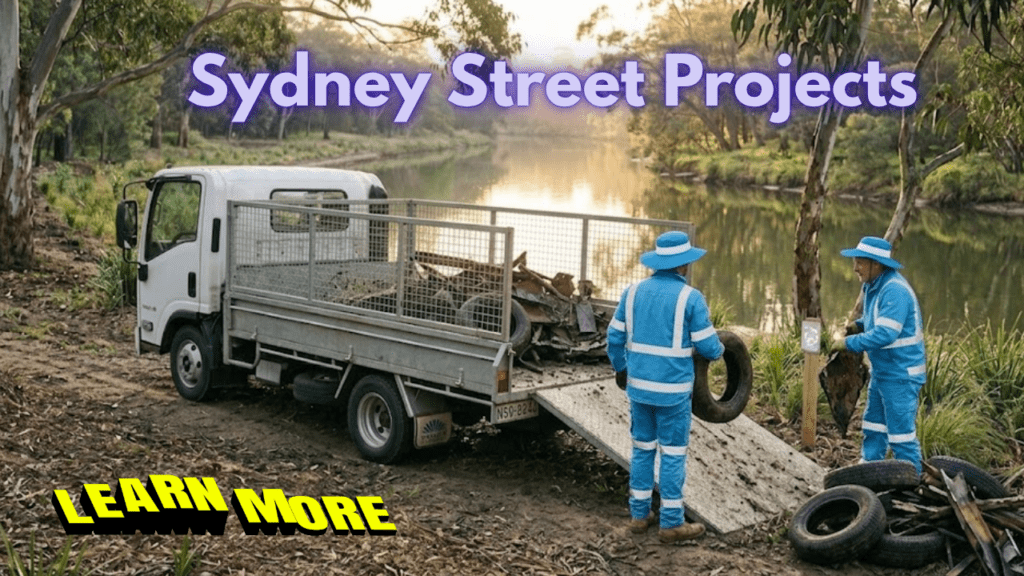
About The Above Free Advertisement for Sydney
Street Projects, located in Muswellbrook, NSW.
Sydney Street Projects
(SSP) is a community‑driven social enterprise dedicated to building practical
skills, local capability and real employment pathways for young people and jobseekers
in the Upper Hunter.
Owned & Operated by local businessman Justin Carter, they focus on hands‑on work, supported training, and
meaningful projects that strengthen both individuals and the region.
SSP provides structured work placements, guided learning, and real‑world experience across a range of practical tasks, from property maintenance to community projects, helping participants gain confidence, discipline and employable skills.
Their approach is simple: meet people where they are, give them the
tools to grow and create opportunities that lead to long‑term stability.
In a world where regional communities often lose talent to the cities, SSP is committed to keeping skills, pride and opportunity in Muswellbrook and surrounding towns.
They believe in second chances, steady progress and the dignity of real
work.
Every project they take on is a step toward a stronger, more resilient
local workforce.