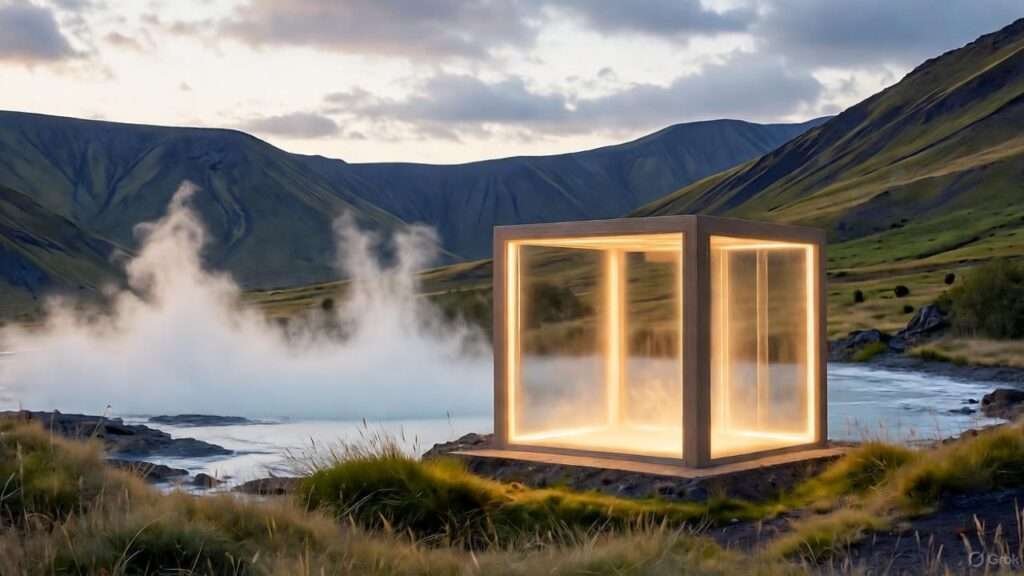
Mapping The Vivid Architecture Of Emotional Branding.
Disclaimer.
This article serves as a conceptual lens, not a prescriptive guide.
It is intended for thoughtful reflection and strategic inspiration, not direct replication or implementation.
The ideas, insights, and examples presented here are designed to stimulate discussion around emotional branding as a dynamic, evolving practice shaped by empathy, cultural context, and human-centered design.
It is not a one-size-fits-all formula.
All references to brands and real-world examples are illustrative only.
They do not imply endorsement, affiliation, partnership, or critique.
They are drawn from public observation and strategic interpretation—not proprietary data.
The opinions expressed are solely those of the author, informed by storytelling, industry trends, and strategic analysis.
This content does not constitute professional business, legal, or financial advice. Readers are encouraged to consult qualified experts for tailored guidance.
Where external research or data is incorporated, sources are cited; otherwise, this work relies on the author’s interpretive expertise. It is intended for marketing professionals, brand strategists, and creative thinkers seeking to foster deeper emotional connections in their work.
Ultimately, this article advocates for brands that prioritize human resonance—brands that foster empathy and authenticity over mere functionality or performance.
Article Summary.
Emotional branding is no longer a niche strategy; it’s the backbone of modern brand architecture.
In a saturated marketplace, consumers don’t just buy products; they seek connection, meaning, and identity.
This article explores how brands can build emotional resonance through storytelling, sensory design, community, and authenticity.
From Iceland’s geothermal serenity to India’s bottled nostalgia, we examine how emotional branding transforms businesses into movements.
The goal is not just loyalty, it’s legacy.
Top 5 Takeaways.
1. Emotional branding is architecture, not ornament. It must be designed intentionally, layer by layer.
2. Storytelling is the cornerstone. Brands that narrate meaning build deeper, more durable connections.
3. Sensory design matters. Emotion lives in texture, color, sound, and space—not just words.
4. Authenticity and consistency are non-negotiable. Emotional resonance collapses without trust.
5. Emotional branding turns customers into participants. The strongest brands are co-authored by their communities.
Table of Contents.
1.0 What Is Emotional Branding Architecture?
2.0 Why Emotion Outperforms Function in Brand Loyalty.
3.0 The Four Pillars: Story, Values, Triggers, Authenticity.
4.0 Designing for Feeling: Sensory Branding and Experience.
5.0 Consistency as Emotional Glue.
6.0 Ten Case Studies From Around The World.
7.0 Emotional Branding in the Digital Age.
8.0 Implementing Emotional Branding in Strategy.
9.0 Measuring Emotional Impact.
10.0 Conclusion: From Transaction to Transformation.
11.0 From Blueprint To Practice.
12.0 Bibliography.
1.0 What Is Emotional Branding Architecture?

Emotional branding is not a campaign, it’s a construct.
It’s the deliberate design of a brand’s identity around human emotion rather than functional features.
It asks not “What does this product do?” but “How does it make people feel?”
Think of emotional branding as architecture. Not the scaffolding of sub-brands and product lines, but the invisible framework of feeling, story, and meaning that holds everything together.
It’s what turns a business from a logo into a living personality.
At its core, emotional branding is built on empathy. It requires understanding not just what your audience needs, but what they yearn for, comfort, pride, nostalgia and belonging.
These emotional undercurrents define the long-term bond between brand and audience.
In a world where logic is abundant but sustained attention over thirty seconds is scarce, emotion is the differentiator.
Brands that build emotional architecture don’t just attract, they anchor.
They become part of someone’s story.
2.0 Why Emotion Outperforms Function in Brand Loyalty.

Functionality gets you noticed. Emotion gets you remembered.
In a world of feature parity and endless choice, the question is no longer “What does this product do?” but “How does it make me feel?”
Emotional branding shifts the focus from performance to perception, from specs to story, from transaction to transformation.
Consumers don’t form loyalty through logic, they form it through feeling.
A product may solve a problem, but a brand that evokes pride, nostalgia, or belonging becomes part of someone’s identity.
That’s the difference between a purchase and a preference.
Consider the difference between a generic notebook and one from Traveller’s Company. The former is paper.
The latter is a passport to imperfection, curiosity, and analog adventure.
The emotional resonance turns a commodity into a companion.
Emotion also creates stickiness. Functional benefits can be replicated. Emotional bonds cannot. A competitor can match your price, your features, even your design, but they cannot replicate the feeling you evoke.
This is why brands like Paper Boat thrive.
Their drinks aren’t just beverages, they’re bottled memories.
Tamarind, rose milk, mango, each flavour is a portal to childhood summers. Customers return not for hydration, but for recollection.
Emotion also drives advocacy. People don’t share specs, they share stories.
A brand that makes someone feel seen, heard, or inspired becomes part of their personal narrative. They don’t just use it, they evangelize it.
In the age of digital saturation, emotional branding is not a luxury, it’s a necessity. It’s what cuts through the noise, what lingers after the scroll, what turns a moment of attention into a lifetime of loyalty.
Because in the end, people may forget what you said, what you sold, or what you promised. But they won’t forget how you made them feel.
3.0 The Four Pillars: Story, Values, Triggers, Authenticity.

Emotional branding is not built on slogans, it’s built on structure.
At the heart of that structure are four foundational pillars: story, values, emotional triggers, and authenticity.
These are not tactics. They are the load-bearing beams of emotional architecture. Remove one, and the whole structure wobbles.
3.1 Story: The Emotional Blueprint.
A brand without a story is a product. A brand with a story is a companion. Storytelling is how we make sense of the world and how brands make themselves memorable.
The best brand stories aren’t about the company. They’re about the customer’s journey, with the brand as a guide, a mirror, or a memory.
Traveler’s Company doesn’t sell notebooks. It sells the romance of imperfection. Each journal is a vessel for curiosity, nostalgia, and analog adventure.
The story isn’t paper, it’s pilgrimage.
3.2 Values: The Moral Compass.
Values are not what a brand says, it’s what it chooses.
What it funds. What it refuses. What it stands for when no one is watching.
Kalevala Jewelry, born to support Finnish women during wartime, still weaves empowerment into every piece.
Its values aren’t a tagline, they’re a legacy.
When values are clear, customers don’t just buy they belong.
3.3 Emotional Triggers: The Spark.
Emotion is not a byproduct—it’s the point. Great brands know which emotional chords they’re here to strike.
Joy. Pride. Longing. Rebellion.
Paper Boat doesn’t just sell juice, it sells childhood.
Each flavor is a time machine.
The emotional trigger isn’t taste, it’s memory.
3.4 Authenticity: The Anchor.
In an age of filters and fabrication, authenticity is the rarest currency. It’s not about being raw, it’s about being true.
Woodstock Brewery in South Africa doesn’t posture. It paints its walls with local stories, sponsors open-air cinema nights and brews community into every pint.
Its emotional anchor isn’t product, it’s place.
Together, these four pillars form the emotional load-bearing frame of a brand. They don’t just support loyalty, they invite it.
When a brand’s story resonates, its values align, its triggers connect, and its authenticity holds—what you’ve built isn’t just a brand. It’s a bond.
4.0 Designing for Feeling: Sensory Branding and Experience.
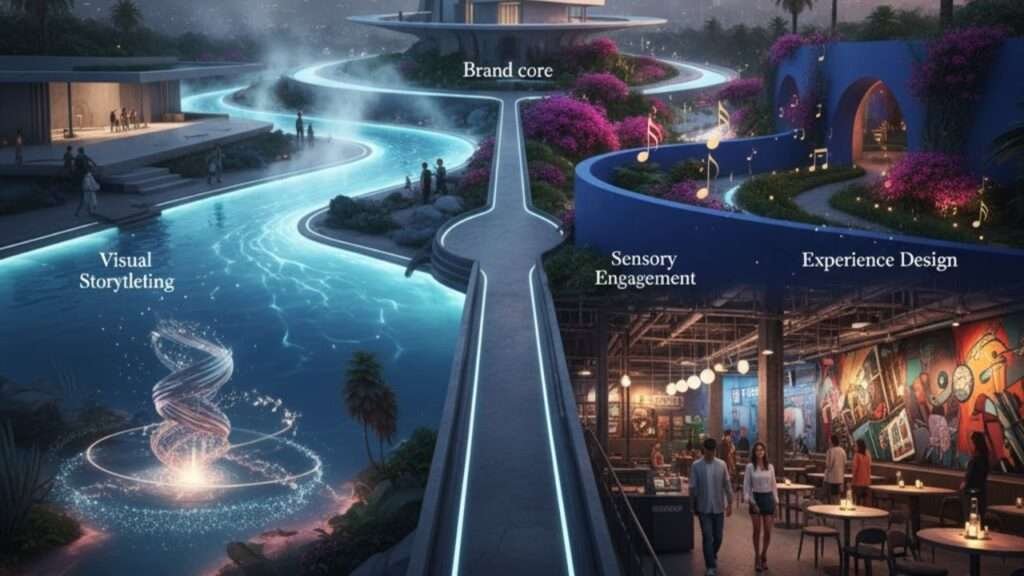
Emotion doesn’t live in logic, it lives in texture, colour, sound, and space.
To build emotional resonance, brands must design for feeling, not just function. This means choreographing every sensory and symbolic detail to reflect the brand’s emotional core.
From the scent of a store to the curve of a logo, sensory branding is how emotion becomes tangible.
4.1 Visual Storytelling.
Iceland’s Blue Lagoon Spa doesn’t just sell relaxation, it embodies it.
Mist, water, silence. Its architecture, colour palette, and typography mirror the geothermal landscape.
The brand identity is not just visual, it’s visceral.
4.2 Sensory Engagement.
In Morocco, Yves Saint Laurent’s Jardin Majorelle is more than a brand extension, it’s a pilgrimage.
Cobalt-blue walls, exotic scents, and ambient music create a multi-sensory experience that reinforces the brand’s emotional promise: artistic escape and romantic immersion.
4.3 Experience Design.
Greyhound Café in Thailand translates the edginess of Bangkok street fashion into its dining experience.
Industrial interiors, local art, and avant-garde plating make customers feel like they’re part of a creative movement, not just eating a meal.
Sensory branding is not decoration, it’s emotional choreography.
It’s how a brand moves through the body before it reaches the brain.
When done well, sensory design creates emotional memory.
A scent that lingers. A texture that comforts.
A sound that signals belonging.
These cues become part of the brand’s emotional architecture—subtle, subconscious, and unforgettable.
But sensory branding must be intentional. Random aesthetics confuse. Inconsistent tone fractures trust. Every detail must echo the brand’s emotional blueprint. Because in the end, people don’t just remember what they saw.
They remember how it felt.
5.0 Consistency as Emotional Glue.

Emotion fades when consistency fails.
In emotional branding, consistency is the glue that holds the architecture together. It’s what transforms scattered moments into a coherent experience. Without it, even the most powerful story or sensory design begins to unravel.
Consistency isn’t just about matching fonts or colours, it’s about emotional continuity.
Every touchpoint, from packaging to customer service, must echo the same tone, values and emotional cadence.
Consider Denmark’s Skagen. Its minimalist watches, muted photography, and understated voice have remained remarkably consistent for decades.
The brand doesn’t chase trends, it cultivates trust. Customers know exactly what it stands for: calm, timeless Scandinavian beauty.
Inconsistency, by contrast, breeds doubt. A brand that feels playful on social media but cold in customer service sends mixed signals.
A brand that preaches sustainability but ships with excessive plastic erodes its own credibility. Emotional resonance collapses when the experience feels fractured.
Consistency also reinforces identity. When a brand speaks with one voice across time and space, it becomes recognizable, not just visually, but emotionally.
It feels familiar. Reliable. Safe.
But consistency must be authentic, not robotic.
It’s not about repetition, it’s about alignment.
A brand can evolve, experiment, and surprise, but the emotional core must remain intact. Think of consistency as the rhythm beneath the melody.
It’s what makes the music feel whole.
Because in the end, emotional branding isn’t just about what you say, it’s more about what people expect you to say and how you make them feel every time you show up.
6.0 Ten Case Studies From Around The World.

Emotional branding isn’t the domain of global titans alone. It often thrives most powerfully in smaller, purposeful brands that act with quiet conviction.
These companies build enduring connections not through aggressive marketing, but through emotional truth, authenticity, design and human stories that echo deeper meaning.
Their brand architectures are lived, not just described—each one a small masterpiece of emotional resonance.
6.1 Kalevala Jewelry (Finland).
Born in 1937 amid national hardship, Kalevala Jewelry was conceived to empower Finnish women during wartime recovery. Its very existence reflects resilience and cultural pride. Each piece carries the story of Finland’s independence, translated into bronze, silver, and gold. The emotional core of Kalevala lies not in luxury but in legacy—the idea that beauty becomes meaningful when shaped by purpose.
Every campaign, workshop, and retail space echoes a shared value: empowerment through heritage. The brand’s storytelling bridges generations, reminding wearers that the jewelry they choose also carries history, craftsmanship, and collective strength.
6.2 Woodstock Brewery (South Africa).
At the heart of Cape Town’s creative district, Woodstock Brewery thrives as both a beer brand and a social hub. It channels a neighborhood ethos—diverse, inclusive, and bursting with art and laughter. Beyond brewing, it curates local art exhibitions, partners with grassroots initiatives, and transforms its tasting rooms into open-air cinemas.
Its emotional foundation is togetherness. Every pint connects real people in real spaces, reflecting post-apartheid South Africa’s drive for unity through creativity. In Woodstock’s world, the product supports a culture of belonging where craft and community blend seamlessly.
6.3 Traveler’s Company (Japan).
Traveler’s Company reawakens appreciation for slowness and imperfection in an age of speed. Its iconic Traveler’s Notebook celebrates scratches, smudges, and handwriting as marks of soul, not mistakes.
Rooted in Japanese wabi-sabi philosophy, the brand invites reflection and mindful journeying.
Each store and campaign evokes quiet exploration, vintage trains, well-worn maps, journals filled with reflection.
The company doesn’t sell stationery; it sells emotional space for contemplation, helping customers romanticize the analog journey in a digital world.
6.4 Paper Boat (India).
Paper Boat turns simple beverages into powerful vessels of emotion.
By reviving the childhood tastes of tamarind, rose milk, and mango, it reconnects urban customers with their earliest memories of home.
Its identity bridges nostalgia and modernity, soft pastel packaging, illustrated storytelling, and honest communication that feels personal.
The emotional trigger isn’t thirst, it’s time travel.
Each pouch revives a cultural emotion: the innocence of summer vacations and the shared joy of local flavours.
Paper Boat’s brand strength lies in empathy, its ability to make memory itself a product.
6.5 Aesop (Australia).
Aesop’s success stems from transforming ordinary self-care into philosophical ritual.
Founded in Melbourne, the brand redefines what skincare can mean, intellectual, calm, and design-led.
Each store is an architectural performance: reclaimed woods, subtle lighting, and apothecary minimalism frame products that speak softly but powerfully.
Its communication style embraces introspection rather than persuasion, with literary references and essays replacing slogans. The result is an aura of cultured stillness.
Aesop’s emotional architecture is built around mindfulness, restraint, and the sophistication of thought made tangible.
6.6 Blue Lagoon Spa (Iceland).
Emerging from an otherworldly lava field, Blue Lagoon Spa fuses natural wonder with human care. Its emotional blueprint combines purity, renewal, and elemental design. Every aspect—from water’s milky opacity to architecturally restrained interiors—reflects Iceland’s dialogue between nature and modernity.
Marketing materials use silence as strategy: minimal copy, serene color palettes, and soundscapes of soft geothermal echo. Visitors associate the brand not with tourism, but transformation. Blue Lagoon’s brand promise isn’t relaxation—it’s rebirth.
6.7 Jardin Majorelle (Morocco).
Jardin Majorelle is more than a garden, it’s Yves Saint Laurent’s emotional refuge turned living brand. The space combines cobalt walls, palm shadows, and tranquil fountains into a synesthetic experience of art and colour.
Visitors enter not a museum but a feeling—serenity framed by sensory richness.
Its emotional essence lies in artistic escape: the capacity of place to transport one emotionally.
As a brand extension, it enriches Saint Laurent’s identity by embodying timelessness and the beauty of restraint.
Jardin Majorelle proves that a space, too, can be a story.
6.8 Innocent Drinks (UK).
Innocent built one of the world’s most beloved beverage brands.
They did this with humour and honesty, not hype.
Its tone, a blend of childlike wit and conscientious care, invites smiles even on packaging labels.
The brand’s minimalist design, transparent sourcing, and charitable foundation all reinforce the same emotional message: goodness can be simple.
Community engagement, environmental initiatives, and joyful tone create trust.
Customers don’t just enjoy the drinks; they enjoy the idea that corporate kindness still exists.
Innocent’s emotional core is happiness with integrity.
6.9 Greyhound Café (Thailand).
Greyhound Café reinterprets Bangkok’s lively street fashion and urban creativity into culinary design.
Founded by a fashion label, the café turns dining into an aesthetic statement: industrial-chic interiors, local art walls and menus that fuse,
Thai tradition with cosmopolitan flair.
It embodies creative rebellion, food as self-expression.
The emotional effect is empowerment through taste and aesthetics: customers feel part of a fashionable movement, not just a meal.
Greyhound Café proves emotional branding can make lifestyle itself the product.
6.10 Skagen (Denmark).
Skagen personifies Scandinavian serenity. Its watches and accessories marry precision with poetic simplicity, reflecting Denmark’s coastal calm and minimalist ideals.
Decades of consistent tone, muted colours, and understated storytelling have earned deep emotional trust.
Skagen’s emotional brand value lies in quiet reliability, a reassurance that design doesn’t need excess to endure.
It connects timekeeping with mindfulness, turning modern minimalism into emotional comfort.
7.0 Emotional Branding in the Digital Age.

Where once emotional branding lived in storefronts, packaging, and print, it now unfolds across feeds, forums, and frictionless clicks.
Digital platforms have become the new commons, where brands are not just seen, but felt, shared, questioned, and co-authored in real time.
In this landscape, emotional branding is no longer a monologue, it’s a conversation.
7.1 From Broadcast to Belonging.
On platforms like Instagram, Reddit, LinkedIn, Tumblr, X, Pinterest, YouTube, TikTok, and Discord, brands don’t just tell stories, they host them.
They create spaces where customers become participants, not just purchasers. A well-timed comment, a behind-the-scenes video, a user-generated post—these are the new rituals of emotional connection.
When done well, digital platforms become mirrors of brand health. Engagement isn’t vanity, it’s intimacy. A like is a nod. A share is an endorsement. A comment is a conversation.
7.2 Consistency Under Pressure.
But digital also tests cohesion. A brand’s tone, values, and visuals must remain emotionally consistent across every channel.
A warm, human voice on Instagram must not become robotic in email. A promise made in a tweet must be honoured in customer support.
Inconsistency is amplified online. One off-brand post can fracture trust.
One tone-deaf reply can unravel years of goodwill. Emotional branding in the digital age demands discipline, empathy, and speed.
7.3 Real-Time Resonance.
Digital platforms also allow for real-time emotional calibration. Brands can listen, learn, and adapt. They can respond to cultural moments, celebrate community milestones, and acknowledge pain with immediacy and care.
But this responsiveness must be rooted in authenticity, not opportunism. Audiences can sense when a brand is chasing relevance rather than living its values.
7.4 The Algorithm of Emotion.
In the digital age, emotional branding is both amplified and algorithmic.
The most resonant stories rise. The most human brands win.
Because in a world of infinite scroll, the brands that endure are not the loudest, they’re the ones that feel closest.
8.0 Implementing Emotional Branding in Strategy.

Emotional branding is not a campaign, it’s a commitment.
To implement it effectively, brands must move beyond inspiration and into integration. This means embedding emotional resonance into every layer of strategy, from research and messaging to design and experience.
8.1 Define Your Emotional Core.
Start with a single question: What emotion do we want to evoke?
Wonder. Pride. Calm. Nostalgia. Empowerment.
This is your emotional north star. It should guide every decision, from product design to tone of voice.
Emotional branding begins not with what you sell, but with how you want people to feel.
8.2 Map Your Emotional Touchpoints.
Every interaction is an opportunity to reinforce your emotional core.
Website. Packaging. Social media. Customer service. These are not just functional moments, they’re emotional cues.
Audit each touchpoint: Does it reflect your chosen emotion? Does it feel aligned, intentional, and human?
8.3 Design for Feeling, Not Just Function.
Use sensory and symbolic cues to evoke emotion. Colour, texture, sound, scent—these are tools of emotional architecture.
A warm tone in copy. A nostalgic visual palette. A tactile un-boxing experience.
Design should not just look good—it should feel right.
8.4 Evolve Authentically.
Emotional branding is a relationship, not a monument. It must grow with your audience. Stay true to your emotional core, but allow your story to evolve.
Authenticity means showing up consistently, even as you adapt. It’s not about being perfect, it’s about being real.
8.5 Listen, Learn, Adjust.
Use qualitative research—interviews, focus groups, sentiment analysis—to understand your audience’s emotional landscape. What do they yearn for? What do they fear? What makes them feel seen?
Emotional branding is not static. It’s a dialogue.
Implementing emotional branding means building a brand that feels like a mirror, not a megaphone. It’s not about telling people what to think—it’s about helping them feel understood.
Because when strategy is rooted in empathy, and execution is guided by emotion, branding becomes more than business.
It becomes bonding.
9.0 Measuring Emotional Impact.

Emotion is intangible, but its effects are not.
To build emotional architecture that endures, brands must learn to measure resonance.
Not with cold metrics alone, but with tools that capture warmth, memory, and meaning. Emotional branding is not immune to analysis, it demands it.
9.1 Beyond Clicks and Conversions.
Traditional KPIs—click-through rates, conversions, bounce rates—tell you what happened. They don’t tell you why.
Emotional branding requires deeper diagnostics:
1. Sentiment analysis: What emotional tone dominates your mentions, comments, and reviews?
2. Brand perception surveys: What feelings do customers associate with your brand?
3. Customer storytelling: What narratives do people share about your product or service?
These are not vanity metrics. They are emotional mirrors.
9.2 Behavioural Indicators.
Emotion shapes behaviour. Look for signs of emotional engagement:
1. Repeat purchases driven by nostalgia or trust.
2. User-generated content that reflects personal connection.
3. Advocacy and referrals rooted in pride or belonging.
When customers become storytellers, you’ve moved beyond transaction into transformation.
9.3 Qualitative Research.
Numbers matter, but stories reveal.
Use interviews, focus groups, and ethnographic observation to understand the emotional landscape.
What do your customers yearn for? What makes them feel seen? What moments matter most?
Emotional branding is not just about what you say, it’s about what people remember.
9.4 Emotional KPIs.
Consider tracking:
1. Emotional recall: Can customers describe how your brand makes them feel?
2. Emotional alignment: Do internal teams understand and express the brand’s emotional core?
3. Emotional consistency: Is the brand’s tone and experience coherent across channels and time?
These indicators reveal whether your emotional architecture is holding or hollowing.
Measuring emotional impact is not about reducing feeling to data, it’s about honouring emotion with insight.
Because the strongest brands don’t just evoke emotion, they understand it, track it, and evolve with it.
10.0 Conclusion: From Transaction to Transformation.

Emotional branding is
not a trend, it’s a threshold.
It marks the shift from selling products to shaping meaning.
From chasing attention to cultivating affection.
From transactional
logic to transformational connection.
Brands that master emotional architecture don’t just win market share, they win mindshare.
They become part of someone’s story,
someone’s memory, someone’s identity.
This is not soft
strategy. It’s structural advantage.
Emotional resonance drives loyalty, advocacy, and resilience. It turns
customers into co-authors. It turns brands into movements.
But emotional
branding must be earned. It
requires empathy, consistency, and courage. It demands that brands show up with
clarity, speak with feeling, and listen with humility.
The future belongs to
brands that feel human. Brands
that evoke, reflect, and remember. Brands that build emotional architecture not
as ornament, but as foundation.
So take a moment to
audit your own brand.
1.
Are you building walls of
logic or bridges of feeling?
2.
Are you chasing
performance or cultivating presence?
3. Are you designing for function or for feeling?
Because in the end, the strongest brands don’t just sell, they stay with us for a very long time.
11.0 From Blueprint To Practice.
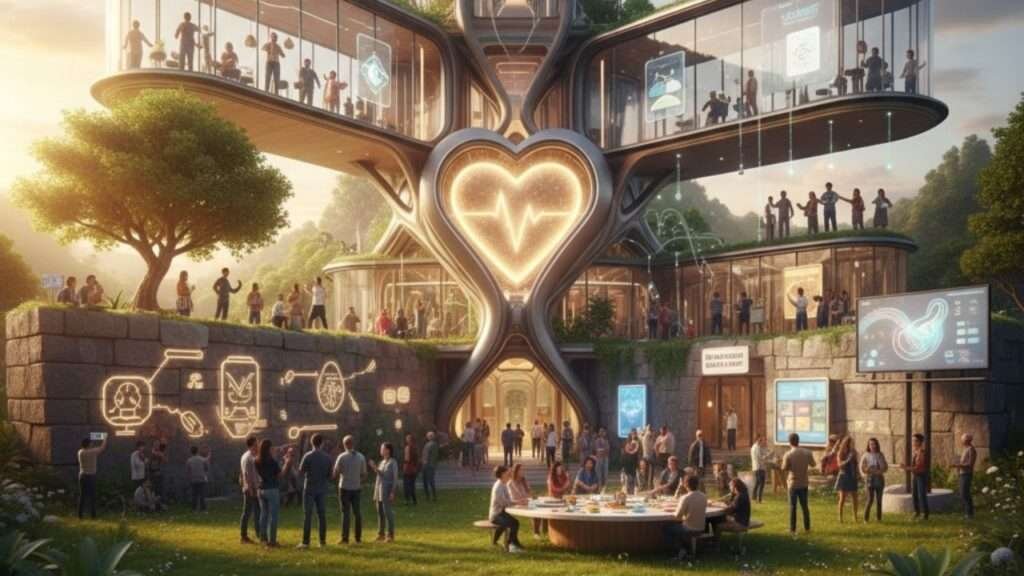
Ideas only matter when they are lived.
The
architecture of emotional branding is not a sketch pinned to the wall, it is a
structure that must be inhabited, tested, and maintained.
Concepts,
no matter how elegant, remain inert until they encounter the friction of
reality.
This
section translates blueprint into practice, offering leaders and brand stewards
a framework for embedding emotional resonance in ways that are both strategic
and tangible.
Emotional
branding is not decoration applied after the fact, it is foundation, framing,
and finish.
It is why
customers return, why employees stay, and why brands endure cultural shifts
without losing their soul.
What
follows is a five-part framework: the essential practices that operationalise
emotional architecture.
Each is a
critical juncture where emotion must be embedded, protected, and expressed.
Together, they transform philosophy into performance.
11.1 The Five Key Applications.
11.1.1 Foundation:
Values as Load-Bearing Walls.
Values
are not what you say—they are what you choose when no one is watching.
They
create coherence, guide decisions, and prevent erosion.
a)
Build
clearly: Define 3–5 core values
in plain, specific language.
b)
Embed
operationally: Let values shape hiring,
partnerships, and crisis response.
c)
Audit
regularly: Ask where you are living
them, performing them, or compromising them.
d)
Communicate
consistently: Show values through
action, not slogans.
Example:
Patagonia’s activism is not a campaign—it is constitutional. Its values act as
the load-bearing walls of the brand.
11.1.2 Design
Language: Consistency Across Touchpoints.
A house
with mismatched rooms feels disorienting. So does a brand with fractured cues.
a)
Codify
the grammar: Document not just logos
and colors, but tone, rituals, and sensory cues.
b)
Train for
fluency: Everyone who touches the
brand must speak the same emotional language.
c)
Audit
touchpoints: Map the journey and
close cracks in coherence.
Example:
Apple’s minimalist design language has remained coherent for decades,
compounding into one of the world’s most valuable emotional architectures.
11.1.3 Community
Atriums: Spaces for Belonging.
The
strongest architecture includes spaces where people gather—not just to consume,
but to co‑create.
a)
Design
for participation: Invite
contribution, not just attention.
b)
Facilitate
connection: Create rituals,
hashtags, and traditions that foster belonging.
c)
Show up
authentically: Listen more than you
broadcast.
Example:
Glossier built loyalty by treating customers as collaborators, turning its
community into a living extension of the brand.
11.1.4 Adaptive
Renovations: Iteration Without Losing Form.
Buildings need maintenance. So do brands. The
art is to evolve without erasing identity.
a)
Anchor in
the emotional core: Update aesthetics,
not ethos.
b)
Communicate
continuity: Bring your community
along when you change.
c)
Test
before scaling: Renovate in stages, not
demolitions.
Example:
Burberry modernised its aesthetic while preserving its British soul, proving
that renovation can be renewal, not betrayal.
11.1.5 Stewardship:
Maintenance as Leadership.
A
building without caretakers decays. Brands without stewards drift.
a)
Measure
what matters: Track emotional health,
not just revenue.
b)
Protect
the values: Resist compromises that
fracture integrity.
c)
Invest in
continuity: Train new leaders in the
brand’s emotional history.
d)
Model the
emotion: Leaders must embody the
brand’s promise.
Example:
Patek Philippe’s philosophy, “You never actually own a Patek Philippe. You
merely look after it for the next generation” is stewardship made visible.
11.2 Bringing It All Together
These below
five practices are not steps but interlocking supports:
1)
Values give direction.
2)
Design
language gives coherence.
3)
Community gives connection.
4)
Adaptation gives relevance.
5)
Stewardship gives endurance.
Together,
they transform emotional branding from concept into culture, from blueprint
into building, from abstraction into lived experience.
The
brands that master this framework don’t just survive, they shape markets.
1)
They don’t just attract
customers, they cultivate believers.
2)
They don’t just occupy
space, they create places people want to inhabit.
Because
in the end, emotional branding is not about being remembered.
It is about being felt, deeply, consistently and enduringly.
That requires more than inspiration. It requires practice.
12.0 Bibliography.

1. Emotional Branding: The New Paradigm for Connecting Brands to People – Marc Gobé
2. Brand Sense: Build Powerful Brands Through Touch, Taste, Smell, Sight, and Sound – Martin Lindstrom
3. The Brand Gap: How to Bridge the Distance Between Business Strategy and Design – Marty Neumeier
4. How Brands Become Icons: The Principles of Cultural Branding – Douglas B. Holt
5. Building Strong Brands – David A. Aaker
6. Designing Brand Identity: An Essential Guide for the Whole Branding Team – Alina Wheeler
7. Start With Why: How Great Leaders Inspire Everyone to Take Action – Simon Sinek
8. Lovemarks: The Future Beyond Brands – Kevin Roberts
9. Branding: In Five and a Half Steps – Michael Johnson
10. The Hero and the Outlaw: Building Extraordinary Brands Through the Power of Archetypes – Margaret Mark and Carol S. Pearson
11. Decoded: The Science Behind Why We Buy – Phil Barden
12. On Brand – Alison Taylor
13. The Experience Economy – B. Joseph Pine II and James H. Gilmore
14. Inspired by Design: Systemic Lessons from the Arts for the Study of Organizational Change and Development – Mara Einstein
15. Contagious: How to Build Word of Mouth in the Digital Age – Jonah Berger
16. The Power of Emotional Branding in Modern Marketing – Forbes Agency Council
17. Why Emotional Branding is the Future of Marketing – Harvard Business Review
18. The Science of Storytelling: Why Stories Make You Feel More Connected to Brands – Psychology Today
19. Brand Experience: Connecting Through the Senses – Adweek
20. How Nostalgia Shapes Brand Loyalty – Fast Company
21. Aesop: The Design of Calm Intelligence – Dezeen
22. The Emotional Connection Between Brands and Consumers – Neuromarketing
23. How to Design for Emotion: Practical Insights for UX and Brand Design – UX Collective
24. Emotional Drivers of Brand Loyalty – McKinsey & Company
25. Reimagining Authenticity in Modern Branding – WARC
26. Building Brands Through Human-Centered Design – Interaction Design Foundation
27. How Brand Consistency Builds Trust and Loyalty – Brandingmag
28. The Future of Sensory Branding in a Digital World – The Drum
29. Measuring Emotional Engagement in Digital Environments – Smart Insights
30. Emotional Branding Through Experience Design – Adobe XD Ideas