The Live Music Industry As A High Performing Brand Ecosystem.
Disclaimer.
This article is provided solely for informational and educational purposes.
The perspectives, interpretations, and analyses expressed herein reflect the author’s independent observations of the live music industry and its intersections with branding practices.
Nothing in this publication should be construed as business, financial, legal, or professional advice.
Readers are encouraged to conduct their own research and seek guidance from qualified professionals before making any decisions based on the ideas discussed.
Any brands, businesses, venues, or case studies referenced are included strictly for illustrative purposes. Their mention does not imply endorsement, recommendation, criticism or affiliation.
Article Summary.
Live music stands as one of the most powerful and emotionally charged branding ecosystems in modern culture.
Unlike the passive consumption of recorded tracks, live performances immerse audiences in multi-sensory experiences that forge enduring bonds between artists, fans, venues, and brands.
This article explores how the live music ecosystem operates as a narrative framework, artists as protagonists, fans as co-authors and brands as supporting characters, each contributing to a larger cultural story.
From iconic venues that become destinations in their own right to merchandise that functions as emotional souvenirs, every element of the live experience offers opportunities for authentic brand engagement.
The analysis highlights how spatial design, genuine partnerships, digital amplification, and post-event continuity combine to create impressions that resonate long after the final encore.
By understanding these dynamics, we see why live music remains an unparalleled platform for building cultural relevance, fostering community and transforming fleeting performances into lasting identity markers.
Top 5 Takeaways.
1. Emotion is the true currency: Fans invest passion, identity and loyalty alongside money, creating emotional economies that transcend transactional consumer relationships.
2. Live music is a co-authored story: Artists lead as protagonists, fans shape the narrative through participation and brands succeed only when they play authentic supporting roles.
3. Venues are more than stages, they’re brands: Spatial design, atmosphere and iconic architecture transform physical spaces into immersive environments that amplify artist narratives and embed lasting memories.
4. Authenticity is the gatekeeper: Partnerships thrive when they enhance the fan experience and align with music culture, but opportunistic or disconnected branding is swiftly rejected.
5. Digital echoes extend the encore: Social media, streaming, and post-event content create feedback loops that amplify engagement before, during and after performances, sustaining community long after the lights fade.
Table of Contents.
1.0 Introduction: Live Music as the Ultimate Brand Stage.
2.0 The Emotional Economy of Live Music.
3.0 The Live Music Ecosystem: A Narrative Framework.
4.0 Venues And Atmosphere: Spatial Branding.
5.0 Artists as Brands.
6.0 Fans as Brand Advocates.
7.0 Merchandise & Memorabilia: Tangible Brand Echoes.
8.0 Sponsorships & Partnerships: Trust as Currency.
9.0 Digital Presence: Social Media & Streaming Integration.
10.0 Festival Culture: Multi-Brand Ecosystems.
11.0 Post-Event Continuity: Lifecycle Branding.
12.0 Conclusion: Live Music as Cultural Electricity.
13.0 Bibliography.
1.0 Introduction: Live Music as the Ultimate Brand Stage.
Live music endures as one of the world’s most powerful and universal forms of entertainment.
Across cultures and continents, audiences gather in stadiums, clubs, festivals, and arenas to witness performances that transcend the simple reproduction of recorded sound.
These events are not just concerts, they are immersive brand stages where cultural energy concentrates and collective memory is forged.
When fans purchase tickets, they are investing in far more than access to songs they could stream at home.
They are buying into an experience that connects them to artists, communities, and moments that become part of their personal identity.
This dynamic transforms live music shows into a cultural gold mine, a concentrated source of emotional energy that artists, venues, and brands can tap to build enduring relationships with audiences.
Understanding this ecosystem reveals profound insights into human connection, cultural storytelling and the mechanisms through which experiences acquire meaning.
Each performance becomes a narrative moment, a shared ritual, and a brand encounter that extends beyond the stage.
The sections that follow explore the dimensions of this ecosystem and how its components work together to generate value that lasts long after the final note fades.
2.0 The Emotional Economy of Live Music.
Music occupies a singular place in human culture as both art and identity.
For countless individuals, musical preferences form part of their personal narrative, signaling values, affiliations and emotional landscapes.
This connection intensifies dramatically in live settings, where music shifts from a private soundtrack into a shared communal ritual.
Unlike digital consumption, which offers convenience but remains largely solitary, live performance delivers immersion across all senses.
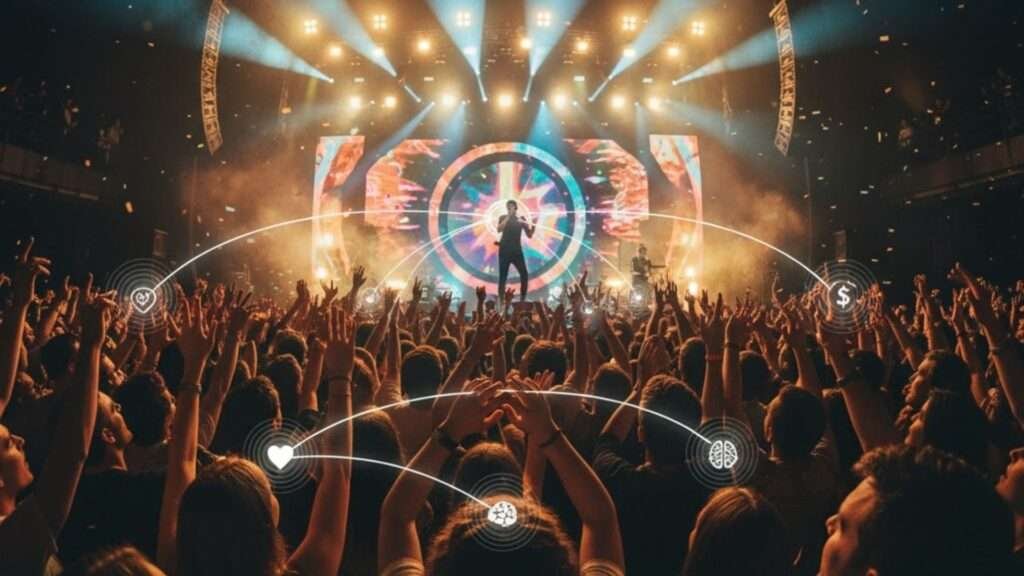
Fans don’t just hear songs, they feel bass reverberations in their chest, witness lighting choreography that punctuates emotional peaks, breathe in the atmosphere of the venue, and share reactions with thousands experiencing the same moment together.
This multi-sensory engagement transforms concerts into memory-making machines, embedding experiences with emotional weight that endures for years.
Psychological research consistently shows that shared experiences contribute more to long-term happiness than material possessions.
Live music exemplifies this principle: fans recall concerts with vivid detail, often tying them to life milestones, friendships, or personal transformations.
These memories become identity markers, reinforcing loyalty not only to the artist but to the broader ecosystem that enabled the experience.
This emotional economy extends beyond the stage.
Fans develop attachments to venues where they’ve lived formative moments, trust in brands that facilitate access or enhance the experience, and kinship with fellow attendees who share their musical identity.
The value created here cannot be reduced to transactional metrics—it represents a web of relationships, emotional investments, and cultural bonds that may last decades.
In this sense, live music operates as a marketplace of meaning.
The currency is not just money, but passion, loyalty and identity, resources far more enduring than ticket sales alone.
3.0 The Live Music Ecosystem: A Narrative Framework.
The live music industry operates as a complex narrative system where diverse stakeholders play interconnected roles.
Viewing this ecosystem through the lens of storytelling clarifies how value flows and how authentic brand engagement can thrive.
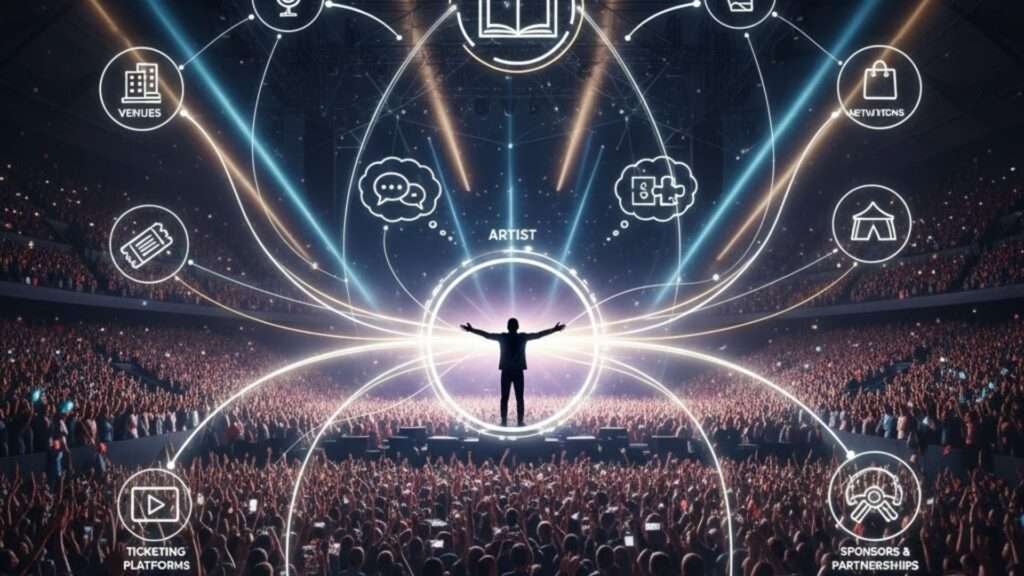
At the centre of this framework, artists serve as protagonists, the visionaries whose talent, persona, and creative direction drive the narrative forward.
They set the emotional tone and provide the reason for gathering.
Yet unlike traditional storytelling, where audiences remain passive, live music transforms fans into co-authors.
Their energy, voices, and participation shape each performance, ensuring that no two shows are ever the same.
Collective singing, call-and-response dynamics and shared movement all contribute to the co-creation of meaning.
Brands function as supporting characters, enhancing rather than overshadowing the central artist-fan relationship.
Venues provide the stage and atmosphere, promoters orchestrate logistics, ticketing platforms manage access, sponsors add resources and activations, merchandise creates tangible memories and streaming services extend the experience beyond physical boundaries.
Each element contributes essential value, but success depends on harmony—supporting rather than competing with the core narrative.
The key for any brand lies in understanding its rightful place in the story.
Those who position themselves as facilitators, making it easier, richer, or more meaningful for fans to connect with artists—integrate seamlessly.
Those who attempt to dominate risk rejection from audiences who prize authenticity above all.
In this way, the live music ecosystem becomes a shared narrative framework: artists as protagonists, fans as co-authors, and brands as enablers.
When these roles align, the result is not just entertainment but a cultural story that resonates across generations.
4.0 Venues And Atmosphere: Spatial Branding.
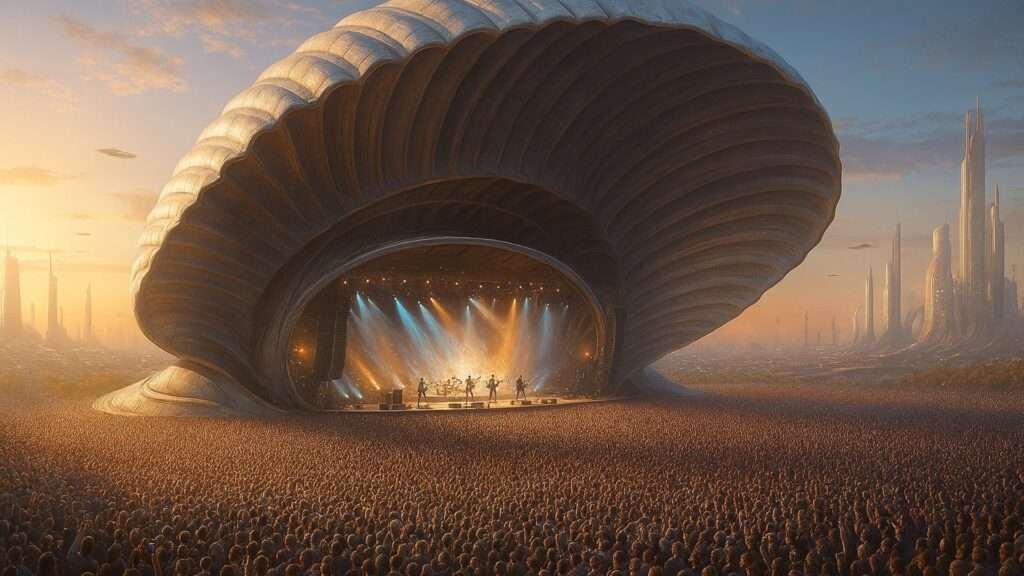
Venues are far more than containers for performance, they are branded environments that shape how audiences experience, interpret and remember live music.
Architecture, acoustics, sightlines, and atmosphere all contribute to a venue’s identity, transforming physical space into a stage for cultural storytelling.
Intimate clubs cultivate closeness and raw energy, while stadiums amplify scale and spectacle.
Outdoor festivals evoke freedom and community, whereas enclosed arenas heighten intensity and focus.
Each spatial form carries its own emotional resonance, aligning with different genres, fan expectations, and cultural traditions.
Some venues achieve iconic status, transcending their functional role to become cultural landmarks. The Sydney Opera House is instantly recognizable as both architectural marvel and national symbol.
Madison Square Garden embodies decades of musical history, with performances there regarded as career milestones.
Glastonbury Festival transforms a Somerset farm into a mythic cultural destination, its atmosphere inseparable from the ethos of the event itself.
Within these spaces, production design becomes a storytelling tool. Lighting choreography, stage construction, and acoustic engineering create immersive environments that extend the artist’s narrative.
LED screens project visual worlds, intelligent lighting shifts with musical emotion, and carefully tuned acoustics ensure every note resonates with clarity.
These elements communicate values: investment in sound systems signals respect for artistry and audience, while thoughtful sightlines demonstrate care for fan experience.
Spatial branding also extends to practical touchpoints. Signage, concessions, décor, and wayfinding all contribute to a cohesive identity.
Venues that maintain distinctive aesthetics while remaining adaptable to diverse artistic visions build reputations that endure across generations.
Ultimately, venues are not neutral backdrops, they are active participants in the branding ecosystem.
By shaping atmosphere, enabling immersion, and embedding cultural memory, they transform performances into experiences that live on long after the final encore.
5.0 Artists as Brands.
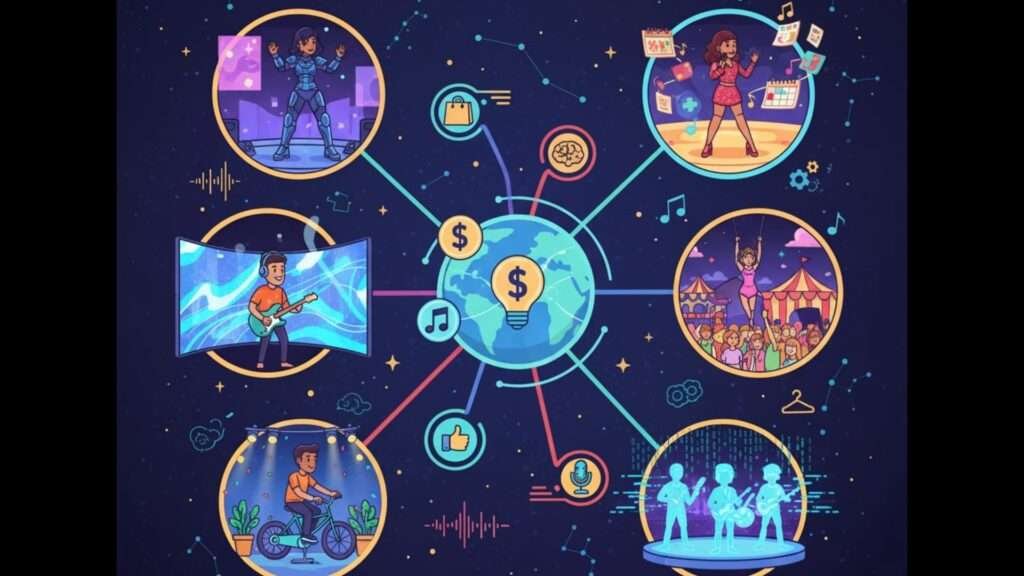
In today’s cultural landscape, artists are no longer defined solely by their recorded output.
They function as multifaceted brands, weaving together visual style, messaging, personal narrative, and public persona into identities that fans connect with on multiple levels.
Strategic collaborations with fashion, technology, and lifestyle companies extend this creative vision into new domains, generating additional revenue streams while broadening cultural influence. Increasingly, artists act as creative directors of their own universes, orchestrating experiences that transcend music to become holistic brand encounters.
5.1 Case Studies in Artist Branding.
1. Beyoncé – The Renaissance Tour:
a. A masterclass in aesthetic universes, Beyoncé’s tour integrated fashion, visual design and cultural references to extend her album’s themes into physical space.
b. The result was not just a concert but a cultural architecture, reinforcing her role as a visionary rather than a performer alone.
2. Taylor Swift – The Eras Tour:
a. By organizing performances around distinct career chapters, Swift created a retrospective narrative that allowed fans to revisit personal histories while witnessing her artistic evolution.
b. The tour became a cultural phenomenon, generating massive economic impact and cementing her brand as both storyteller and cultural touchstone.
3. U2 – The Sphere Residency:
a. Leveraging cutting-edge venue technology, U2 blurred the line between concert and installation art.
b. Their immersive performances demonstrated how artists can harness innovation to redefine live experiences, positioning themselves as pioneers of spectacle and cultural conversation.
4. Coldplay – Music of the Spheres World Tour:
a. Sustainability became the centerpiece of Coldplay’s brand identity.
b. From kinetic flooring that harnessed fan energy to biodegradable confetti, the band transformed ecological responsibility into a participatory spectacle.
c. This integration of values and experience reinforced their identity as a purpose-driven collective.
5. P!NK – Summer Carnival Tour:
a. P!NK’s brand thrives on authenticity, athleticism, and joy.
b. Her aerial stunts and carnival-inspired production embodied her “rocker mom” persona, proving consistency and physical commitment as powerful brand assets.
c. The tour’s commercial success underscored the resonance of authenticity paired with spectacle.
6. ABBA Voyage – Digital Avatar Residency:
a. A groundbreaking example of brand longevity, ABBA’s digital avatars (“ABBA-tars”) preserve and monetize legacy IP through technology.
b. This residency illustrates how heritage artists can extend their brand beyond physical performance, engaging new generations while safeguarding cultural identity.
5.2 The Artist as Brand Architect.
These examples reveal a broader trend: artists increasingly act as brand architects, designing experiences that integrate music, visuals, values, and technology into cohesive identities.
Their success lies not only in artistry but in the ability to orchestrate immersive worlds that fans inhabit, advocate for, and carry into their own lives.
In this sense, artists are no longer just performers, they are living brands, shaping culture through every aesthetic choice, partnership, and performance.
6.0 Fans as Brand Advocates.
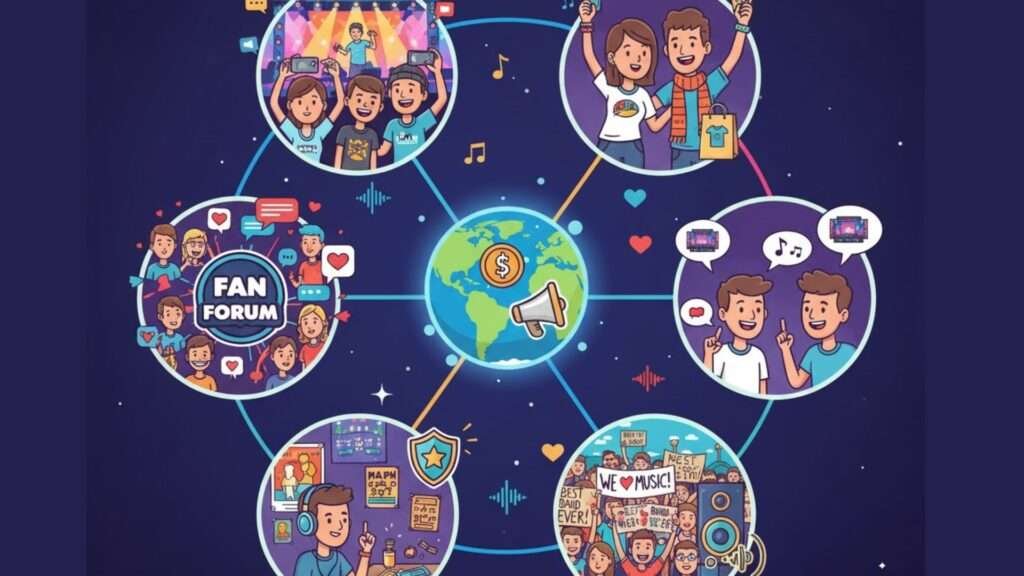
In the live music ecosystem, fans are not passive consumers, they are active brand advocates whose enthusiasm generates organic marketing that traditional advertising can rarely replicate.
Their participation transforms concerts into cultural movements, amplifying both artist identity and brand resonance.
Fan identity expresses itself through multiple channels: merchandise worn as badges of affiliation, social media posts celebrating favorite artists, participation in fan communities, and rituals surrounding concert attendance.
These actions elevate fandom from consumption to identity construction, embedding music into the fabric of personal and collective storytelling.
Contemporary fan culture represents an intensification of this dynamic. Dedicated communities coordinate campaigns, create content, defend artists against criticism, and mobilize to support releases and tours.
While this intensity can occasionally manifest in problematic ways, it more often represents a powerful grassroots energy that benefits artists and associated brands.
Brands that succeed in this space understand the psychology of fandom.
They position themselves as facilitators rather than exploiters, creating merchandise, experiences, or services that help fans express identity and connect with others.
This approach generates goodwill and long-term loyalty, as fans perceive the brand as an ally in their cultural journey.
Social media has amplified fan advocacy exponentially. A single concert can generate millions of impressions as attendees share photos, videos, and commentary across platforms.
These posts function as authentic testimonials, extending the event’s reach far beyond those physically present.
In effect, every fan becomes a micro-influencer, broadcasting their experience to networks that trust their voice more than any advertisement.
The economic value of this advocacy is substantial. Research consistently shows that recommendations from friends and peers influence purchasing decisions more effectively than traditional marketing.
When fans champion artists and events, they provide marketing money cannot buy, a form of cultural endorsement rooted in authenticity and emotional resonance.
In this way, fans are not just the audience; they are co-creators of brand meaning, amplifying narratives, sustaining communities, and ensuring that live music experiences echo far beyond the venue walls.
7.0 Merchandise & Memorabilia: Tangible Brand Echoes.

Concert merchandise occupies a unique position in the live music ecosystem, functioning simultaneously as revenue stream, marketing tool, and emotional souvenir.
A tour t-shirt or limited-edition vinyl is never just a product, it is a tangible echo of the experience, a wearable memory that signals identity and belonging long after the final encore.
Merchandise has evolved far beyond simple shirts with tour dates.
Today, offerings often include collaborative fashion pieces, exclusive vinyl releases, limited-run collectibles, and thoughtfully designed packaging that extend the artist’s aesthetic vision.
Scarcity adds value and this is the core psychological driver behind the Velvet Rope Marketing technique, collaborations add cultural cachet and high-quality materials signal respect for fans who invest in these artifacts.
Economically, merchandise often delivers higher margins than ticket sales, particularly for independent and mid-tier artists.
While venues and promoters take significant percentages of ticket revenue, merchandise remains a more direct and profitable channel.
This financial incentive has fueled creativity, with artists treating merchandise design as an extension of their brand storytelling.
The emotional significance of merchandise cannot be overstated.
Unlike most consumer goods, tour memorabilia carries memory associations: the shirt recalls the night, the friends who attended, the songs that defined the moment, and the atmosphere of the venue.
These artifacts become identity markers, transforming fans into walking ambassadors of the artist’s brand.
Packaging and presentation further enhance this emotional value. Special edition items, creative unboxing experiences, and cohesive design aesthetics elevate merchandise from commodity to cultural artifact.
Fans treasure these items not only for their utility but for the stories they embody, reinforcing loyalty and deepening the bond between artist and audience.
In this way, merchandise functions as a tangible brand echo, a physical reminder of an ephemeral experience, carrying the emotional charge of live music into everyday life.
8.0 Sponsorships & Partnerships: Trust as Currency.
Brand sponsorship in live music is both a financial necessity and a cultural balancing act.
When executed with authenticity, partnerships can elevate fan experiences and enable ambitious productions.
When perceived as opportunistic or disconnected, they risk backlash that damages both sponsor and artist alike.
Modern tours and festivals rely heavily on sponsorship revenue.
Rising production costs, driven by advanced technology, large crews and complex logistics, make external funding essential.
Sponsorships help offset these expenses, allowing ticket prices to remain accessible and enabling creative elements that might otherwise be unattainable.
8.1 The Spectrum of Sponsorship.
1. Aligned Partnerships → Beverage brands integrated into venue culture, tech companies enhancing digital engagement, fashion labels extending artist aesthetics, and financial services supporting ticketing infrastructure.
2. Authentic Investments → Red Bull’s long-term commitment to music culture through the Red Bull Music Academy, Vans’ deep-rooted association with punk and alternative communities via the Warped Tour, and Spotify’s event activations that logically connect streaming with live experiences.
3. Opportunistic Missteps → Brands that treat music merely as a marketing channel, without genuine cultural engagement, often face rejection from fans who value authenticity above exposure.
8.2 Trust as the Differentiator.
The distinction between successful and failed sponsorships lies in trust and alignment. Fans embrace brands that demonstrate cultural understanding and contribute meaningfully to the experience.
They reject those that intrude or exploit. Sponsorships that prioritize enhancing fan experience, comfortable viewing areas, quality concessions, charging stations, creative activations generate goodwill.
Conversely, intrusive advertising or poorly executed integrations erode credibility regardless of visibility achieved.
8.3 The Currency of Authenticity.
In the live music ecosystem, trust functions as currency.
Sponsorships are not judged by logos on banners but by the value they add to the communal experience.
Brands that position themselves as facilitators, helping fans connect more deeply with artists and each other, earn lasting equity.
Those that chase exposure without cultural respect pay the price in diminished reputation.
9.0 Digital Presence: Social Media & Streaming Integration.

The relationship between live music and digital platforms has evolved from simple documentation into sophisticated integration that extends experiences across time, space and audience.
Social media and streaming are no longer peripheral—they are essential components of the live music ecosystem, amplifying cultural electricity far beyond the venue walls.
9.1 Before the Event: Anticipation as Narrative.
Digital platforms build anticipation through announcements, behind-the-scenes content, and fan-driven discussions. Social media enables direct artist-to-fan communication, creating intimacy at scale. Fans coordinate attendance, share excitement, and participate in pre-event rituals that strengthen community bonds before a single note is played.
9.2 During the Event: Amplification in Real Time.
Concerts now unfold simultaneously in physical and digital dimensions. Instagram stories, TikTok clips and live commentary create parallel experiences that engage global audiences.
Artists design “Instagrammable moments,” visual spectacles engineered to photograph or film beautifully, encouraging organic promotion as fans document and share. This feedback loop drives ticket sales, fuels digital buzz, and magnifies cultural reach.
9.3 After the Event: Extending the Encore.
Livestreams, concert films and documentaries prolong the lifecycle of live experiences.
High-quality streams reach fans unable to attend physically, while post-event content allows audiences to relive moments and introduces performances to new viewers.
Virtual reality and hybrid concerts experiment with immersive digital formats, expanding possibilities without replacing the irreplaceable energy of physical gathering.
10.0 Festival Culture: Multi-Brand Ecosystems.
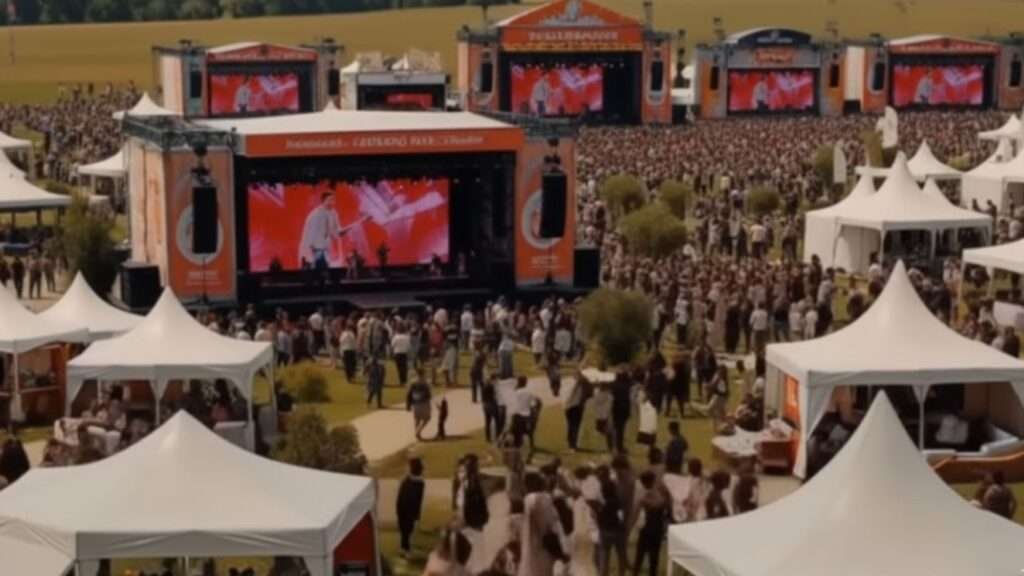
Music festivals represent the live music ecosystem at its most complex and communal.
These multi-day, multi-stage gatherings bring together dozens of artists, tens of thousands of fans, and a dense network of brand partners, creating temporary cultural cities where identity, commerce, and storytelling converge.
10.1 Festivals as Cultural Landmarks.
Major festivals cultivate distinctive identities that transcend their lineups.
1. Coachella has become synonymous with fashion-forward aesthetics and Southern California cool.
2. Splendour in the Grass embodies Australian festival culture, blending international acts with local artistry.
3. Tomorrowland positions itself as a fantastical world of electronic dance music, complete with elaborate themed environments.
4. Glastonbury maintains its countercultural ethos while achieving mainstream cultural significance, transforming farmland into a mythic stage for global music.
Each festival is more than an event, it’s a brand ecosystem with its own values, rituals, and cultural imprint.
10.2 Multi-Sensory Brand Integration.
Festivals offer unparalleled opportunities for brand engagement across countless touchpoints: stage sponsorships, beverage partnerships, food vendors, merchandise tents, branded lounges, charging stations, art installations, and cashless payment systems. The density of these interactions requires careful curation to avoid overwhelming audiences. Successful festivals select partners that align with their identity, ensuring that every activation feels additive rather than intrusive.
10.3 Artifacts of Belonging.
The festival wristband is a powerful symbol of participation. Beyond its practical role as access control, it becomes a badge of identity—a keepsake that attendees often preserve long after the event. Like merchandise, it functions as a tangible reminder of belonging to a temporary community and a cultural moment.
Fashion also plays a central role in festival branding. Attendees often treat festivals as stages for self-expression, creating distinctive style cultures that ripple outward into mainstream fashion. This dynamic opens opportunities for fashion brands to engage authentically, whether through official partnerships, influencer collaborations, or simply by inspiring the aesthetics of festival-goers.
10.4 Balancing Scale and Authenticity.
The challenge for organizers lies in maintaining coherence across a sprawling ecosystem. Over-commercialization risks alienating core audiences, while thoughtful partnerships enable scale and production values that elevate the experience.
The most successful festivals achieve this balance by curating brand participation with precision, ensuring that commercial presence enhances rather than dilutes cultural meaning.
In essence, festivals are multi-brand ecosystems where artistry, commerce, and community intersect. They are temporary worlds that generate lasting cultural electricity, embedding themselves in collective memory as more than events—they become movements.
11.0 Post-Event Continuity: Lifecycle Branding.
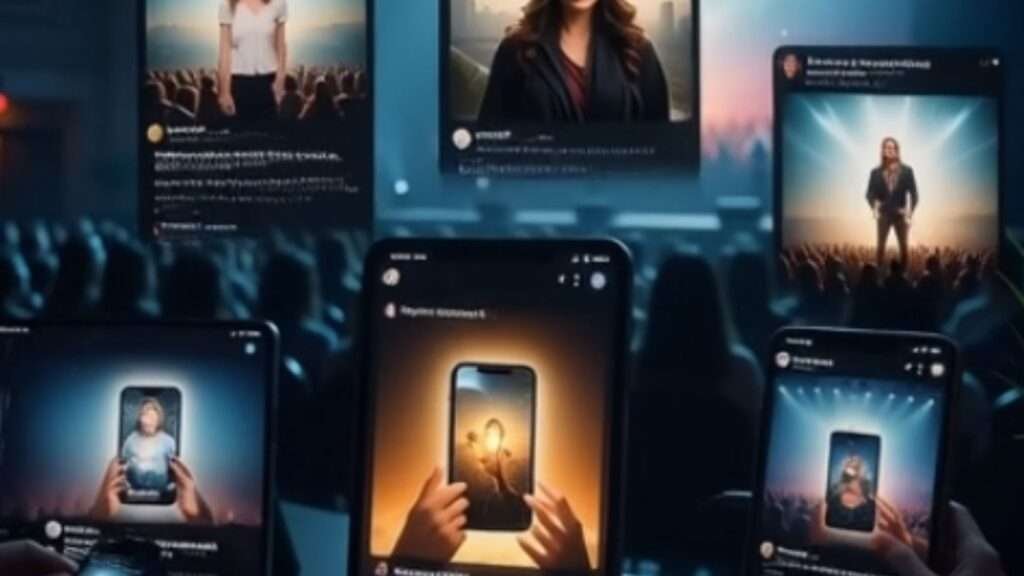
The live music experience does not end when the house lights rise. For artists, venues, and brands, the true measure of impact lies in how effectively they sustain engagement after the final encore. Post-event continuity transforms fleeting performances into lifecycle branding, extending emotional resonance and commercial value across time.
11.1 Extending the Narrative.
Post-event content—highlight reels, behind-the-scenes footage, concert films, and documentaries—allows fans to relive moments and share them with others. These artifacts preserve cultural memory, introduce performances to new audiences, and maintain momentum between touring cycles. They ensure that the story of the event continues long after the stage has been dismantled.
11.2 Merchandise & Digital Souvenirs.
Exclusive merchandise drops, limited-edition vinyl, and digital collectibles (such as NFTs or interactive media) reinforce the emotional connection fans carry home. These items serve as tangible echoes of memory, embedding the experience into daily life and extending the brand’s reach beyond the venue.
11.3 Community Continuity.
Fan communities thrive on post-event rituals: sharing photos, posting reviews, exchanging stories, and coordinating future meetups. Social media platforms amplify this continuity, turning individual experiences into collective archives. Artists who nurture these communities—through direct engagement, surprise content releases, or interactive campaigns—strengthen loyalty and deepen cultural bonds.
11.4 Lifecycle Strategy.
Post-event branding is not an afterthought; it is a deliberate strategy. By designing experiences that flow seamlessly from anticipation to performance to memory, artists and brands create cultural lifecycles rather than isolated events. This approach builds enduring equity, ensuring that each concert becomes part of a larger narrative arc that fans inhabit and carry forward.
In essence, post-event continuity transforms live music from a momentary spectacle into a living brand journey.
The encore may end, but the story continues, echoing through merchandise, digital platforms, and community memory, sustaining relevance until the next gathering of cultural electricity.
12.0 Conclusion: Live Music as Cultural Electricity.

Live music is more than entertainment—it is cultural electricity, a force that sparks identity, community, and memory in ways few other experiences can.
Each performance becomes a charged moment where artistry, audience, and atmosphere converge, generating energy that radiates far beyond the venue.
This ecosystem—artists as brands, fans as advocates, venues as storytellers, and partners as facilitators—operates as a living narrative framework. Its value lies not only in ticket sales or merchandise but in the emotional economies it creates: loyalty, passion, and belonging that endure across decades.
Digital platforms, sponsorships, and festival culture amplify this electricity, extending its reach into global networks and sustaining its resonance long after the encore.
Yet at its core, the power of live music remains rooted in authenticity, the unrepeatable magic of shared experience.
For brands, artists, and communities alike, live music offers an unparalleled stage to build relevance, foster trust, and shape cultural meaning. It is not simply a business model but a marketplace of meaning, where the true currency is emotional connection.
In this sense, live music stands as one of the most enduring and transformative forces in contemporary culture, a reminder that when sound, story, and spirit align, they generate electricity capable of lighting up generations.
13.0 Bibliography.

1. Music, Branding and Consumer Culture — Peter Doran & Lesley Drake
2. The Oxford Handbook of Music and Advertising — James Deaville & Paul Atkinson
3. Branding in the Music Industry — David Loschelder
4. Music and Identity in Ireland and Beyond — Mark Fitzgerald & John O’Flynn
5. Experiencing Live Music: A Creative and Cultural Perspective — Panos A. Panay & Michael Hendrix
6. Synesthetic Song: Music, Branding, and the Experience Economy — Wendy Beasley
7. Performance and Popular Music: History, Place and Time — Ian Inglis
8. Music and Marketing: History, Culture, and the Popular Song — Samuel M. Cole
9. The Business of Streaming: Artists, Brands, and the Digital Music Economy — Andrew Reilly
10. Festivalisation of Culture: Festivals as Branding and Identity — Beatriz Garcia
11. Branding in the Age of Social Media — Alicja Pawluczuk
12. Musical Creativity: Transcending Branding and Tradition — Brian Eno & Alan Moore
13. Consumer Tribes, Fandom and Culture — John F. Schouten
14. The Experience Economy: Competing for Customer Time, Attention, and Money — B. Joseph Pine II & James H. Gilmore
15. Live Music Venues: From Spaces to Experiences — Simon Frith & Martin Cloonan
16. How Branding is Shaping the Music Industry — Alec Banks
17. Branding, Live Music, and Cultural Impact — Ethan Millman
18. The Power of Live Music: Beyond Streaming — Julian Mitchell
19. How Venues Became Brands — Dave Brooks
20. Merchandise: The Unsung Hero of Music Branding — Tim Ingham
21. The Emotional Economy of Live Events — Jessica Heasley
22. How Authenticity Defines Music Brand Partnerships — Stuart Dredge
23. Fans as Brand Advocates: The Impact of Fandom — Robert Klara
24. The Role of Festivals in Branding — Kat Bein
25. Building Brand Identity Through Live Events — Lucy Tesseras
26. Using Social Media to Deepen Live Music Connections — Madelyn Paquette
27. Digital Amplification: Extending Live Music Engagement — Bridget Todd
28. Sponsorship and Trust in Music — Gideon Spanier
29. Lifecycle Branding: Sustaining Fan Engagement — Kayla Knudsen
30. Cultural Electricity: Why Live Music Matters — Otis Hart