
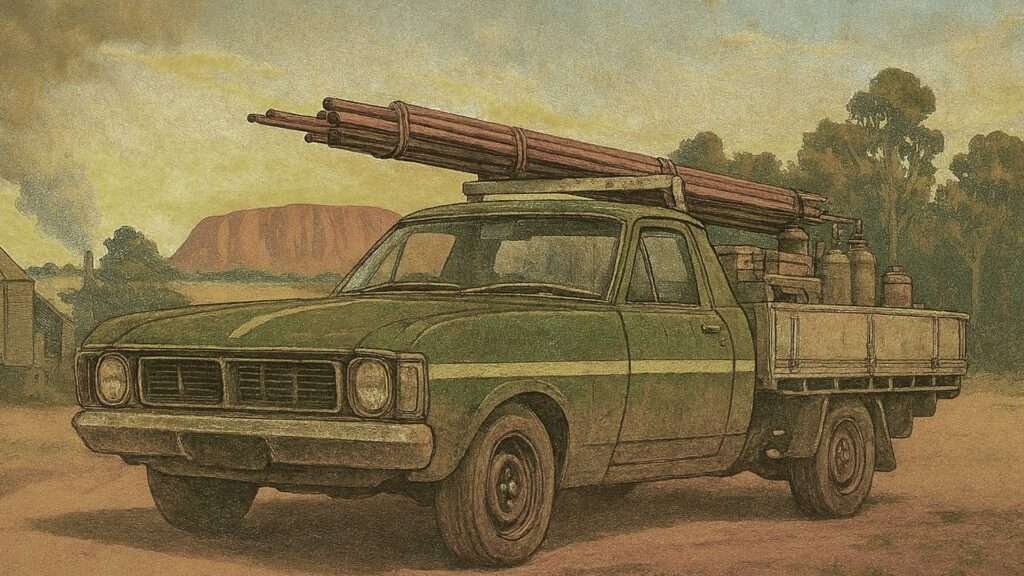
Made in Australia: The Narrative Power of Manufacturing
Disclaimer.
This article is provided for informational and
educational purposes only.
The views and opinions expressed are those of the
author and do not constitute professional business, marketing, political or
financial advice.
While every effort has been made to ensure accuracy,
readers are encouraged to conduct their own research and seek guidance from
qualified professionals before making business decisions based on the
information presented.
Brand names and examples are included for illustrative
purposes only and do not imply endorsement.
Article Summary.
The “Made in Australia” label is more than a mark of
origin, it’s a cultural signature that evokes pride, trust, and a sense of
belonging.
For consumers both at home and abroad, it signals not
just where a product comes from, but what it stands for.
This article explores how Australian manufacturing
brands can harness the storytelling power of national identity, industrial
heritage, and shared cultural values to build compelling brand narratives.
These narratives don’t just differentiate products, they
forge emotional connections that drive loyalty and elevate everyday purchases
into expressions of national pride.
From the golden era of Holden cars and Victa
lawnmowers to today’s sustainable manufacturing pioneers, the Australian brand
story has evolved, balancing nostalgia with innovation, craftsmanship with
conscience.
To thrive in modern markets, manufacturers must create
authentic stories that link timeless values with contemporary concerns like
ethical sourcing and environmental responsibility.
Ultimately, this article argues that the true power of
Australian manufacturing lies in its ability to transform commerce into
culture.
By embracing this narrative potential, brands can
build deeper relationships, command fair value, and compete globally, while
uplifting local communities and preserving the spirit of Australian ingenuity.
Top 5 Key Takeaways.
1. Emotional Connection
Drives Loyalty: The “Made in Australia” label taps into deep
emotional currents, turning purchases into personal statements of identity,
values, and belonging.
2. Heritage Builds Trust: From steel and wool
to automotive innovation, Australia’s industrial legacy offers a rich foundation
for brand authenticity and market differentiation.
3. Tradition Meets
Sustainability: Modern consumers seek ethical and eco-conscious
choices. Brands that fuse traditional craftsmanship with sustainable practices
stand out and stay relevant.
4. Experiences Deepen
Brand Stories: Factory tours, maker workshops, and immersive brand
experiences can turn manufacturing sites into cultural destinations, showcasing
innovation and fostering connection.
5. Visual Identity
Amplifies Meaning: Strategic use of Australian imagery, native
landscapes, iconic products, cultural symbols—reinforces brand stories and
resonates with both local pride and global appeal.
Table of Contents.
- Introduction: More Than a Label – A Statement of Values
- The Psychology of Australian Brand Loyalty
- Trust and Authenticity in the Australian Market
- The Golden Age of Australian Manufacturing
- Cultural Icons That Defined a Nation
- The Spirit Behind the Products
- When the Spirit Faltered: Lessons from Decline
- Heritage as the Foundation of Modern Manufacturing
- Reinventing Factory Tours as Brand Experiences
- Packaging Narratives: From Outback Identity to Global Appeal
- The Role of True Blue Imagery in Brand Building
- The Path Forward: Building Belonging Through Narrative
- Article Bibliography
1. Introduction: More
Than A Label, A Statement Of Values.
In my opinion, the “Made in Australia” label carries a
weight that goes well beyond its role as a simple marker of origin.
In today’s global marketplace, where consumers are
overwhelmed with choices from every corner of the world, these three words can
stand apart as something more than product specifications or competitive
pricing. They can serve as a reminder of values.
For Australian consumers, and with a bit of luck, some
international buyers too, choosing Australian made products can represent more
than just a purchase.
It can be an investment in a story, one shaped by
resilience, ingenuity and the spirit of community that has grown out of the
unique challenges and opportunities of this continent.
The Australian story resonates because it reflects
values that many people still hold dear: authenticity, quality craftsmanship,
ethical production and support for local communities.
The power of this narrative is not limited to
patriotic sentiment. It speaks to something deeper, to the human need for
connection, belonging and meaning in the choices we make.
When someone buys an Australian made product, they are
not simply acquiring goods, they are participating in a larger story about
national identity, shared values and collective prosperity.
Of course, this is not something unique to Australia,
but our context does provide particularly rich material for brand storytelling.
Our history of turning adversity into opportunity, our
tradition of practical innovation, and our cultural values of fairness and
mateship all contribute to a manufacturing story that could, with the right
focus, command attention in global markets while also building much needed
loyalty at home.
2. The Psychology of
Australian Brand Loyalty.
Understanding the psychology that shapes preference
for Australian made products can reveal the deeper emotional architecture
behind consumer decision making.
I feel that Australian made products still have a huge
potential and could very much benefit from what behavioural economists describe
as the country of origin effect, a mental shortcut that allows consumers to
infer quality, safety and values alignment based on where a product is
manufactured.
This preference operates on several levels. At the
most immediate level, Australian consumers might associate local production
with stronger quality control, fresher ingredients and production standards
that feel closer to their expectations.
Over time, this perception creates a mental framework
where Australian made becomes almost interchangeable with trustworthiness and
reliability.
On a deeper level, purchasing Australian made products
could satisfy important psychological needs tied to identity and belonging,
which in 2025 feels like one of the most pressing issues in our country.
We are living through a period of rapid social,
cultural and economic change, and I sense every day that people are struggling
and reaching out for anchors: stories, traditions and values that remind us who
we are and what still holds us together.
When our Aussie values feel fragmented, people
naturally look for shared symbols, the Anzac spirit, our flag, or the “Made in
Australia” label, this reminds us of a common ground.
I believe that people derive part of their self
concept from group memberships, including national identity. By choosing
Australian made products, consumers might be reinforcing their connection to
the Australian community and expressing their values through the choices they
make.
The idea of psychological ownership also plays a role
here. When consumers feel that Australian manufacturing success belongs to all
of us, when they see local businesses as “ours” rather than “theirs”, they
become more invested in supporting them.
This emotional investment can go beyond rational cost
benefit analysis and create loyalty that persists even when imported
alternatives offer lower prices or greater convenience, at least for those who
can afford it.
I have long thought that brands perceived as
authentically Australian can survive and even prosper precisely because they
meet these deeper emotional needs.
Buying Australian made products satisfies not only our
need for quality but also the heartfelt value we place on being part of our
national manufacturing story.
3. Trust and
Authenticity in the Australian Market.
I think most of us would agree that trust forms the
cornerstone of successful Australian manufacturing brands, with authenticity
serving as the main mechanism through which that trust is built and maintained.
In an era of global supply chains and complex
production networks, the “Made in Australia” label gives consumers a clear and
verifiable connection to standards and values they understand.
Over time, Australian consumers have developed fairly
sophisticated expectations about what authenticity means in the manufacturing
context.
True authenticity requires more than simply assembling
products within our borders. It demands a genuine commitment to Australian
values, fair employment practices and meaningful investment in local
communities.
Brands that try to exploit the “Made in Australia”
label or lean on the “Aussie Spirit of Yesteryear”
without real substance quickly face backlash.
Aussies will put up with a lot, we can be very
tolerant at times, but I don’t think brands should ever try messing with our
hearts.
The trust dividend that authentic Australian
manufacturers earn can show itself in several ways. First, consumers are more
willing to try new products from trusted local brands, which reduces the costs
of launching something new.
Second, authentic Aussie brands might enjoy greater
forgiveness when problems arise, as people are more likely to attribute
difficulties to external pressures rather than flaws in character.
Third, trusted Australian brands can often expand into
new product categories more easily than, in my opinion, many international
competitors could.
But authenticity is not static. It requires constant
reinforcement. You cannot take it for granted. Brands have to keep proving
themselves through consistent actions and communication.
Australian manufacturers cannot just sit on their
hands and hope for the best. They need to roll up their sleeves and show their
commitment to local communities through employment practices, supplier
relationships, environmental stewardship and community engagement.
The brands that succeed long term are surely the ones
that embed authenticity so deeply into their operations that it becomes
inseparable from the business itself. The rise of social media and transparent
communication channels has made authenticity both more important and more
difficult to maintain.
Consumers can now easily check claims about local
sourcing, employment practices and environmental impact. This transparency,
however, works in favour of those who are truly authentic.
It exposes the brands that rely on superficial
Australian branding without substance, while rewarding the manufacturers who
live up to the values they claim to represent.
4. The Golden Age of
Aussie Manufacturing And Subsequent Demise.
To understand my optimism with
regards the current narrative power of Australian manufacturing, we need to
look back at the golden age that established the foundational stories still
referenced today.
From the post war boom through to
the late twentieth century, Australia built a manufacturing sector that
produced not just products, but cultural symbols that helped define national
identity and pride.
This period represented more than
economic activity. It embodied national aspiration and capability.
The establishment of major
operations across automotive, appliances, textiles and heavy industry showed
Australia’s evolution from a resource dependent colony to an industrial nation
capable of sophisticated production.
The psychological impact of this
transformation cannot be overstated. It gave Australians tangible proof of
their nation’s potential and capability.
The manufacturing boom seemed to
move in step with rising living standards, suburban expansion and optimism
about Australia’s future.
Products made during this
remarkable era became associated with progress, prosperity and the achievement
of middle class aspirations.
The family car in the driveway,
modern appliances in the kitchen and quality clothing in the wardrobe all
represented participation in Australia’s industrial success story.
This golden age also set
important precedents about the relationship between manufacturing and national
identity. Products were not just functional items, they were expressions of
Australian values and capabilities.
The emphasis on durability,
practical design and value for money reflected broader cultural values of
honesty, hard work and getting the job done without unnecessary fuss.
The decline of this golden age in
the late twentieth and early twenty first centuries has, in my opinion, created
a deep sense of loss for many of us.
It is a hurt that lingers and
grows sharper every time another news update reports an Australian business
closing its doors or shifting offshore after decades of service, in some cases
after more than 120 years of operating on our shores.
The closure of major facilities
is not just economic disruption. It feels like the end of an era when Australia
made things for itself and for much of the world.
At the same time, this sense of
loss may have created space for new Australian manufacturers who can credibly
claim to be continuing this proud tradition.
Yet it must also weigh heavily on
them. The question surely arises: is it really worth taking the risk and having
a go when so many others could not hold things together?
5. Cultural Icons
That Defined a Nation.
Certain products from Australia’s manufacturing golden
age transcended their functional purpose to become genuine cultural icons.
They succeeded because they embodied Australian values
while meeting practical needs, creating emotional connections that lasted long
after their commercial lifespan ended. These icons still shape how we think
about brand narratives today.
Not to suggest for one second that I am more of a
Holden person than a Ford, but the Holden automobile stands as perhaps the most
powerful example of this phenomenon.
Launched in 1948 with the FX model, Holden was not
just Australia’s first mass produced car, it was a symbol of post war optimism
and national capability.
The slogan “Australia’s Own Car” captured something
essential about pride and self reliance. For decades, the Holden in the family
driveway represented achievement, reliability and participation in the
Australian dream.
The very last Holden to roll off an Australian
production line was built on Friday 20 October 2017 at the Elizabeth plant in
Adelaide. It was a red VF Series II Commodore SS V Redline sedan. Even today,
nearly a decade later, Holden retains enormous emotional resonance and
continues to influence how Australians think about local manufacturing.
As for the blue oval, the very last Ford built in
Australia rolled off the line on Friday 7 October 2016 at the Broadmeadows plant
in Victoria. The final car was a Kinetic Blue Ford FG X Falcon XR6 sedan.
What strikes me as crazy about the end of Australian
car manufacturing is that both of these final vehicles were absolutely
brilliant in my opinion. Their quality makes the loss feel even harder to
accept for a car enthusiast such as myself.
Victa lawnmowers also became cultural icons,
revolutionising suburban life and becoming synonymous with the great Australian
backyard. Invented in Sydney in 1952, the Victa was more than a tool for mowing
lawns.
It was an enabler of the lifestyle that millions of
Australians aspired to. The distinctive sound of a Victa firing up on a
Saturday morning became part of the soundtrack of suburban life, and its export
success showed that Australian innovation could compete globally.
RM Williams boots exemplify how Australian
manufacturing could combine practicality with aspiration.
Founded by a bushman who built a global brand from a
single pair of boots stitched in a tin shed—how Aussie is that—RM Williams
represented the dream of turning skill into business success.
These boots became symbols of both outback
authenticity and urban sophistication, worn by stockmen and business leaders
with equal pride.
Akubra hats achieved similar status by capturing the
Australian relationship with the land. More than protective headwear, Akubras
became symbols of resilience, practicality and connection to country.
Their adoption by everyone from farmers to prime
ministers showed how authentically Australian products could transcend social
boundaries.
I believe these cultural icons succeeded, and in some
cases still succeed, because they embodied an Australian personality.
They manufactured Aussie characteristics into their
very identity. They were seen as honest, rugged, reliable and
unpretentious—values Australians admired in themselves and their communities.
To show just how much these cars in particular still
mean to us, consider the record sale prices compared to their original launch
prices in the below table.
|
Make |
Model/variant |
Year (vehicle) |
Record sale price (AUD) |
Approx new price at launch (AUD) |
|
Ford |
Falcon XA GTHO
Phase IV (prototype) |
1972 |
Just under
2,000,000 |
Not sold to public
(prototype) |
|
Ford |
Falcon XY GTHO
Phase III |
1971 |
$1,300,000 |
~$5,250 |
|
Holden |
HSV GTSR W1 Maloo
(one of four) |
2017 |
$1,050,000 |
Not officially sold
(special builds) |
|
Holden |
Commodore VK SS
Group A (#05, Peter Brock) |
1985 |
$1,057,000 |
~$22,000 |
|
Holden |
HSV VS GTSR (#001
“XU3 Yellah”) |
1996 |
$1,000,000 |
~$75,000 |
|
Holden |
HSV GTSR W1 sedan |
2017 |
$750,000 |
$169,990 |
|
Holden |
Commodore SS‑V
Redline (final VIN) |
2017 |
$750,000 |
~$55,000 |
|
Holden |
HSV GTSR Coupe
(Motor Show concept) |
2004 |
$580,000 |
Not sold (concept) |
|
Holden |
Monaro HK GTS 327
Bathurst coupe |
1968 |
$330,000 |
~$3,800 |
|
Holden |
Commodore VH SL/E
(prototype survivor) |
1981–84 |
$108,000 |
~$16,000 |
|
Ford |
Falcon XY GT (non‑GTHO) |
1970–71 |
$186,000 |
~$4,500 |
|
Chrysler |
Valiant Charger VH
R/T E49 (Track Pack) |
1972 |
~$400,000 –$500,000 |
~$4,600–4,900 |
|
Chrysler |
Valiant Charger VH
R/T E38 |
1971 |
~$250,000 –$350,000 |
~$3,700–4,000 |
|
Chrysler |
Valiant Charger VJ
770 E55 (340 V8) |
1973 |
~$180,000 –$280,000 |
~$4,300–4,600 |
|
Chrysler |
Valiant VG Pacer
E31 (Big Tank) |
1970 |
~$120,000 –$200,000 |
~$2,600–2,900 |
Let me
know which is your favourite in the comments.
Mine is
the 1972 Chrysler Valiant Charger R/T E49. To me it is legendary because at the
time it was the most powerful six cylinder engine ever mass produced in
Australia.
The
Chrysler Hemi 6 straight six, Australian developed, 265 cubic inches (4.3
litres), fed by triple 45 DCOE Weber side draft carburettors, produced 302 bhp
(225 kW) at 5,600 rpm. It was paired with a Borg Warner 4 speed manual unique
to the E49.
I am no
tyre expert but I think it is fair to say that tyre technology back then was
nowhere near what it is today.
Radials
were only just becoming common and compounds were relatively hard. The E49’s
powerful six with triple Webers was brutally strong for its relatively light overall
weight.
That
meant a huge surge of torque hitting tyres that were not designed to cope with
it. Suspension setups and chassis tuning were more basic, but these cars were
built tough. Traction control was how hard you pressed the accelerator, or how
much the rational part of your brain decided not to.
For
those that did give these aussie icons a bootful (in a controlled, safe, legal
way at an approved facility), the result was wheelspin, axle tramp and a
reputation for being a handful off the line.
Road
testers at the time often noted that the E49 was faster than the tyres could
handle. That wildness is part of why I believe the Charger R/T E49 resonates so
strongly with me and a lot of other Australians.
Built at
the Tonsley Park assembly plant in Adelaide, only 149 were made between June
1972 and early 1973. Yet in 2025 they are still remembered with enormous
fondness. They were raw, demanding and thrilling, and they commanded respect
from the driver.
If there
is a point in all this nostalgia, it is this: I believe you can only feel so
moved about a motor vehicle when it is made in your own country.
6. The Spirit Behind
the Products.
The enduring appeal of
Australia’s manufacturing icons came from more than product quality or clever
marketing. It reflected a distinctive Australian spirit that infused the entire
manufacturing culture.
This spirit, shaped by
resilience, resourcefulness and practical innovation, created products that
felt genuinely Australian and resonated with people both here and overseas.
This spirit was forged in the
crucible of our history, through experiences that demanded practical solutions
to difficult problems.
From the goldfields to frontier
farms, from wartime production to post war reconstruction, Australians
developed a reputation for making things work with limited resources and
maximum ingenuity.
Out of this grew a manufacturing
ethos that valued functionality over flash, durability over disposability, and
honest value over empty promises.
You could see this spirit in the
design philosophies that emphasised robustness and reliability. Australian made
products were built to withstand harsh conditions, whether that meant the heat
of the outback, the salt air of the coast, or the rough handling of working
life.
They earned respect through
performance rather than promises, building loyalty through what they delivered
rather than what they claimed.
Perhaps most importantly, this
spirit carried with it a sense of fairness and straightforward dealing.
Australian manufacturers built reputations for honest communication, fair
pricing and standing behind their products.
This reflected broader cultural
values of mateship, fair dinkum behaviour and treating customers with respect.
The result was a manufacturing culture that built trust through consistency and
reliability rather than artificial differentiation.
The decline of much traditional
Australian manufacturing did not erase this spirit. It adapted and found new
expressions.
Today’s craft brewers, artisanal
food producers, sustainable fashion makers and innovative technology companies
often embody the same values of practical innovation, honest communication and
community connection that defined the golden age.
In many ways, the spirit behind
the products has outlived the factories themselves, waiting to be carried
forward by those willing to build on it.
7. When the Spirit
Faltered: Lessons from Decline.
The decline of Australian manufacturing in the late
twentieth and early twenty first centuries offers important insights into how
narrative power can be lost and what lessons today’s few remaining aussie manufacturers
might need to heed if they are to avoid a similar fate.
The closure of major operations, culminating in the
end of automotive production in 2017, was more than economic restructuring. It
was, in many ways, a crisis of confidence in our national manufacturing capability.
Several factors contributed to this decline, each
carrying lessons for the present. Cost pressures from low wage international
competitors forced many Australian manufacturers into competing primarily on
price.
This eroded the premium positioning that had once been
built on quality and authenticity. When Australian made products became seen as
little more than more expensive versions of identical imports, consumers
understandably began to question the value proposition.
To me, perhaps more damaging was the gradual loss of
innovation leadership in key sectors.
As manufacturers focused on defending existing market
positions rather than developing new capabilities, they ceded technological and
design leadership to international competitors. This defensive posture
undermined the narrative of Australian ingenuity and capability that had been
central to earlier success.
The failure to adapt to changing consumer values may
have also played a role. Greenwashing, globalisation and the push for external
validation hit Australia pretty hard in the early 2000s.
As Australians became more concerned with
sustainability, social responsibility and global connectivity, some of our
manufacturers did not evolve their practices or narratives quickly enough.
Personally, I feel as though Australia was being given
an uppercut about our situation without ever being given the chance to improve
in a gradual, affordable and manageable way.
I still don’t fully understand why Australia had to be
so affected by what was happening around the world so quickly.
Whatever the reasoning behind it, I certainly noticed
that some Australian products which had once symbolised progress and modernity
began to feel outdated and irrelevant.
That said, the decline was not uniform. The manufacturers
that survived and even thrived during this period offer lessons, though I will
leave it to readers to decide whether all of those lessons were valuable.
In any event, the brands that maintained strong
connections to Australian values while adapting to contemporary concerns proved
the most resilient.
Companies that invested in innovation, sustainability
and customer experience were able to hold their premium positioning even as
traditional players struggled.
The emotional response to decline, particularly the
widespread sadness at the closures of Holden and Ford, showed that the
narrative power of Australian manufacturing had not disappeared.
I think it had simply been dealt a flesh wound. The
grief that followed was soon overtaken by nostalgia and to me this reveals an
untapped consumer desire to support Australian made products once again, a
desire that may still be there, waiting around the corner, and one that could
be harnessed if approached with authenticity and strategic care.
8. Heritage as the
Foundation of Modern Manufacturing.
Contemporary Australian manufacturers are discovering
that their industrial heritage, far from being a burden of the past, can serve
as a powerful foundation for future success.
For my way of thinking, the key lies in knowing how to
honour our historical legacy while addressing modern consumer needs and
shifting market conditions.
Australia’s steel industry is one example of this
heritage informed approach. Companies that once focused almost entirely on
commodity production have begun repositioning themselves around sustainability,
innovation and high value applications.
By drawing on decades of metallurgical expertise while
embracing new technologies such as advanced materials and large scale
recycling, these companies are creating narratives that bridge industrial
heritage with environmental responsibility.
The wool industry provides another compelling case.
Australian wool producers and processors are leveraging centuries of expertise
in fibre production while highlighting wool’s natural sustainability
credentials.
Modern wool brands tell stories that connect
traditional pastoral practices with contemporary concerns about synthetic fibre
pollution and ethical fashion, offering narratives that resonate strongly with
environmentally conscious consumers.
Even in newer sectors, heritage creates competitive
advantages. Australian food and beverage manufacturers draw on traditions of
agricultural excellence and quality production to stand out in global markets.
Craft brewers reference historical brewing techniques while experimenting with
local ingredients, producing beers that feel both timeless and contemporary.
The most successful heritage informed brands avoid
slipping into simple nostalgia. Instead, they use historical foundations to
demonstrate credibility and authenticity in addressing today’s challenges.
They show continuity of values, quality,
craftsmanship, community connection, while evolving practices to meet
contemporary standards for sustainability, social responsibility and
innovation.
This approach requires careful balance. Too much
emphasis on heritage can make a brand seem outdated, while too little
connection to the past can weaken claims of authenticity. The most effective
brands find ways to make their heritage feel relevant and aspirational, not
merely historical.
9. Reinventing
Factory Tours as Brand Experiences.
The traditional factory tour, once a straightforward
showcase of production processes, is being reinvented as a powerful brand
experience that deepens customer relationships and creates lasting emotional
connections.
Forward thinking Australian manufacturers are
reimagining their facilities as destinations that tell compelling stories about
craftsmanship, innovation and values.
Modern factory experiences go far beyond showing
visitors how products are made. They create immersive narratives that help
people understand the passion, skill and values behind the manufacturing
process.
Interactive displays, hands on workshops and personal
interactions with craftspeople transform passive observation into active
engagement, creating memories that strengthen brand loyalty long after the
visit ends.
Australian distilleries have led this transformation,
turning production facilities into destinations that celebrate both
craftsmanship and culture.
Visitors do not just observe whisky or rum production,
they hear stories about local ingredients, traditional techniques and the
personalities behind the brands.
Tastings become educational journeys that help people
appreciate the complexity and skill required for quality production.
Food manufacturers are taking a similar approach,
reimagining facility tours as culinary experiences that celebrate Australian
ingredients, techniques and food culture.
Chocolate makers invite visitors to participate in the
bean to bar process, while cheese producers offer tastings that highlight the
terroir of Australian dairy regions. These experiences create emotional
connections that transform visitors into brand ambassadors.
9.1 Wineries as
Flagship Experiences.
Perhaps the most developed example of this reinvention
can be found in Australia’s wine regions.
Wineries have long understood that a cellar door is
more than a sales point—it is a stage for storytelling. The Hunter Valley,
Australia’s oldest continuous wine region, has turned winery tours into
immersive cultural experiences.
Visitors can walk through vineyards first planted in
the 1820s, learn about the history of iconic varietals like Semillon and
Shiraz, and meet winemakers who carry forward generations of expertise.
Some wineries go further, offering blending workshops
where guests can create their own wine, guided tastings that highlight the
nuances of terroir, and picnics among the vines with panoramic views of the
Brokenback Range.
These experiences combine heritage, craftsmanship and
hospitality in a way that few other industries can match.
They show how manufacturing, in this case, winemaking can
be transformed into a living, breathing brand story that people carry with them
long after they leave.
9.2 Broader Examples
Across Industries.
A good number of Australian manufacturers already
offer factory or facility tours, providing a fascinating look behind the scenes
of their production processes.
These span industries from food and beverage to
recreational vehicles and specialty goods:
1. Yakult Australia: (Dandenong South,
VIC) – free weekday tours of probiotic drink production, including tastings.
2. The Ginger Factory: (Yandina, QLD) –
guided tours of ginger growing and processing, part of a larger visitor
attraction.
3. Bundaberg Brewed
Drinks:
(Bundaberg, QLD) – self guided gallery tour with tastings of their
traditionally brewed range.
4. Bundaberg Rum
Distillery: (Bundaberg, QLD) – behind the scenes tours of the
Molasses Well, Barrel House and rum making process, followed by tastings.
5. Haigh’s Chocolates: (Adelaide, SA) –
Australia’s oldest family owned chocolate maker, offering free factory viewing
and tours by booking.
6. Jayco Australia: (Dandenong South,
VIC) – free tours of recreational vehicle production, from framing to
interiors.
7. Mortels Sheepskin
Factory
(Thornton, NSW) – guided tours of UGG boot making from a raised viewing
platform.
8. Matisse (Derivan)
Artist Paints (Rhodes, NSW) – in depth tours including a history
session and the chance to make a small batch of paint.
9. BlueScope Steelworks (Port Kembla, NSW) –
occasional public tours via third party organisers, offering rare insight into
large scale steelmaking.
These experiences do more than showcase production. They
allow Australians to reconnect with the spirit of making, to see the skill,
care and tradition that underpin local manufacturing.
They also build trust by showing that nothing is
hidden, what you see is what you get. The reinvention of factory and winery
tours shows how heritage and innovation can work hand in hand.
When done well, they are not just tours but brand
experiences that create pride, loyalty and a sense of belonging.
10. Packaging
Narratives: From Outback Identity to Global Appeal.
Packaging in my opinion is one of the most visible
opportunities for Australian manufacturers to communicate their narrative
power. This is largely related to the article I wrote titled Try Not To Leave Any Money On The
Table.
It serves as a canvas for stories that connect local
identity with global market appeal, carrying with it both heritage and
aspiration.
The evolution of Australian packaging design reflects
broader changes in how brands understand the relationship between visual
communication and consumer engagement.
Traditional packaging often relied on obvious symbols,
maps, flags and native animals to signal origin.
While sure, these elements remain important, contemporary
approaches lean toward more sophisticated storytelling that conveys Australian
values and lived experiences rather than simply geographic location.
I think the most effective packages create emotional
connections that make consumers feel part of the Australian story, not just
purchasers of Australian products.
Sustainability is also referenced in this narrative.
Australian manufacturers are doing pretty well with using eco friendly
materials that reflect the nation’s environmental consciousness.
Packaging made from recycled ocean plastic,
biodegradable plant fibres and minimal waste designs tells a story of
stewardship that resonates with globally conscious consumers. These choices
reinforce perceptions of Australia as a nation that cares deeply about
responsibility to the land and sea.
Indigenous design elements are also being incorporated
with increasing sophistication and respect.
Collaborations with Aboriginal and Torres Strait
Islander artists create packaging that honours culture while supporting
communities.
These designs do more than decorate, they carry
authentic cultural narratives that differentiate Australian products while
generating positive social impact.
The most successful packaging narratives work across
cultural boundaries while maintaining an authentic Australian character.
They use colour palettes, typography and imagery that
feel distinctively Australian without falling back on clichés.
The goal is to spark curiosity and invite exploration,
encouraging consumers to discover the story behind the product rather than
simply noting its origin.
Premium Australian brands are increasingly using
packaging to justify higher prices by communicating quality, craftsmanship and
values alignment.
Unboxing experiences that reveal careful attention to
detail and thoughtful design communicate respect for the customer and
confidence in product quality.
In these moments, packaging becomes more than a
container, it becomes part of the product itself, a physical expression of the
values and pride that sit behind Australian manufacturing.
11. The Role of True
Blue Imagery in Brand Building.
Visual identity plays a crucial role in how Australian
manufacturing brands communicate their narratives, with “true blue” imagery
serving as a powerful tool for creating authentic connections with consumers.
Yet the most effective use of distinctively Australian
visual elements requires sophistication and cultural sensitivity rather than
simple stereotyping.
Contemporary Australian brands are moving beyond the
obvious clichés to embrace more subtle and layered approaches to imagery.
Rather than relying solely on kangaroos, boomerangs or
flags, successful brands draw inspiration from the landscapes, colours,
textures and natural phenomena that define the Australian experience.
The deep blues of coastal waters, the rich reds of
outback earth and the silvery greens of eucalyptus forests provide a palette
that feels unmistakably Australian without slipping into caricature.
Photography and illustration that capture the feeling
of Australia, rather than just its landmarks, create more powerful emotional
connections.
Images that convey the sharp clarity of Australian
light, the openness of its spaces or the warmth of its interactions resonate
more deeply than tourist postcard visuals. The goal is not simply recognition
but immersion: helping consumers feel what it is like to experience Australia.
Typography and design choices can also communicate
Australian character in subtle but meaningful ways.
Clean, straightforward layouts that prioritise clarity
over decoration align with cultural preferences for honesty and practicality.
Designs that feel unpretentious and grounded often
perform better with Australian audiences than those that appear overly slick or
contrived.
Colour psychology adds another layer to this
storytelling. The deep blues of skies and oceans suggest trust, reliability and
openness. Earth tones connect with authenticity and groundedness.
Bright, clear colours can communicate optimism, energy
and a sense of possibility. Together, these choices create a visual language
that feels both distinctively Australian and universally appealing.
In my opinion, the most successful brands use visual
identity to tell stories rather than simply announce origin.
Their imagery helps consumers understand what the
brand stands for, what experiences it offers and what values it represents.
This approach creates emotional connections that
transcend patriotic appeal, positioning Australian products as both proudly
local and globally relevant.
12. The Path Forward:
Building Belonging Through Narrative.
The future success of Australian manufacturing depends
not on returning to past glories but on creating new narratives that connect
timeless values with contemporary challenges and opportunities.
The manufacturers that will thrive are those who
understand how to build genuine belonging among consumers while delivering
authentic value in evolving markets.
Building “belonging” requires more than appealing to
patriotic sentiment. It demands the creation of genuine community around shared
values and lived experiences.
Australian manufacturers must identify the values that
truly resonate with their audiences and demonstrate them consistently across
every touchpoint.
Whether those values centre on environmental
sustainability, social responsibility, innovation or quality craftsmanship,
they must be embedded deeply enough to shape operational decisions rather than
existing only in marketing campaigns.
The digital age has opened new opportunities for
manufacturers to tell their stories and build communities around their brands.
Social media platforms allow for dialogue rather than
one way broadcasting, enabling consumers to participate in brand narratives
rather than simply receive them. The most successful brands use these channels
to showcase behind the scenes operations, highlight employee stories and
demonstrate their commitment to stated values.
Collaboration will also be essential for the narrative
future of Australian manufacturing.
Partnerships between manufacturers, suppliers,
designers and even competitors can create ecosystem level stories about
Australian innovation and capability.
Industry associations, regional development
organisations and government agencies can amplify these collaborative
narratives, while individual brands focus on their unique contributions to a
larger national story.
Innovation must remain central, but it should be
understood broadly. Social innovation, environmental innovation and business
model innovation are as important as technological advancement.
The brands that succeed will be those that show how
Australian ingenuity and values can address contemporary global challenges.
At the same time, it is important to acknowledge the
practical realities that shape how these narratives unfold.
From my perspective, four issues stand out as either
enablers or barriers to resurgence: the high cost of electricity, the rising
cost of natural gas, the burden of regulatory and compliance “red and green
tape,” and the level of payroll tax.
I do not raise these points to prescribe solutions,
but to note that they form the environment in which manufacturers operate.
Addressing them in ways that balance national
priorities with industry vitality could make it easier for manufacturers to
turn inspiring stories into lasting practice.
Ultimately, the path forward requires Australian
manufacturers to embrace their role as storytellers who help consumers
understand not just what they are buying, but what they are joining when they
choose Australian made products.
The most powerful narratives will be those that make
people feel proud to be part of the Australian manufacturing story and excited
about its future possibilities.
The “Made in Australia” label will continue to carry
special meaning only if manufacturers earn it through consistent demonstration
of the values and capabilities that make Australian manufacturing distinctive.
The opportunity exists for a new golden age, not built
on protecting past achievements, but on creating new reasons for consumers to
believe in Australian capability and choose Australian products.
Through authentic storytelling, consistent value
delivery and genuine commitment to the communities they serve, Australian
manufacturers can build the belonging that transforms customers into advocates
and transactions into relationships.
This is the true narrative power of Australian
manufacturing, the ability to create meaning that extends far beyond products
themselves, and to carry forward a spirit that is both proudly local and
globally relevant.
In the end, the lesson may be as simple as this: if we
make a product that Australians truly love and want, if we market it with care
and support it with pride, then with a bit of luck fifty years from now there
will be another Australian sitting down to write a heartfelt story about how
much they miss that product and how good it was.
We have seen it before. The Chrysler Valiant E49
Charger, the Ford Falcon XY GTHO Phase III, the Holden Torana XU‑1 and SLR 5000 and the one‑tonne utes that
Holden and Ford once built all became more than just vehicles.
They were symbols of our ingenuity, identity and belonging. They carried
families, won races, built businesses and created memories that still stir
emotion decades later.
When a product captures the spirit of its time, it
becomes more than machinery, it becomes memory. That is the real opportunity
for Australian car manufacturing
today: to create products that people will not only buy, but remember,
celebrate and pass down as part of our shared story.
The made in Australia dream is
not gone, forgotten or too hard to fix, it is simply resting for a moment,
while our island nation reflects and works out a plan for moving forward.
Let’s
Build A New Golden Age Of Australian Manufacturing!
13.
Article Bibliography.
Core
References (Direct Mentions)
1. Manufacturing in Australia (Wikipedia)
2. History of
manufacturing in Australia (Australian Made Campaign Ltd, PDF)
3. The Changing of
Australian Manufacturing (Productivity Commission, PDF)
5. Holden launch
(National Museum of Australia)
6. Holden was never
really Australian (The Conversation)
7. R.M.Williams
brand history (Official site)
8. Akubra sale and
heritage (Consultancy.com.au)
9. Practicality, Protection
and Pride: Manufacturing in Australia (Ethical Clothing Australia)
Further
Learning & Exploration.
1. Embracing Sustainability
in Australian Manufacturing (Manufactor.com.au)
2. Aussie-Made Food
Packaging: Local Materials & Suppliers (RPCO.com.au)
3. Cultural
Packaging Design Style (Graphic Design Australia)
4. True Blue… –
Discovering Australian Identity (WordPress blog)
5. About the Logo
(Australian Made Campaign)
6. Australia – Manufacturing, Resources,
Trade (Britannica)
7. Australia Factory Tours: Join 45
Hands-On Experiences (ByFood.com)
8. Five must visit
Australian food factory tours (Carsales.com.au)
9. Australia’s Best Cellar Doors (TourDeVines.com.au)
10. Australia’s Best Cellar Door Experiences in 2025 (Cellar Doors and More)




[…] The Storytelling Power of Australian Manufacturing – Explores how industry narratives shape national pride and […]
[…] The Storytelling Power of Australian Manufacturing – Examines how the “Made in Australia” identity can either authentically embody the […]
[…] The Storytelling Power of Australian Manufacturing – David, Topload Brands […]