
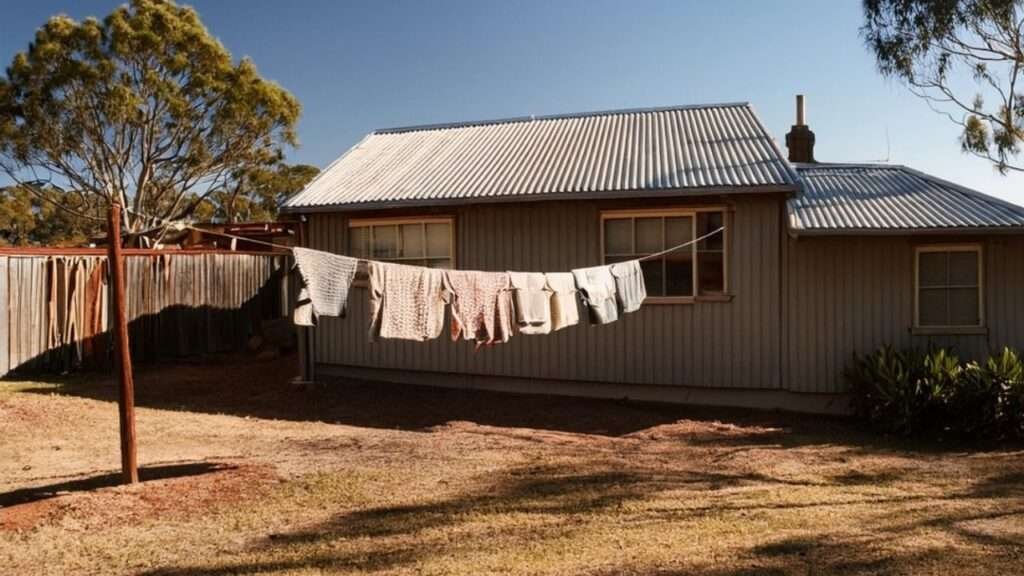
Was The Hills Hoist Was The Invention That Lifted a Nation’s Spirit?
Disclaimer.
This article offers
historical and cultural commentary on the Hills Hoist and its role in shaping
Australian domestic life.
It is based on publicly
available research and is intended for educational and reflective purposes
only.
The views expressed are
those of the author and do not constitute financial, legal, or professional
advice.
Readers are encouraged
to conduct their own research and draw independent conclusions.
Article
Summary.
The Hills Hoist is more
than a backyard clothesline, to me it’s a symbol of Australian ingenuity,
resilience, and reinvention.
Born in the crucible of
post-war optimism, it rose alongside the great suburban sprawl, transforming
the humble act of drying laundry into a ritual of domestic pride.
While Lance Hill’s 1945
design became iconic, the rotary clothes hoist’s true genesis lies in Gilbert
Toyne’s 1911 patent, a quiet innovation by a Victorian blacksmith that would
one day become a national emblem.
With this article, I’ll
trace the arc of that transformation. From the backbreaking labour of pre-Hoist
wash days to the engineering brilliance and marketing savvy that elevated a
utilitarian device into cultural folklore, we explore how a simple mechanism
came to embody the Australian Dream.
Across the 13 chapters,
we’ll journey from sagging clothes lines slung between posts in the ground to
spinning steel sentinels of suburbia, uncovering how one invention helped lift
not just our laundry, but the spirit of our nation.
Top 5
Takeaways.
1.
Authorship
Matters: Gilbert Toyne patented the
first rotary clothes hoist in 1911. Lance Hill’s 1945 version refined it for
mass production and cultural ubiquity.
2.
Labour
Transformed: Before the Hoist, laundry
was a test of endurance—especially for women managing wartime homes. The rotary
hoist marked a turning point in domestic ease.
3.
Engineering
Excellence: With spiral rotation,
adjustable height, galvanised steel, and taut wire design, the Hills Hoist was
built to endure—and it did.
4.
Cultural
Iconography: From backyard cricket
stumps to Olympic ceremonies, the Hills Hoist became a fixture in Australia’s
visual and emotional landscape.
5.
Environmental
Legacy: Long before sustainability
was a buzzword, the Hoist offered zero-energy drying and decades-long
durability—values that echo louder than ever today.
Table of Contents.
1.0 The Aussie Backyard
Before the Hoist.
2.0 Laundry as Labour.
3.0 The DIY Clothesline Era.
4.0 Australia Was Ready For Homegrown Innovation.
5.0 Lance Hill and the Birth of the Hoist.
6.0 Marketing the Modern Domestic Dream.
7.0 Functional Brilliance: The Engineering of Everyday Life.
8.0 The Backyard as Australia’s Social Stage.
9.0 The Hills Hoist in Art, Literature, and Film.
10.0 Endurance and Adaptation: Beyond the Rotary Line.
11.0 Environmental and Heritage Perspectives.
12.0 Five Reflections Beyond the Backyard.
13.0 Conclusion.
1.0 The Aussie Backyard Before the Hoist.
Picture an Australian
backyard in the early 1940s. Corrugated iron roofs catch the afternoon sun,
throwing glints of light across weathered timber fences. Children navigate
around a sagging clothesline stretched between posts jammed into the ground,
their bare feet dodging puddles from the morning’s washing water.
Magpies call from gum
tree branches as shadows lengthen across kikuyu grass. The air carries the
scent of sun-dried cotton mixed with the distinctive notes of eucalyptus and
earth.
This was the domestic
landscape before the Hills Hoist—a world where practicality reigned supreme and
comfort remained aspirational.
Clotheslines consisted
of wire strung between rough-hewn timber posts, often supplemented by mid-span
supports to prevent sagging under the weight of wet sheets and blankets.
The lines themselves
told stories of resourcefulness: repurposed fencing wire, salvaged timber, and
makeshift tensioning systems that required constant adjustment.
The backyard of this
era embodied a particular Australian pragmatism born from necessity rather than
design.
These were
fundamentally a utilitarian and productive space, driven by the economic
necessities of the post-depression era and the ongoing wartime economy. Its
primary functions were directly tied to family self-sufficiency and national
support:
1.
Food Production: The space
was essential for maintaining a vegetable garden (known as the “Victory
Garden” during WWII) and an orchard. This cultivation was a critical
strategy to supplement food rations and relieve the burden on commercial
agriculture, allowing produce to be directed towards the armed forces.
2.
Essential Services: It
housed key infrastructure necessary for the running of the household, including
the wash-house (a separate laundry facility often containing a copper for
boiling clothes), the chicken coop (or “chook shed”) for eggs and
meat, and often the outhouse (or “dunny”), as not all rural homes had
indoor plumbing.
3.
Storage and Processing: The
backyard contained sheds for storing wood and fuel, gardening tools, and served
as the site for preserving the harvest, such as preparing and canning large
quantities of fruit and vegetables.
Yet within this
utilitarian framework, Australian families were cultivating something
distinctive: a relationship with outdoor domestic space that would later become
central to national identity.
It was 1945, and the
nation stood at a threshold. Soldiers were returning from war, families were
reuniting, and the suburban expansion that would define post-war Australia was
beginning to take shape. The backyard clothesline, humble and overlooked, was
about to become the site of an innovation that would capture the imagination of
an entire nation.
2.0 Laundry as Labour.
To understand the
significance of the rotary clothes hoist, one needs to appreciate the physical
reality of laundry work in pre- and wartime Australia.
Washing clothes
represented one of the most physically demanding household tasks, a weekly
ordeal that consumed hours and tested endurance.
The process began with
hauling water, often from outdoor tanks or copper boilers heated over wood
fires. Women knelt beside washtubs, scrubbing fabrics against washboards until
their knuckles reddened and backs ached.
Heavy, water-soaked
items like sheets and towels required wringing by hand, a task that strained
shoulders and wrists.
The soiled water then
needed emptying, often bucket by bucket, before the entire process repeated for
rinsing.
During World War II,
these demands intensified as women managed households alone while men served
overseas.
The domestic sphere
became a domain of remarkable resilience, where Australian women balanced
childcare, rationing, victory gardens, and volunteer war work alongside
traditional household duties. Contemporary sources, including articles from The
Australian Women’s Weekly and oral histories collected by heritage
organisations, document the sheer scope of this labour.
A typical weekly wash
might involve processing clothing, bedding, towels, and work garments for
entire families, sometimes supplemented by taking in laundry for income.
The physical toll
manifested in chronic back pain, joint problems, and premature aging of hands.
Yet this hardship rarely received acknowledgment beyond the domestic sphere.
Once washed, the
challenge of drying began. Clothes needed carrying to outdoor lines, often in
heavy baskets that strained arms and backs.
The lines themselves, strung at fixed heights, required constant retensioning and stooping.
Tall
individuals bent awkwardly; shorter people struggled to reach. In wet weather,
the entire load might need rehanging multiple times or brought indoors to drip
across furniture and floors.
This grinding physical
reality created fertile ground for innovation.
Australian ingenuity
has often emerged from such necessity, the desire to reduce labour, save time,
and improve quality of life through practical problem-solving.
The rotary clothes hoist
would emerge directly from this context, offering a solution that addressed
multiple pain points simultaneously.
3.0 The DIY Clothesline Era.
Before rotary hoists
spun their way into ubiquity, Australian backyards were theatres of domestic
improvisation.
The fixed clotheslines
were everywhere you looked, yet, they were flawed and required endless
tinkering, adaptation and ingenuity.
Traditional designs
relied on timber posts, often eucalyptus or hardwood, sunk deep into the soil
at intervals dictated more by available space than engineering precision.
Cement was a luxury in many rural households—unavailable, unaffordable, or
simply impractical.
Instead, posts were
driven directly into the earth, braced with stones or packed soil, their
stability a matter of hope and habit.
Between these posts,
wire was strung under tension, meant to suspend laundry above the dirt.
In theory, it worked.
In practice, wire sagged under the weight of wet garments, rusted in the rain,
and pulled loose from iron staples.
Timber warped, rotted,
and leaned. The clothesline became a living structure, one that aged, bent, and
broke.
To counter these flaws,
families introduced mid-span supports: extra posts or props wedged beneath
sagging lines.
These makeshift
solutions turned backyards into obstacle courses, with children and pets
weaving through upright hazards.
Tales of face-height
collisions and wire-whip injuries became part of family folklore. Some
householders pushed further, crafting frames from salvaged steel or water pipe.
These metal structures
offered durability but rarely addressed ergonomics. Lines remained fixed in
height, demanding users bend, stretch, and adapt to the structure, never the
other way around.
The most inventive
built pulley systems or hinged frames, allowing lines to tilt or rise. These
innovations were clever but localised—labour-intensive, resource-dependent and
limited to those with metalworking skills or access to materials.
What few realised was
that a more elegant solution had already been forged.
In 1911, Gilbert Toyne,
a Victorian blacksmith born in 1888, patented the first rotary clothes hoist.
His later patents in
1923 and 1925 introduced the enclosed crown-wheel and pinion winding mechanism,
the engineering heart of what would become the Hills Hoist.
Toyne’s design was
visionary: fully metal construction, height adjustability, and rotational
access to every line from a single standing position. Between the wars, his
Aeroplane Clothes Hoist Company marketed thousands of units across Australia
and New Zealand.
Yet adoption remained
limited. Economic hardship, distribution challenges, and the inertia of
tradition kept fixed lines in place. Toyne’s invention was brilliant—but it
awaited a moment, a messenger, and a market.
4.0 Australia Was Ready For Homegrown Innovation.
The years following
World War II reshaped Australian society in fundamental ways. Soldiers returned
to a nation eager to move beyond wartime austerity towards prosperity and
normalcy.
The baby boom was
beginning, marriage rates climbed, and suburban expansion accelerated
dramatically.
This period represented
more than demographic change, it embodied a cultural shift towards domesticity,
homeownership, and the pursuit of what would become known as the Australian
Dream.
Between 1945 and 1960,
Australia’s suburban landscape transformed.
Government housing
initiatives, soldier settlement schemes and accessible home loans enabled
unprecedented homeownership rates, reaching approximately 70% by the 1960s.
Quarter-acre blocks became
standard, providing space not just for houses but for the backyards that would
define Australian domestic culture.
This expansion
coincided with evolving expectations about modern living. Advertising, women’s
magazines, and emerging consumer culture promoted convenience as progress.
Products promising to
save time and effort found eager markets among families establishing households
and navigating the demands of growing families. The narrative was clear:
modernity meant efficiency, and efficiency liberated time for family, leisure,
and personal pursuits.
The cultural context
was distinctly Australian. While influenced by American and British trends, the
nation maintained its own character pragmatic, egalitarian and sceptical of
pretension.
Innovations that
succeeded in this market combined practical utility with affordability and
durability.
Australians valued
products that worked reliably under harsh conditions: intense sun, variable
rainfall, and the general wear of active family life.
This environment proved
ideal for the Hills Hoist. It arrived at precisely the moment when Australian
families were establishing suburban homes, when women’s domestic labour was
simultaneously valued and questioned and when “Australian-made”
carried pride and preference.
The rotary hoist
promised to transform one of the most labour-intensive household tasks, and it
did so with engineering that suited Australian conditions and Australian
budgets.
The house, the car, the
garden and the backyard, these foundational elements comprised the domestic
ideal that would define a generation.
Within that framework,
the Hills Hoist would claim a position at the literal and symbolic centre,
transforming how Australians approached one of life’s most mundane necessities.
5.0 Lance Hill and the Birth of the Hoist.
The Hills Hoist origin
story has achieved near-mythic status in Australian culture, yet the full
picture reveals a more complex narrative of innovation, commercialisation, and
calculated timing.
In 1945, Lance Hill
returned to Adelaide from military service to a domestic challenge that would
prove historically significant.
His wife, Sherry,
needed additional space to hang washing, away from their lemon tree that was
staining the clothes.
Hill, working as a
mechanic, responded with characteristic Australian practicality: he built a
solution from scrap materials available in his workshop.
Hill’s first model was
welded together from salvaged pipe and metal, incorporating a winding mechanism
that allowed the entire frame to be raised or lowered depending on need.
The design could
rotate, enabling users to access all clotheslines while remaining in one
position, a significant ergonomic improvement over fixed lines requiring
constant repositioning.
What Hill created
wasn’t entirely original, though this fact has often been obscured in popular
retellings.
Gilbert Toyne’s rotary
clothes hoist patents from 1911, 1923, and 1925 had already established the
fundamental design principles.
Toyne’s crown-wheel and
pinion winding mechanism, his rotational framework and his adjustable height
system were the engineering foundations upon which Hill built.
However, Hill’s
contribution was both significant and transformative.
He simplified the
design for easier manufacturing, reduced costs to make the product accessible
to average households and most importantly, recognised its commercial potential
at exactly the right historical moment.
By 1945, Toyne’s 1925
patent had expired, meaning Hill could legally modify and commercialise the
design without infringement.
In 1946, Hill partnered
with Harold Ling, bringing together complementary skills: Hill’s mechanical
expertise and Ling’s business acumen.
Together they refined
the design, developed manufacturing processes, and established distribution networks.
Hills Hoists Ltd was
formally established in 1948, marking the beginning of what would become one of
Australia’s most recognisable brands.
The patent Hill secured
covered his specific modifications and manufacturing methods. Early advertising
emphasised the product’s Australian origins, its labour-saving benefits, and
its durability under harsh conditions.
Distribution expanded
rapidly, first throughout South Australia, then nationally.
By the early 1950s, the
Hills Hoist had achieved market dominance, becoming virtually synonymous with
rotary clothes hoists in the Australian consciousness.
It’s worth clarifying
the historical record: Hill was not the first to design a rotary clothes hoist,
nor did he claim to be in his early business dealings.
His achievement lay in
perfecting the concept for mass production and transforming it from a niche
product into a household standard.
He identified a market
ready for the innovation and executed a business strategy that made the product
accessible, affordable, and aspirational.
The truth enhances
rather than diminishes Hill’s legacy.
Gilbert Toyne conceived
the rotary hoist and proved its engineering viability.
Lance Hill recognised
its potential, refined it for mass appeal, and built the commercial infrastructure
that brought it to every Australian suburb.
Together, these two
Australian inventors created an icon, one through innovation, the other through
popularisation.
6.0 Marketing the Modern Domestic Dream.
Hills Industries didn’t
merely sell clotheslines; they marketed a vision of modern Australian
domesticity.
The company’s
advertising strategy mirrored broader post-war trends that positioned consumer
products as gateways to better living.
Radio
jingles carried the Hills message into Australian homes throughout the
1950s and 1960s.
These weren’t simply
product announcements but carefully crafted narratives about efficiency,
modernity, and domestic pride.
The advertisements
typically featured scenarios of harried housewives transformed by labour-saving
innovations, with the Hills Hoist positioned as a central element in the modern
home.
Print advertising in
The Australian Women’s Weekly and similar publications showed smiling women
effortlessly hanging washing, often with clean, well-dressed children playing
nearby in sun-drenched backyards.
The visual language
emphasised ease and grace where previous generations had experienced strain and
struggle.
Catalogues detailed the
product’s features, galvanised steel construction, adjustable height,
rotational capability, while situating it within the broader narrative of
domestic advancement.
Live demonstrations
became powerful marketing tools. Hills representatives appeared at agricultural
shows, home exhibitions, and community events, showing audiences how quickly
laundry could be hung and how easily the mechanism operated.
Seeing the product in
action proved more persuasive than any written description, particularly for a
generation accustomed to scepticism about advertising claims.
The marketing cleverly
positioned the Hills Hoist within the “freedom through technology”
narrative that defined post-war consumer culture.
Electric appliances,
packaged foods and labour-saving devices were all marketed with similar
promises: buy this product and reclaim time for what truly matters—family,
leisure, personal development.
The Hills Hoist fit
perfectly within this framework, offering tangible reduction in physical labour
for a one-time investment.
From a contemporary
perspective, particularly considering feminist analyses of this period, these
“efficiency products” created interesting contradictions.
They didn’t
fundamentally challenge who performed domestic labour, but they did acknowledge
that such labour was burdensome and worthy of technological solutions.
The products
simultaneously reinforced traditional gender roles while offering tools that
measurably reduced physical strain.
Hills Industries’
success also reflected broader marketing sophistication emerging in post-war
Australia.
The company understood
that products succeeded not just through utility but through emotional
resonance and social positioning.
The Hills Hoist
represented more than clothes drying, it symbolised participation in modern
Australian life, alignment with progress, and pride in Australian
manufacturing.
This marketing strategy
proved remarkably effective.
By the 1960s, the Hills
Hoist had achieved cultural ubiquity, appearing in backyards across suburban
Australia.
It had transcended its
status as mere product to become a recognised symbol of Australian domestic
life, an achievement that speaks to both the product’s genuine utility and the
skill with which it was promoted.
7.0 Functional Brilliance: The Engineering of Everyday
Life.
Beneath its seemingly
simple appearance, the Hills Hoist represented sophisticated mechanical
engineering tailored specifically to Australian conditions and domestic
requirements.
The spiral rotation
system formed the core of the design’s brilliance.
Rather than requiring
manual repositioning of laundry baskets or physical movement around the
structure, users could rotate the entire clothesline array with minimal effort,
accessing all lines from a single standing position.
This innovation alone
dramatically reduced the physical demands of hanging laundry, particularly for
those with mobility limitations or back problems.
The galvanised steel
construction addressed the harsh realities of the Australian climate. Intense
ultraviolet radiation, salt-laden coastal air, variable humidity and
temperature extremes all challenged outdoor metal structures.
Galvanisation (coating
the steel with zinc) provided corrosion resistance that enabled decades of
service with minimal maintenance.
Early Hills Hoists,
properly maintained, could outlast the houses they served.
The wire tensioning
system represented another engineering refinement. Rather than simply stringing
wire between arms, the design incorporated tensioners that maintained consistent
tautness across all lines.
This prevented sagging
under load and ensured even drying, as clothes hung at consistent heights with
good air circulation around all items.
The adjustable crank
mechanism provided perhaps the most significant ergonomic improvement over
fixed-height alternatives.
Users could lower the
entire structure for easy hanging and removal, then raise it to heights that
maximised sun exposure and air circulation while keeping laundry clear of pets,
children, and ground moisture.
This adjustability
accommodated users of varying heights, addressing a persistent problem with
fixed installations.
Comparing early Hills
models with competitors like Austral’s Super Line reveals the thoughtfulness of
Hill’s design choices.
While competitors often
emphasised maximum line length or load capacity, Hills balanced these factors
with durability and ease of use.
The structural
engineering ensured that the unit remained stable under load without requiring
concrete installation beyond a single central post, simplifying installation
considerably.
The Hills Heritage 7
model, continuing the traditional design into the present day, offers
approximately 49 metres of drying line, sufficient for complete household
laundry loads while maintaining structural integrity and ease of operation.
This capacity, combined
with the product’s longevity, meant that a single Hills Hoist could serve
multiple generations within the same family.
From an environmental
perspective, though the concept wasn’t framed in those terms during the
product’s early decades, the Hills Hoist offered significant advantages.
Line drying eliminated
energy consumption associated with electric dryers while preserving fabric
quality through gentler drying.
The product’s
exceptional durability meant minimal resource consumption over its lifespan and
at end-of-life, the steel components remained fully recyclable.
The engineering
philosophy evident in the Hills Hoist, balancing function, durability,
cost-effectiveness and user experience, reflected broader principles of
Australian industrial design during its manufacturing golden age.
Products were expected
to work reliably under challenging conditions, require minimal maintenance, and
justify their cost through years of dependable service.
The Hills Hoist
exemplified these values, which helps explain its remarkable staying power in
the Australian consciousness.
8.0 The Backyard as Australia’s Social Stage.
The Hills Hoist didn’t
simply occupy the backyard; it helped transform that space into something
distinctly Australian, a zone where utility, leisure, socialisation, and family
life intersected in ways that defined suburban culture.
Picture a typical
Saturday afternoon in suburban Australia during the 1960s or 1970s. The Hills
Hoist stands at the centre of the backyard, sheets and towels spinning gently
in the breeze.
Children used the
rotating frame as an impromptu merry-go-round, their delighted shrieks mixing
with magpie warbles and the distant hum of lawnmowers.
Mothers chat across
fence lines while monitoring washing and supervising play. Fathers tinker with
cars or tend vegetable gardens, occasionally pausing to adjust a clothesline or
retrieve a cricket ball.
This scene, repeated in
countless variations across Australian suburbs, illustrates how the backyard
evolved from purely functional space into a social hub.
The Hills Hoist,
positioned prominently in most backyards, became a reference point around which
other activities organised themselves.
Its presence marked the
space as domestic yet outdoor, private yet sometimes shared with neighbours and
friends.
The backyard’s social
significance reflected particularly Australian values around privacy,
self-sufficiency, and informal community.
Unlike front yards or
footpaths, which inhabited more public domains, backyards offered family
territory where Australian informality could flourish.
Here, children played
unsupervised but within earshot, families entertained casually, and the demands
of maintaining appearances relaxed. The Hills Hoist participated in this
culture in multiple ways. It served its intended purpose efficiently, freeing
time that could be redirected towards leisure.
Its durability and
low-maintenance design meant it rarely demanded attention, blending into the
background of backyard life.
Yet it remained
visually prominent, a steel sculpture of suburban domesticity standing witness
to countless family moments.
For children, the Hills
Hoist held particular fascination. Many Australians recall using the rotating
frame as playground equipment, riding the spinning arms or hanging upside down
from the lines.
This informal play
equipment status, while not manufacturer-intended, became part of the product’s
cultural identity.
Parents generally
tolerated such usage when laundry wasn’t hanging, recognising that a bit of
creative misuse caused little harm to such robust construction.
The backyard itself,
with the Hills Hoist as its centrepiece, became central to the Australian
Dream’s domestic component.
While the house
represented shelter and the car represented mobility, the backyard embodied a
particularly Australian relationship with space, climate, and outdoor living.
Here families could
pursue creative projects, grow vegetables, raise children with independence,
and host gatherings without the formality of indoor entertaining.
The Hills Hoist stood
at the literal and figurative centre of this domestic landscape. Its rotating
arms traced circles in the air like compass roses, marking the backyard’s
boundaries and possibilities.
It represented
modernity brought home, Australian engineering serving Australian families, and
the transformation of labour into something more efficient, more modern, more
aligned with post-war aspirations.
This cultural
centrality explains why the Hills Hoist transcended its purely functional
identity.
It wasn’t simply a
clothesline; it was a marker of Australian suburban life, a symbol recognised
and understood across social classes and geographic regions. The backyard was Australia’s social stage, and
the Hills Hoist played a leading role.
9.0 The Hills Hoist in Art, Literature, and Film.
When filmmakers and
artists sought visual shorthand for Australian suburban life, they consistently
returned to the Hills Hoist.
Its presence in
cultural production reflects and reinforces its status as a national icon. The
1994 film Muriel’s Wedding features the Hills
Hoist as part of its suburban setting, helping establish the domestic
environment from which Muriel desperately seeks escape.
The rotating clothesline
appears in several scenes, serving as visual punctuation for the stifling
conformity of suburban life that the film explores.
Its presence signals
“Australian suburb” to audiences with immediate clarity.
The Castle, released in 1997, to me, was a masterpiece in
Australianism, similarly deployed the Hills Hoist as visual shorthand for
working-class suburban culture.
In the Kerrigan
family’s backyard, the clothesline stands alongside the powerlines, the
greyhound kennel and the airport perimeter fence, elements of the domestic
landscape that the film celebrates rather than critiques.
Here the Hills Hoist
represents not conformity but authenticity, the real Australia of ordinary
families and unpretentious living.
Australian visual
artists have repeatedly incorporated the Hills Hoist into works exploring
national identity, suburbia, and domestic life.
Photographers have
captured the structure in various contexts, silhouetted against sunsets,
standing stark in abandoned yards, or laden with laundry in active use.
Painters have rendered
it in styles ranging from photorealistic to abstract, each interpretation
exploring different dimensions of its cultural significance.
The structure’s
geometric form, the central post, radiating arms and catenary curves of hanging
lines, offers artists strong compositional elements. Its familiarity to
Australian audiences means it carries immediate cultural resonance, requiring
no explanation or context.
The Hills Hoist
functions as visual language, communicating “home,” “Australia,”
and “everyday life” with elegant efficiency.
Perhaps the Hills
Hoist’s most prominent cultural moment came during the Sydney 2000 Olympics
closing ceremony.
In a segment
celebrating Australian suburbia, performers danced around rotating Hills Hoists
in a choreographed display that presented the clothesline as an emblem of
national identity to a global audience.
The choice to feature
this domestic object in such a prominent international showcase demonstrates
how thoroughly it had become associated with Australian cultural identity.
The ceremony’s creative
team understood that the Hills Hoist represented something larger than its
functional purpose.
It embodied Australian
values of practicality, ingenuity, and finding meaning in ordinary objects.
It suggested a culture
comfortable celebrating the everyday rather than requiring grand gestures or
aristocratic traditions.
The rotating
clothesline, in this context, became a declaration: this is what we value, this
is who we are.
Literature has similarly
embraced the Hills Hoist as cultural marker. It appears in memoirs and
autobiographies when authors establish childhood settings.
Poets have used it
metaphorically to explore themes of domesticity, gender roles, and Australian
identity.
Novelists deploy it as
scene-setting detail that grounds narratives in specific times and places.
This consistent
presence across art forms reveals a broader cultural pattern: Australia’s
tendency to find meaning and identity in ordinary objects and experiences rather
than in grand monuments or aristocratic heritage.
The Hills Hoist, like
Vegemite or the Holden Ute, represents democratic iconography, symbols
accessible to and recognised by the majority of the population regardless of
economic or social status.
The transformation from
functional object to cultural symbol involves complex processes of repetition,
recognition, and emotional association.
The Hills Hoist
achieved this transformation through its ubiquity, its reliability, and its
presence during formative family moments.
It witnessed
childhoods, supported households, and endured across generations, accumulating
cultural meaning through sheer persistence and utility.
10.0 Endurance and Adaptation: Beyond the Rotary Line.
Hills Industries’ story
extends beyond the rotary clothes hoist, though that product remained central
to the company’s identity and reputation throughout its evolution.
By the 1960s and 1970s,
the company had diversified significantly.
Hills entered the
children’s playground equipment market, manufacturing metal slides, swings and
climbing frames that appeared in parks and backyards across Australia.
This diversification
made strategic sense—the company possessed expertise in weather-resistant metal
fabrication and had established trust with families through the clothesline
business.
Television antenna
manufacturing represented another significant product line as television
ownership became near-universal in Australian households during the 1960s.
Hills TV antennas became as common on rooftops as Hills Hoists were in
backyards, extending the brand’s presence throughout the domestic landscape.
The company continued
innovating in the home products category through the 1980s and beyond,
introducing various household hardware and storage solutions.
However, the late
twentieth century brought significant challenges to Australian manufacturing.
Globalisation, tariff
reductions, and cheaper offshore manufacturing created competitive pressures
that affected many Australian industrial companies.
Hills Industries
responded to these pressures through various strategies: continued product
innovation, focus on premium segments where quality justified higher prices,
and strategic business adjustments.
The company’s evolution
reflected broader patterns in Australian manufacturing—a shift from mass
production of everyday items towards more specialised products and markets.
Despite these changes,
the company recognised the enduring appeal of its original product.
Contemporary
“Heritage” models deliberately echo the classic Hills Hoist design,
appealing to nostalgia while incorporating modern materials and manufacturing
techniques.
These products serve
both practical and emotional functions—they dry clothes efficiently while
connecting current generations to cultural traditions and childhood memories.
The export legacy of
Hills products deserves mention as well. The clothesline achieved sales in
various international markets, carrying Australian design and manufacturing
reputation abroad.
While never achieving
the same cultural penetration overseas as in Australia, the Hills Hoist
represented Australian engineering capability and innovation in global markets.
The symbolic
significance of “Made in Australia” evolved throughout this period.
During the product’s early decades, Australian manufacturing represented
national pride and economic nationalism, purchasing locally made goods
supported Australian workers and industries.
As manufacturing
declined, “Made in Australia” acquired nostalgic dimensions,
representing a perceived golden age of local production and quality
craftsmanship.
Hills Industries
navigated these transitions with varying success, but the Hills Hoist itself
remained remarkably resistant to obsolescence.
While electric dryers
became standard in many Australian households, line drying persisted for
various reasons: energy efficiency, fabric care, the sensory appeal of
sun-dried laundry, and simple economics.
The rotary hoist
continued serving its fundamental purpose regardless of technological alternatives.
This endurance speaks
to the product’s fundamental soundness.
Good engineering,
appropriate materials, and clear functional advantages created a product that
didn’t require constant replacement or updating.
In an era increasingly
characterised by planned obsolescence and rapid product cycles, the Hills
Hoist’s decades-long service life represented different values, durability,
repairability and design integrity.
The company’s story
illustrates how iconic products can become both assets and constraints.
The Hills Hoist
provided brand recognition and customer loyalty, but it also created
expectations about quality and Australian provenance that became challenging to
maintain as economic conditions shifted.
Managing this legacy
while adapting to contemporary market realities required balancing respect for
tradition with commercial pragmatism.
11.0 Environmental and Heritage Perspectives.
Long before
environmental consciousness became mainstream, the Hills Hoist embodied
sustainability principles that contemporary perspectives increasingly value.
The environmental
calculus is straightforward: the Hills Hoist requires zero operational energy.
Line drying uses solar
radiation and wind for the free energy they provide, eliminating the
substantial electricity consumption associated with electric dryers.
Over a typical
household’s annual laundry requirements, this represents significant energy
savings.
Multiply those savings
across millions of households and decades of use, and the cumulative impact becomes
substantial.
Beyond energy
consumption, the product’s longevity offers environmental advantages. A
well-maintained Hills Hoist can function for thirty, forty, or fifty years with
minimal intervention.
This extended service
life reduces resource consumption associated with manufacturing replacements
and minimises waste.
When these units
eventually reach end-of-life, the steel construction enables complete
recycling, recovering materials for new uses rather than contributing to
landfill.
Contemporary research
comparing line drying with electric dryers consistently demonstrates the
environmental superiority of the former.
Electric dryers rank
among the highest energy-consuming household appliances, generating significant
carbon emissions depending on electricity sources.
They also expose
fabrics to heat and tumbling that accelerates wear, effectively reducing
clothing lifespan and increasing textile waste.
The renewed interest in
low-impact living has brought attention back to clotheslines, including rotary
hoists.
Environmental advocates
promote line drying as a simple, effective way households can reduce energy
consumption and carbon footprint.
The Hills Hoist, in
this context, represents not outdated technology but time-tested sustainable
practice.
From a heritage
perspective, the Hills Hoist has achieved recognition through various channels.
The National Museum of
Australia includes Hills Hoists in its collections, recognising the product’s
significance in Australian social history.
Heritage Hill oral
history projects have collected memories and stories associated with the
product, preserving personal narratives that illuminate its role in daily life.
Museum displays
typically contextualise the Hills Hoist within post-war suburban expansion, domestic
labour changes and Australian manufacturing history.
These interpretations
help contemporary audiences understand not just the object but the social and
economic conditions that made it significant.
The clothesline becomes
a lens for examining broader historical themes.
Some communities and
heritage organisations have undertaken preservation projects focused on Hills
Hoists and other examples of mid-century Australian industrial design.
These initiatives
recognise that everyday objects carry cultural significance and historical
information that warrant conservation efforts.
A restored Hills Hoist
in a heritage home or community space serves educational purposes while
maintaining tangible connections to past practices.
The preservation
impulse reflects recognition that material culture documents ways of life that
may otherwise vanish from collective memory.
Future generations,
living in climate-controlled homes with electric dryers, may struggle to
understand the sensory experience of line-dried laundry or the physical routine
of outdoor washing.
Preserved examples,
combined with oral histories and archival materials, maintain connections to
these practices.
Environmental and
heritage perspectives converge around recognition that the Hills Hoist represents
values worth preserving: durability over disposability, function over fashion,
environmental consideration embedded in design.
These aren’t explicitly
nostalgic positions but rather acknowledgments that some older practices and
products embody principles relevant to contemporary challenges.
The Hills Hoist offers
a case study in how thoroughly successful products can achieve multiple layers
of significance.
It functions
practically, carries cultural meaning, embodies environmental advantages, and
documents historical change.
This multiplicity
explains its persistence in Australian consciousness despite technological
alternatives and changing domestic practices.
12.0 Five Reflections Beyond the Backyard.
This section explores
five distinct perspectives on the Hills Hoist legacy, each offering a different
lens through which to understand its broader significance in Australian
culture, history and identity.
12.1 Women Who Raised the Nation’s Washing.
The Hills Hoist’s story
cannot be told without centring the women whose labour it was designed to
reduce.
To understand its
significance requires appreciating the sheer physical burden that laundry
represented in the decades before and immediately after World War II.
Research into
mid-twentieth century domestic labour reveals staggering disparities.
Australian women in the 1950s performed between ten and fifteen times more
weekly housework hours than their counterparts today.
Laundry alone could
consume an entire day each week, washing, wringing, hanging, monitoring
weather, retrieving, ironing and folding.
The pre-Hoist routine
demanded constant physical exertion. Women knelt at washtubs, scrubbing fabric
against corrugated washboards until their hands blistered and backs ached.
They wrung heavy,
waterlogged items by hand, twisting towels and sheets with force that strained
wrists and shoulders.
They carried laden
baskets across backyards, stretched to reach fixed lines, and stooped to
retrieve dropped items from the ground.
During wartime, these
demands intensified dramatically.
With men serving
overseas, Australian women managed households independently while often working
in factories, farms, or volunteer organisations supporting the war effort.
The domestic sphere
became a domain of remarkable resilience where women balanced childcare,
rationing, victory gardens, war work, and traditional household duties with
minimal support.
The post-war period
brought complex social dynamics. Many women who had experienced independence
and capability during wartime found themselves encouraged, sometimes pressured back
into purely domestic roles.
The cultural narrative
celebrated homemaking and motherhood while advertising promoted products that
would make these roles more efficient and modern.
The Hills Hoist arrived
within this context as a genuine labour-saving innovation. The adjustable
height mechanism eliminated constant stooping and stretching.
The rotational design
meant women could hang an entire load while standing in one position rather
than circling the yard with heavy baskets.
The efficient design
reduced time spent on the weekly wash, reclaiming hours that could be directed
elsewhere.
This efficiency
represented tangible progress, though it came with nuanced social implications.
Labour-saving devices
didn’t fundamentally challenge gendered divisions of household work—laundry
remained women’s responsibility regardless of the tools available.
However, these
innovations did acknowledge that such work was physically demanding and worthy
of technological solutions.
The products
simultaneously reinforced traditional roles while offering tools that
measurably improved daily experience.
Contemporary feminist
analyses of this period recognise these contradictions.
The Hills Hoist didn’t
liberate women from domestic labour, but it made that labour less physically
punishing.
It represented progress
within existing social structures rather than transformation of those
structures themselves.
Personal accounts and
oral histories reveal how women experienced these changes. Many described the
Hills Hoist with genuine enthusiasm, the relief of not bending constantly, the
satisfaction of efficiently completing a demanding task and the pride in owning
a modern appliance that neighbours recognised.
These responses reflect
authentic improvements in daily quality of life, even within social
constraints.
The Hills Hoist also
became part of women’s social networks.
Backyard conversations
across fence lines often occurred while hanging or retrieving washing.
The clothesline marked
territory where women’s work was visible and where informal community
connections formed.
These moments of
connection and conversation, though occurring within domestic labour contexts,
represented important social bonds in suburban neighbourhoods.
Honouring this history
means recognising the women who performed countless hours of physically
demanding domestic labour, often with minimal acknowledgment or support.
It means understanding
that innovations like the Hills Hoist, while not revolutionary in feminist
terms, represented meaningful improvements in daily life.
It also means
appreciating that the efficient completion of necessary tasks provided women
with dignity, pride in capability and incremental gains in time and physical
wellbeing that shouldn’t be dismissed as trivial.
The Hills Hoist stands
as a monument not just to engineering ingenuity but to generations of
Australian women who raised families, maintained households and contributed
immeasurably to national life through work that often went unrecognised beyond
the domestic sphere.
12.2 Australian Icons Compared.
The Hills Hoist belongs
to a constellation of Australian icons that collectively defined mid-twentieth
century national identity.
Understanding its
significance requires positioning it alongside other symbols that captured
similar themes of resilience, accessibility, and national utility. Consider
Vegemite, introduced in 1922 but achieving true cultural penetration during and
after World War II.
This thick, salty yeast
extract represented Australian resourcefulness during periods of scarcity.
It was nutritious,
shelf-stable, affordable, and distinctly Australian. Like the Hills Hoist,
Vegemite transcended its functional purpose to become a symbol of national
identity, something Australians recognised, consumed, and claimed as uniquely
theirs.
The Holden 48-215,
released in 1948, offered another parallel.
As Australia’s first
mass-produced car, the Holden represented mobility, suburban expansion, and
manufacturing capability.
It enabled families to
access new housing developments spreading across metropolitan peripheries.
The car facilitated the
suburban lifestyle that the Hills Hoist served, both products emerged from and
enabled the same post-war domestic transformation.
The Snowy Mountains
Hydro-Electric Scheme, constructed between 1949 and 1974, operated on a
different scale but embodied similar national values.
This massive
infrastructure project represented collective effort, engineering ambition, and
nation-building through practical achievement.
It demonstrated
Australia’s capability to undertake major technical projects while providing
essential electricity and irrigation infrastructure.
What united these
diverse icons? Several common threads emerge.
First, they represented
Australian capability, products and projects designed, manufactured, or
constructed domestically.
During an era when
“Australian-made” carried significant pride, these icons demonstrated
that the nation could produce world-class outcomes.
Second, they embodied
practical utility rather than ornamental prestige.
Australians embraced
icons that served clear purposes: nourishment, transportation, power
generation, and efficient domestic labour.
This reflected cultural
values that prioritised function, scepticism towards pretension, and
appreciation for things that worked reliably.
Third, they were
accessible across social classes. Unlike icons rooted in aristocratic
traditions or exclusive luxury goods, these symbols belonged to ordinary
Australians.
Whether you lived in a
weatherboard cottage or a brick veneer home in the expanding suburbs, you
likely owned a Hills Hoist, spread Vegemite on toast, aspired to a Holden, and
benefited from Snowy Hydro power.
Fourth, they arrived
during a particular historical moment—the post-war decades when Australia was
actively constructing its modern identity.
These icons emerged as
the nation urbanised rapidly, pursued ambitious development goals, and sought
to establish distinctive cultural markers separate from British or American
influences.
The Hills Hoist fit
seamlessly within this constellation. Like Vegemite, it was an everyday product
elevated to symbolic status.
Like the Holden, it
served the expanding suburbs and represented Australian manufacturing.
Like the Snowy Scheme,
it demonstrated engineering capability and improved quality of life through
practical innovation.
Together, these icons
built the mythology of an industrious, inventive nation that valued practical
achievement over inherited prestige.
They suggested a
culture confident in its capability, comfortable with informal egalitarianism,
and proud of making things that lasted and worked well.
This comparative
perspective reveals why the Hills Hoist achieved and maintained iconic status.
It wasn’t simply a good
product, though it was that indeed. It represented values and aspirations that
resonated deeply within Australian culture during a formative period.
It stood alongside
other symbols that collectively told a story about who Australians were and
what they valued.
The endurance of these
icons, even as the specific historical conditions that produced them recede,
speaks to their success in capturing something essential about Australian
identity.
They remain reference
points for understanding the nation’s character, even for generations who may
never have tasted Vegemite, owned a Holden, benefited directly from the Snowy
Scheme, or hung washing on a Hills Hoist.
12.3 Heritage and Restoration.
In suburbs and rural
towns across Australia, a quiet passion persists: the restoration and
preservation of Hills Hoists.
These projects,
undertaken by heritage enthusiasts, community groups, and individual
householders, reveal how deeply this humble clothesline has embedded itself in
Australian cultural consciousness.
Restoration stories
often begin with discovery, an old Hills Hoist spotted in an overgrown
backyard, at a demolition site, or offered through online marketplaces.
The unit might be
rusted, seized, or structurally compromised, yet something compels acquisition.
What drives this
impulse to save a clothesline?
For many, restoration
connects generations. Adult children restore their parents’ or grandparents’
Hills Hoists, maintaining tangible links to family history.
The physical act of
cleaning rust, replacing wires, and restoring mechanical function becomes a
form of communion with previous generations who relied on the same structure
for daily tasks.
The restoration process
itself holds appeal. Mechanical restoration offers satisfaction, diagnosing
problems, sourcing or fabricating parts, and ultimately returning seized
mechanisms to smooth operation.
The work demands
patience and skill but remains achievable for home enthusiasts with basic tools
and determination.
Communities have
organised preservation projects around significant Hills Hoists—perhaps one
installed in early public housing estates or community facilities.
These collective
efforts transform restoration from individual hobby into shared heritage
activity. Workshops teach restoration techniques, preserving practical
knowledge alongside physical objects.
Museums and heritage
organisations have recognised the Hills Hoist’s cultural significance through
formal preservation.
The National Museum of
Australia’s collection includes examples demonstrating manufacturing evolution
and design variations.
Regional museums often
feature Hills Hoists in domestic history displays, contextualising them within
exhibits about post-war suburban life.
Heritage Hill archives,
though namesake only, collect oral histories and documentation related to
Australian domestic life, including countless memories associated with the
rotary clothesline.
These narratives
preserve experiences that might otherwise disappear—childhood games on spinning
frames, the rhythm of weekly washing routines, community moments shared across
backyard fences.
The nostalgia
surrounding Hills Hoist preservation operates on multiple levels. There’s
personal nostalgia—memories of specific childhoods, households, and family
patterns.
There’s also cultural
nostalgia—longing for a perceived era of greater simplicity, when products were
built to last and communities connected through shared domestic routines.
Yet preservation isn’t
purely backward-looking. Many restoration enthusiasts actively use their Hills
Hoists, appreciating both heritage value and contemporary utility.
Line drying remains
practical, environmentally sensible, and sensorially satisfying, the smell of
sun-dried sheets and towels continues appealing regardless of era.
Preservation also makes
educational arguments. Maintaining examples of mid-century Australian
industrial design helps future generations understand material culture,
manufacturing history, and domestic practices.
A restored Hills Hoist
in a heritage home or museum becomes a teaching tool, illustrating how people
lived and what they valued.
The philosophy
underlying preservation might be captured thus: “Preserving a Hoist is
less about metal and gears, it’s about holding onto the rhythm of Australian
life.”
The object represents
patterns of daily existence, seasonal cycles, weekend routines, and the
particular relationship with outdoor space that characterised Australian
suburban culture.
This preservation
impulse reflects broader heritage concerns about what deserves conservation.
Grand architecture and aristocratic estates have long received preservation
attention.
Increasingly, heritage
practitioners recognise that everyday objects and ordinary places also warrant
conservation, they document how most people actually lived rather than how elites
presented themselves.
The Hills Hoist
preservation movement, informal and dispersed as it is, participates in
democratising heritage.
It asserts that
clotheslines matter, that domestic labour deserves recognition, and that
Australian identity resides in backyards as much as in formal institutions.
12.4 Engineering Elegance.
Examining the Hills
Hoist through purely technical lenses reveals design sophistication that
explains its remarkable longevity and functional success.
The engineering
elegance lies not in complexity but in how efficiently the design solves
multiple problems simultaneously.
The wind rotation
mechanism demonstrates elegant physics in action.
The rotational
capability doesn’t require external power or complex gearing, it simply allows the
frame to spin freely around the central post.
This simplicity
provides multiple benefits: users access all clotheslines from one position,
wind naturally rotates the frame to distribute drying evenly, and the
mechanical simplicity means minimal maintenance and failure points.
The structural geometry
creates inherent stability. Forces from hanging laundry are distributed along
radiating arms and then down through the central post into the ground mounting.
This configuration
handles substantial loads, full household washes including heavy items like
blankets and jeans, without requiring elaborate support structures.
The engineering
achieves maximum utility from minimum material.
Tension equilibrium
across the wire system represents another sophisticated element. Rather than
individual wires with independent tensioning, the system balances tension
across all lines simultaneously.
This maintains
consistent height and reduces sagging under load. The tensioning mechanism
allows adjustment as wires stretch over time, extending service life
significantly.
The lift mechanism
embodies ergonomic genius. The crown-wheel and pinion system, inherited from
Gilbert Toyne’s original patents provides mechanical advantage, allowing users
to raise and lower substantial loads with minimal effort.
The winding handle
typically requires only modest hand strength to operate, making the system
accessible to people with varying physical capabilities.
Material science
considerations informed construction choices. Galvanised steel provided optimal
balance between strength, weight, corrosion resistance, and cost.
The zinc coating
protects against rust in Australia’s challenging climate, coastal salt air,
intense UV radiation, and moisture from morning dew and occasional rain.
Properly galvanised
Hills Hoists resist corrosion for decades, far outlasting alternatives like
painted steel or aluminium that lack similar protection.
Early design iterations
tested different configurations and materials.
Some competitors
emphasised maximum line length, creating large frames that proved unwieldy in
typical backyards.
Others prioritised
lightweight construction, sacrificing durability. Hills Industries refined the
balance, creating frames large enough for practical capacity but manageable in
standard suburban plots, robust enough for decades of service but not
unnecessarily heavy.
The installation
engineering deserves mention as well. The system requires only a single central
mounting point, typically a concrete-set post, rather than multiple anchor
points like fixed lines demanded.
This simplified
installation, reduced costs, and minimised backyard disruption. The mounting
system also facilitated eventual removal, important in rental properties or
when households relocated.
Functional longevity
demonstrates engineering success. Properly maintained Hills Hoists operate
effectively for thirty, forty, even fifty years.
Components wear
gradually rather than failing catastrophically, and most parts can be repaired
or replaced individually.
This repairability, increasingly
rare in consumer products, reflects engineering philosophy that valued
durability and lifecycle service over planned obsolescence.
The design’s mechanical
balance might be read metaphorically: the Hoist’s engineering equilibrium
mirrored post-war Australia’s quest for social stability.
Just as the structure
distributed forces efficiently to achieve stable function, post-war society
sought to balance competing demands, economic growth with social equity,
tradition with modernity, individual aspiration with collective wellbeing.
This technical
excellence explains why the design endured with minimal modification. When
fundamental engineering is sound, when materials are appropriate, mechanisms
are reliable, and function is optimized, there’s little need for constant
revision.
The Hills Hoist
achieved a form of engineering maturity early in its development, creating a
design that simply worked exceptionally well at its intended purpose.
Contemporary engineers
might appreciate the Hills Hoist as a case study in appropriate technology solutions
scaled correctly for their context, using materials efficiently, providing
excellent functionality without unnecessary complexity.
It represents an era
when engineering philosophy emphasised getting fundamentals right rather than
adding features for marketing differentiation.
12.5 Made in Australia, Made to Last.
The Hills Hoist emerged
during what many consider Australia’s manufacturing golden era, a period when
domestic production represented both economic strategy and national pride.
Understanding this
context illuminates why the product achieved such cultural resonance.
Post-World War II
industrial policy actively supported local manufacturing. Tariff protections
shielded Australian industries from international competition, allowing local
manufacturers to develop capabilities and achieve scale.
This wasn’t unique to
Australia, many nations pursued similar policies during post-war
reconstruction—but it profoundly shaped the Australian economy and identity.
Skilled migrant labour
boosted local engineering and manufacturing capability. Post-war immigration
programs brought European tradespeople with metalworking, machining, and
engineering expertise.
These migrants staffed
factories, established workshops, and contributed technical knowledge that
elevated Australian manufacturing standards.
The “Australian
Made” movement, though formalised later, had cultural roots in this era.
Purchasing
locally-manufactured goods was understood as supporting Australian workers,
families, and communities.
Products carrying
“Made in Australia” labels signalled quality, reliability, and
patriotic consumption simultaneously.
Hills Industries
embodied these dynamics. The company employed Australian workers, sourced
domestic steel, and manufactured entirely within Australia.
The business model
depended on local production being cost-competitive with imports, which tariff
protections and transport costs facilitated during this period.
The “made to
last” philosophy reflected both practical necessity and cultural values.
Manufacturing economies of scale worked best when products had long service
lives, customers purchased once then remained satisfied for years, building
brand loyalty through performance rather than requiring repeated purchases.
Culturally, Australians
valued durability and resented products that failed prematurely or required
constant replacement.
This stood in contrast
to emerging consumer culture emphasising novelty, fashion cycles, and planned
obsolescence.
While these trends
affected some product categories, durable goods like the Hills Hoist maintained
traditional engineering values.
Families expected
clotheslines to outlast childhood, perhaps transferring to next generations.
The pride associated
with Australian manufacturing during this era extended beyond simple
nationalism.
It represented
confidence in local capability, belief that Australians could design and
produce products matching or exceeding international standards.
This confidence, earned
through demonstrated success, reinforced national identity distinct from
colonial ties or imported culture.
Contemporary tensions
around manufacturing reflect how dramatically conditions have changed.
Globalisation, reduced tariff protections, and offshore production’s cost
advantages devastated Australian manufacturing from the 1980s onward.
The nation transitioned
from manufacturing economy toward services, resources, and knowledge
industries.
This transition
generated nostalgia for manufacturing’s golden era, a period when working-class
families could secure stable factory employment, when local production thrived
and when “Australian Made” represented straightforward reality rather
than niche marketing category.
The Hills Hoist,
surviving this transition through product longevity and continued demand,
became a tangible reminder of this earlier era.
Modern Hills Hoist
production faces different competitive conditions than Lance Hill encountered
in 1945. Global supply chains, international competition and changed consumer
preferences create challenges unknown to mid-century manufacturers.
Yet the product
endures, suggesting that some market segments still value durability, local
production, and heritage connection.
The broader lesson
might be that national character, for a period, genuinely did revolve around
making things that lasted for generations.
This wasn’t marketing
rhetoric but embedded practice, engineers designed for longevity, manufacturers
built for durability, and consumers expected decades of service.
The Hills Hoist
exemplified these values, which explains its persistence in cultural memory
even as economic conditions that produced it transformed dramatically.
Whether future
generations will know products with similar longevity remains uncertain.
Contemporary economics,
environmental pressures, and social values may generate new forms of
durability, or they may not.
The Hills Hoist stands
as evidence that such products are possible, that engineering, manufacturing
and commerce can align to create objects that serve generations rather than
seasons.
12.6 Closing
Note.
From the hands that
hung the washing to the factories that forged the steel, from the backyards
that raised neighbourhoods to the museums that keep memory turning, the Hills
Hoist continues to spin, carrying with it the weight and the wonder of
Australian life.
These five perspectives
reveal how a simple clothesline became a lens through which to examine labour,
identity, heritage, engineering, and national pride.
Together, they
demonstrate that the Hoist’s significance extends far beyond its functional
purpose, touching fundamental questions about how societies value work,
preserve memory, and construct collective identity through everyday objects.
13.0 Conclusion.
The story of the Hills
Hoist is ultimately a story about transformation of laundry practices, of
domestic labour, of suburban landscapes, and of how a nation understands
itself.
Before the rotary
hoist, Australian backyards featured sagging wire lines strung between
weathered timber posts.
Laundry represented
gruelling physical work, consuming hours each week and demanding constant
stooping, stretching, and carrying.
Women bore this burden
largely alone, their labour enabling household function while receiving minimal
recognition beyond domestic spheres.
Gilbert Toyne’s
engineering ingenuity created the fundamental design in 1911, proving that
rotary hoists could solve multiple problems simultaneously.
His patents established
the mechanical principles that would eventually transform Australian laundry
practices.
Lance Hill’s
contribution, emerging from a 1945 backyard project in Adelaide, was
recognising this design’s potential for mass-market refinement and building the
commercial infrastructure to deliver it to every Australian suburb.
The timing proved
impeccable. Post-war Australia was expanding rapidly, pursuing the domestic
component of the Australian Dream with enthusiasm. Families were establishing
households on quarter-acre blocks, embracing modern conveniences and seeking
products that delivered on promises of efficiency and progress.
The Hills Hoist arrived
at precisely the moment when Australian culture was ready to embrace it.
The product succeeded
through genuine engineering excellence. The rotational design, adjustable
height mechanism, galvanised steel construction, and wire tensioning system
created a clothesline that worked exceptionally well under Australian
conditions and lasted for decades with minimal maintenance.
This wasn’t marketing
hyperbole but demonstrable performance that generated authentic customer
satisfaction and loyalty.
Beyond its functional
success, the Hills Hoist achieved something rarer: it became a cultural icon.
It appeared in films and literature as shorthand for Australian suburban life.
It featured in art exploring national identity.
It stood at the centre
of the 2000 Olympics closing ceremony as an emblem presented to the world.
This transformation
from product to symbol reflects how thoroughly the rotary clothesline embedded
itself in Australian consciousness.
The backyard itself
transformed around the Hills Hoist.
These outdoor spaces
evolved from purely utilitarian zones into social stages where Australian
family life played out, children playing, neighbours conversing, families
gathering.
The clothesline stood
witness to countless ordinary moments that collectively built the texture of
suburban Australian experience.
Contemporary
perspectives add additional layers of significance. Environmental consciousness
recognises the Hills Hoist’s zero-energy operation and exceptional durability
as embodying sustainability principles.
Heritage perspectives
see the product as documenting important social history and domestic labour
patterns. Feminist analyses acknowledge both the product’s genuine reduction of
physical burden and its participation in reinforcing gendered household roles.
The contrast between
pre-Hoist laundry practices and the efficiency the rotary hoist enabled
illustrates how innovation can measurably improve daily life. The women who spent hours each week wrestling
with heavy, wet laundry and primitive clotheslines experienced genuine relief
when adjustable, rotational designs became accessible.
This improvement, while
not revolutionary in broader social terms, represented tangible progress in
physical comfort and time reclamation.
The Hills Hoist’s story
also illuminates Australia’s manufacturing history—a period when local
production thrived under tariff protection, when “Made in Australia”
represented both economic reality and cultural pride, and when products were
genuinely engineered to last generations rather than seasons.
The transition away
from manufacturing as economic pillar has generated nostalgia for this era,
with the Hills Hoist serving as tangible reminder of what once was.
Looking back across
more than eight decades since Gilbert Toyne’s initial patents and eighty years
since Lance Hill’s garage workshop creation, the Hills Hoist’s persistence
seems remarkable.
Technological
alternatives exist, electric dryers have become standard household appliances.
Yet the rotary
clothesline endures, continuing to serve households across Australia and
maintaining its position in cultural imagination.
This endurance suggests
that some innovations achieve a form of timelessness through getting
fundamentals right.
The Hills Hoist solved
real problems elegantly, using appropriate materials and sound engineering to
create a product that simply worked exceptionally well at its intended purpose.
When that level of
functional excellence combines with emotional resonance and cultural meaning,
products transcend their immediate utility to become part of collective
identity.
The rotating arms of
the Hills Hoist traced circles in Australian backyards for generations, marking
the rhythm of domestic life, wash day routines, seasonal variations, family
growth and change.
Those circles also
traced something larger: the arc of Australian suburban development, the
evolution of domestic technology and the nation’s relationship with
manufactured objects that carried both utility and meaning.
Today, whether standing
in active service or preserved in museums and heritage spaces, the Hills Hoist
continues to communicate.
It speaks about
practical ingenuity born from necessity. It tells stories of women’s labour and
incremental progress toward reducing physical burden.
It documents
manufacturing capability and national pride in making things that lasted. It
represents the particular Australian approach to outdoor domestic space and
informal family life.
The towels and sheets
that once filled Hills Hoists across the nation have long since worn out and
been replaced countless times.
The children who played
on rotating frames have grown, raised their own families, and in many cases
watched grandchildren discover the same simple pleasure of spinning clotheslines.
The backyards
themselves have changed, some replaced by apartment complexes, others renovated
beyond recognition.
Yet the Hills Hoist
endures, both as physical object and cultural symbol. It reminds contemporary
Australians of values that shaped previous generations: appreciation for
well-engineered products, pride in local manufacturing and finding meaning in
everyday objects rather than requiring grand monuments.
It connects generations
through shared experience and collective memory.
The story that began
with sagging timber clotheslines and gruelling laundry labour ultimately
transformed into something richer, a narrative about how thoughtful innovation
can improve daily life, how ordinary objects can carry extraordinary cultural
significance and how a nation’s character can be read in something as simple as
a backyard clothesline.
The Hills Hoist stands
not merely as a product but as a testament to Australian ingenuity, resilience,
and the capacity to create meaning from the everyday.
Its rotating arms continue to trace circles against Australian skies, carrying with them the history, hopes and domestic dreams of generations who found in this simple structure something worth celebrating: proof that ordinary objects, thoughtfully designed and built to last, can indeed lift a nation’s laundry and its spirit.




The Hills Hoist reminds us that Australia once built more than products, we built symbols of resilience, ingenuity and pride in our own backyard and across our nation.
To reclaim that spirit, we must value what’s made here, back local makers and dare to dream and innovate, restoring the weight of ‘Made in Australia.’
The same toughness and creativity that turned scrap steel into an icon still lives in us, we only need the courage and conditions to let it thrive.
Let’s honour that legacy not by looking back wistfully, but by rolling up our sleeves and making this island nation a workshop of ideas and industry once again.